
THE IMPORTANCE OF THE BUDDY SYSTEM IN DIVING
Martin Gomez Jun 22, 2026
THE IMPORTANCE OF THE BUDDY SYSTEM IN DIVING
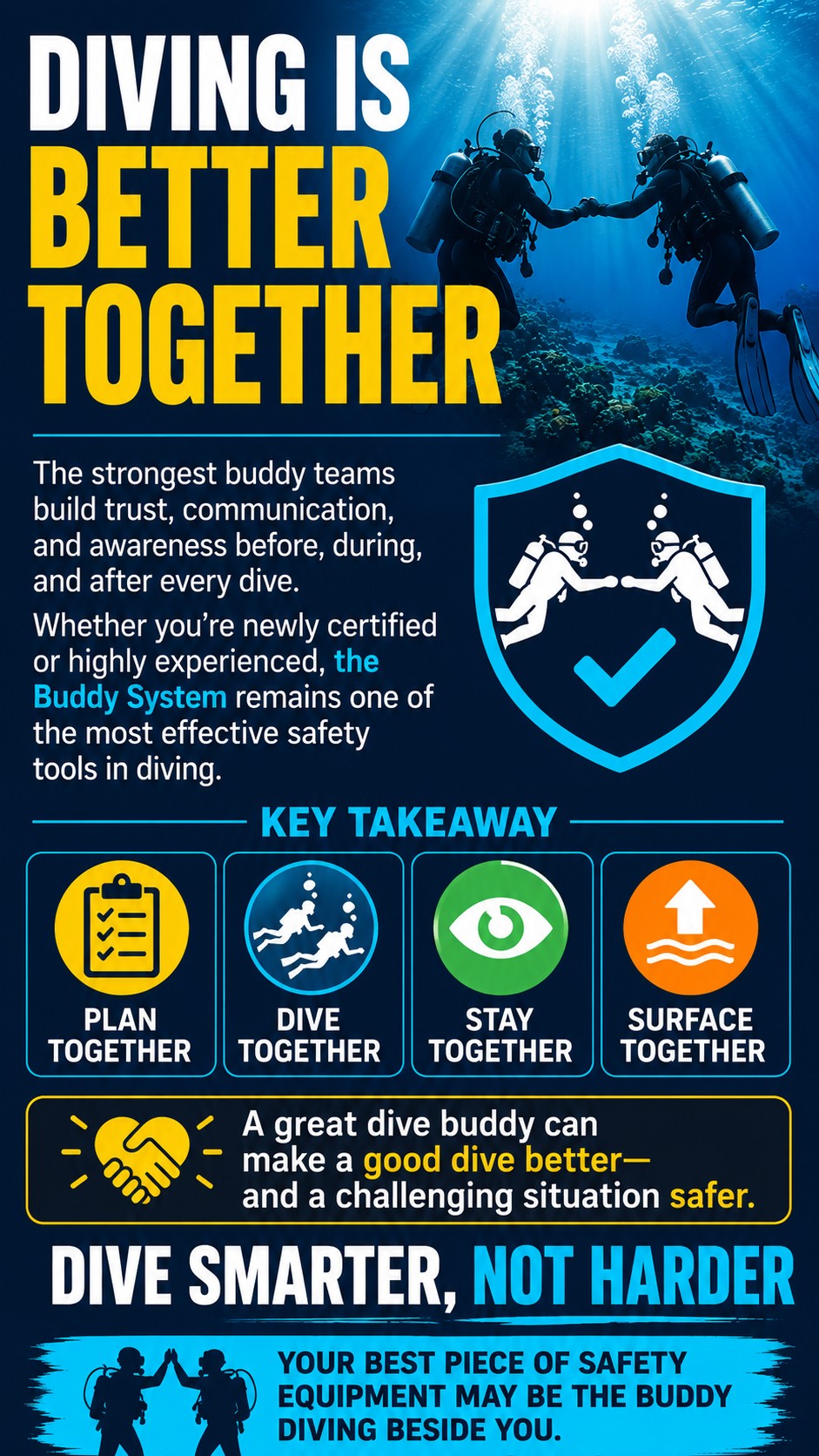
The Buddy System is one of the most important safety principles in scuba diving. While modern equipment is reliable and divers are trained to be self-sufficient, diving with a buddy provides an extra layer of safety, support, and enjoyment that begins long before entering the water and continues even after the dive is over.
The Buddy System Starts Before the Dive
Being a good buddy starts during dive planning. Before entering the water, buddies should discuss the dive plan, including:
- Maximum depth and bottom time.
- Entry and exit procedures.
- Navigation plan.
- Air management expectations.
- Emergency procedures.
- Hand signals and communication methods.
- What to do if separated.
This pre-dive discussion ensures both divers understand the plan and have the same expectations.
The Pre-Dive Buddy Check
Before entering the water, buddies should perform a thorough equipment check. A simple oversight can become a major problem underwater.
Verify:
- BCD operation.
- Weights secured and releasable.
- Releases and buckles fastened properly.
- Air supply turned on and functioning.
- Final check of mask, fins, and accessories.
Remember: Many diving incidents can be prevented with a careful buddy check.
One More Check at the Surface
Once in the water and ready to descend, buddies should perform a final confirmation:
- Both divers are comfortable.
- Regulators are functioning correctly.
- Masks are secure.
- Air gauges have been checked.
- Both divers are ready to begin the descent.
This is also the perfect time to establish eye contact and give the "OK" signal before descending together.
During the Dive
The Buddy System is most effective when buddies remain close enough to help each other if necessary.
Good buddy practices include:
- Maintaining visual contact.
- Staying within a reasonable distance.
- Monitoring each other's air supply.
- Watching for signs of stress, fatigue, or equipment problems.
- Communicating frequently with hand signals.
- Sharing the experience and helping each other stay aware of the surroundings.
A buddy is not there simply to swim alongside you; a buddy is your partner in safety.
If a Problem Occurs
Whether it is low air, an equipment issue, disorientation, or simply needing assistance, your buddy is your first source of help.
Proper buddy teamwork allows divers to:
- Solve minor problems before they become major emergencies.
- Share air if necessary.
- Assist with navigation.
- Help maintain calm and control during unexpected situations.
After the Dive
The Buddy System doesn't end when you leave the water.
After the dive, buddies should:
- Confirm that both divers exited safely.
- Discuss the dive.
- Review any challenges or lessons learned.
- Help each other with equipment.
- Celebrate a safe and enjoyable dive together.
These post-dive conversations often provide valuable learning opportunities that improve future dives.
Diving Is Better Together
The best buddy teams build trust, communication, and awareness before, during, and after every dive. Whether you are a newly certified diver or have hundreds of dives in your logbook, the Buddy System remains one of the most effective safety tools in scuba diving.
Remember: The Buddy System is not just about having someone nearby—it is about planning together, diving together, and returning safely together.
A great dive buddy can make a good dive better and can make a difficult situation manageable. Dive together. Stay together. Surface together.
