
UNDERSTANDING THE DIFFERENT TYPES OF BCDs(BACKPLATE AND WING -SIDEMOUNT)
Martin Gomez Jun 22, 2026
UNDERSTANDING THE DIFFERENT TYPES OF BCDs
Choosing the right Buoyancy Control Device (BCD) can significantly improve your comfort, trim, and overall diving experience. Each design has advantages depending on your diving goals, experience level, and diving environment.
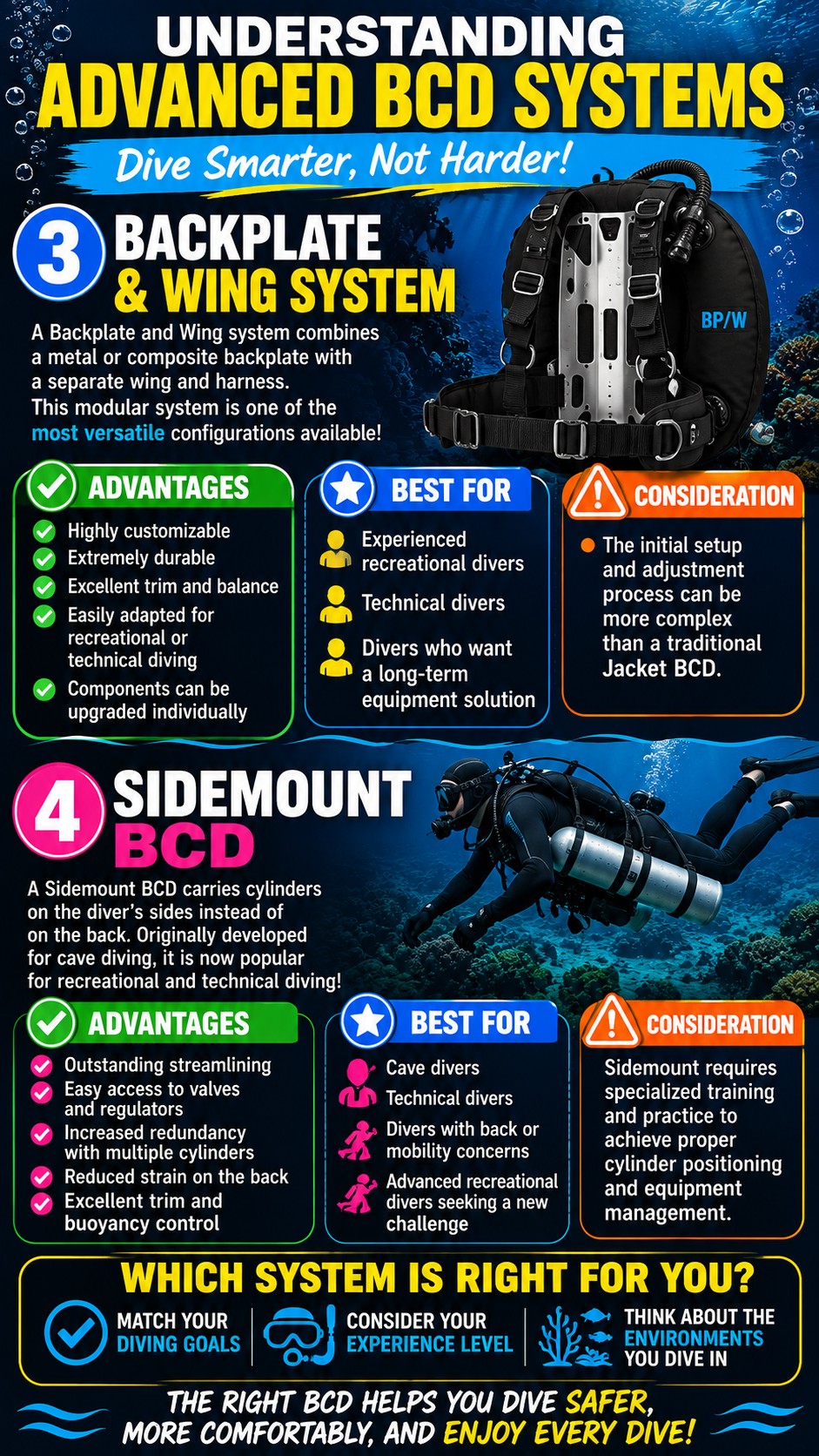
3. BACKPLATE AND WING SYSTEM
A Backplate and Wing system combines a metal or composite backplate with a separate wing and harness.
This modular system is considered one of the most versatile configurations available.
Advantages:
✔ Highly customizable
✔ Extremely durable
✔ Excellent trim and balance
✔ Easily adapted for recreational or technical diving
✔ Components can be upgraded individually
Best For:
- Experienced recreational divers
- Technical divers
- Divers who want a long-term equipment solution
Considerations:
The initial setup and adjustment process can be more complex than a traditional Jacket BCD.
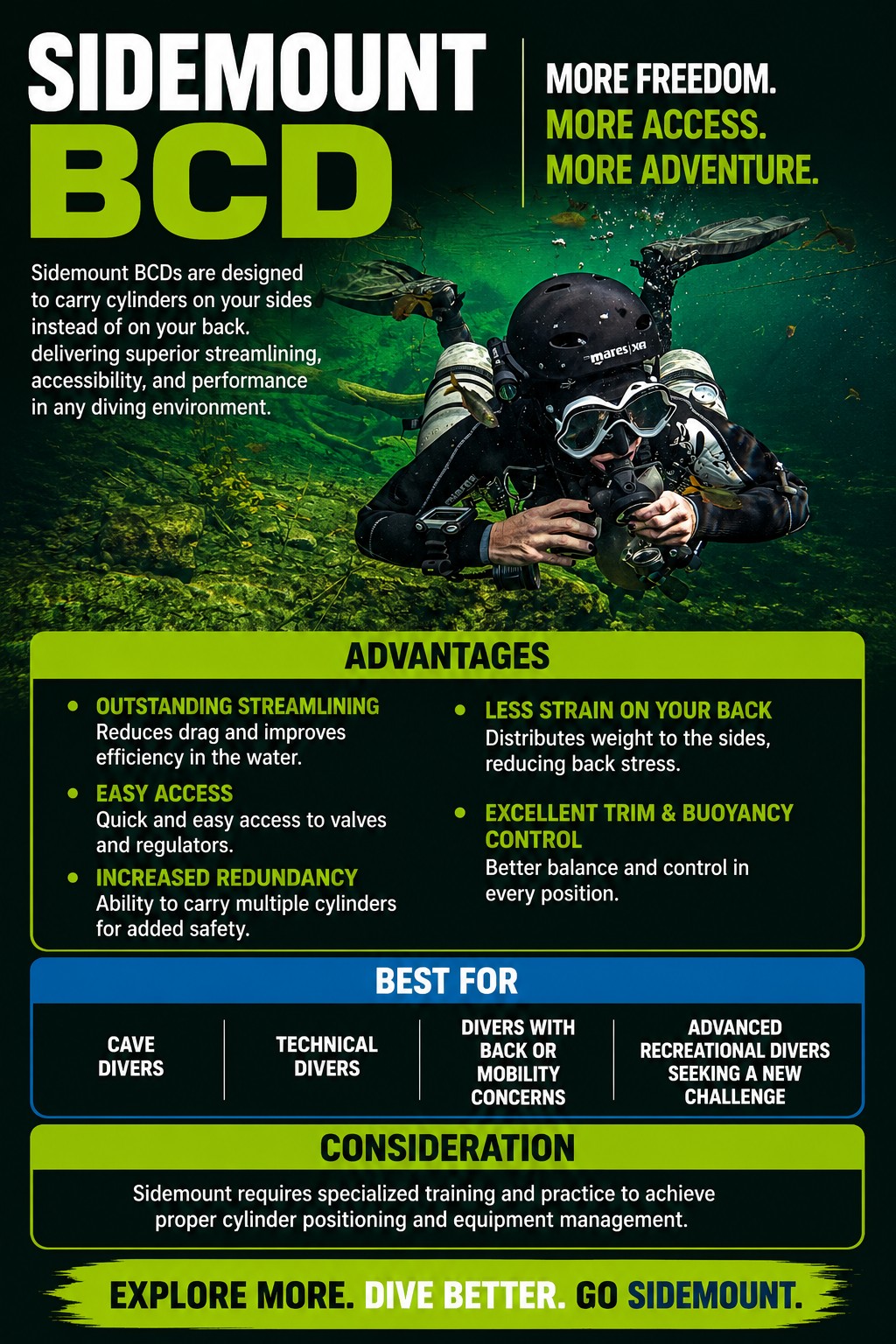
4. SIDEMOUNT BCD
A Sidemount BCD is specifically designed to carry cylinders on the diver's sides instead of on the back.
Originally developed for cave diving, it has become increasingly popular in recreational and technical diving.
Advantages:
✔ Outstanding streamlining
✔ Easy access to valves and regulators
✔ Increased redundancy with multiple cylinders
✔ Reduced strain on the back when carrying equipment
✔ Excellent trim and buoyancy control
Best For:
- Cave divers
- Technical divers
- Divers with back or mobility concerns
- Advanced recreational divers seeking a new challenge
Considerations:
Sidemount requires specialized training and practice to achieve proper cylinder positioning and equipment management.
WHICH BCD IS RIGHT FOR YOU?
There is no single "best" BCD—only the best BCD for your diving style.
- Jacket BCD: Simplicity, comfort, and recreational diving.
- Wing BCD: Better trim and underwater efficiency.
- Backplate & Wing: Maximum versatility and performance.
- Sidemount: Streamlining, redundancy, and advanced diving applications.
The most important factor is choosing equipment that matches your diving goals, training, and experience level.
Dive the system that supports the way you dive.
