
AZORES, PORTUGAL: THE KINGDOM OF BLUE SHARKS & MANTA RAYS! Top 10 Iconic Scuba Diving Destinations in the Atlantic Ocean — Episode 1
Martin Gomez Oct 29, 2026
AZORES, PORTUGAL: THE KINGDOM OF BLUE SHARKS & MANTA RAYS!
Top 10 Iconic Scuba Diving Destinations in the Atlantic Ocean — Episode 1
Discover Blue Sharks, Oceanic Mobula Rays, Volcanic Reefs, and Extraordinary Adventures in the Heart of the Atlantic!
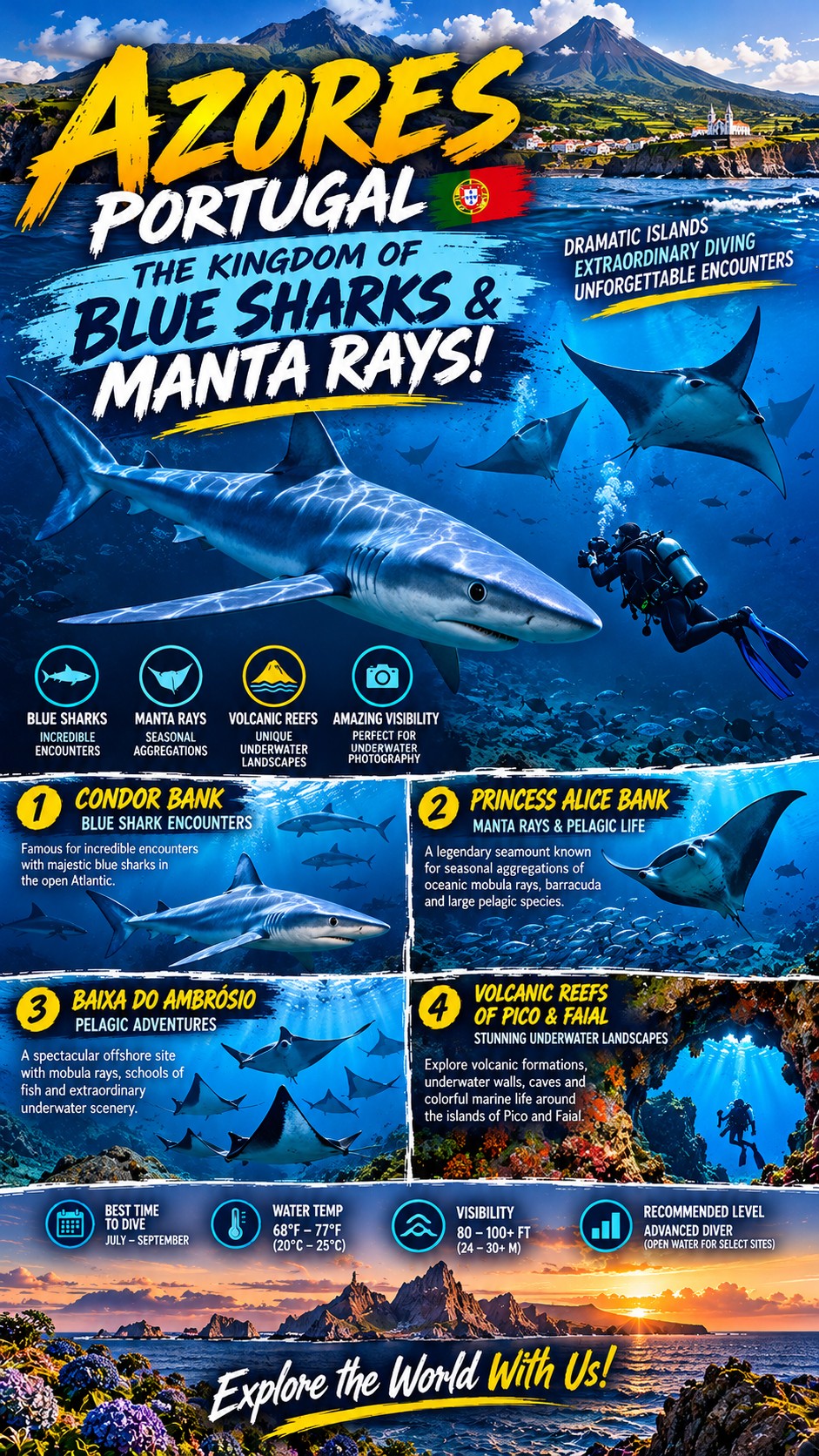
Welcome to the Azores: Where the Atlantic Comes Alive!
Imagine floating in the deep blue waters of the Atlantic Ocean, surrounded by an endless underwater horizon.
Suddenly, a graceful blue shark emerges from the distance.
Its sleek body glides effortlessly through the water, moving with remarkable elegance and curiosity.
A few moments later, another shark appears, creating an extraordinary encounter that few divers will ever forget.
On another dive, you may find yourself watching oceanic mobula rays soaring through the water above a remote underwater seamount.
Welcome to the Azores, one of the most spectacular scuba diving destinations in the Atlantic Ocean!
Located approximately 900 miles (1,450 kilometers) west of mainland Portugal, the Azores are a group of nine volcanic islands surrounded by deep ocean waters.
This extraordinary archipelago is known for its dramatic landscapes, volcanic formations, marine biodiversity, and remarkable encounters with large oceanic animals.
At Loves Park Scuba, we're excited to begin our new series exploring the Top 10 Iconic Scuba Diving Destinations in the Atlantic Ocean.
And there's no better place to start than the Azores!
1. What Makes the Azores So Special?
Unlike many tropical diving destinations, the Azores offer a truly oceanic diving experience.
The islands rise from the deep Atlantic, creating underwater environments where volcanic formations, ocean currents, and nutrient-rich waters support a remarkable variety of marine life.
Divers can experience:
-
Extraordinary blue shark encounters.
-
Seasonal aggregations of oceanic mobula rays.
-
Dramatic volcanic reefs and underwater walls.
-
Offshore seamounts surrounded by deep water.
-
Schools of barracuda, amberjack, and other pelagic fish.
-
Fascinating underwater caves and rocky formations.
-
Excellent underwater photography opportunities.
-
Beautiful landscapes above and below the surface.
Why dive the Azores? Because few destinations offer such an extraordinary combination of open-ocean adventure, volcanic scenery, and encounters with large marine animals!
2. Blue Sharks: The Stars of the Azores
One of the most famous diving experiences in the Azores is encountering the beautiful blue shark (Prionace glauca).
These elegant oceanic predators are recognized by their slender bodies, long pectoral fins, and distinctive blue coloration.
Blue sharks spend much of their lives in open water, traveling across enormous distances in search of food.
The waters surrounding the Azores provide opportunities for specialized blue shark diving excursions.
What Makes These Encounters Extraordinary?
Unlike reef diving, blue shark encounters generally take place in open water, far from the coastline.
Divers may remain at controlled depths while sharks swim nearby.
Watching these animals move through their natural environment is an unforgettable experience.
However, these are specialized dives that require careful planning, experienced guides, and strict safety procedures.
Blue shark encounters may involve attracting sharks with bait or scent, depending on the operator's practices and applicable regulations.
Divers must follow all instructions, maintain excellent buoyancy, and respect the animals' space.
At Loves Park Scuba, we believe that understanding and respecting sharks is an important part of becoming a responsible ocean explorer.
Shark encounters are never guaranteed.
3. Princess Alice Bank: The Legendary Underwater Seamount
One of the Azores' most iconic diving locations is Princess Alice Bank, also known as Banco Princesa Alice.
Located offshore southwest of Faial and Pico, this underwater seamount rises dramatically from the deep Atlantic Ocean.
Its relatively shallow summit creates an extraordinary environment for marine life.
Princess Alice Bank is especially famous for seasonal encounters with oceanic mobula rays.
These graceful animals move through the water with wing-like pectoral fins, creating the impression that they are flying underwater.
Divers may also encounter schools of barracuda, amberjack, and other open-water species.
Why Is Princess Alice Bank So Famous?
-
Extraordinary pelagic marine life.
-
Seasonal mobula ray encounters.
-
Remote offshore diving.
-
Dramatic underwater topography.
-
Excellent wide-angle photography opportunities.
Because the site is far offshore and exposed to oceanic conditions, excursions require suitable weather, experienced operators, and appropriate diver qualifications.
Strong currents, open-water exposure, and changing conditions can make this a challenging dive.
Princess Alice Bank is one of the Atlantic's most remarkable destinations for experienced divers seeking unforgettable pelagic encounters.
4. Top Dive Sites in the Azores
Condor Bank — Blue Shark Encounters
Condor Bank is one of the best-known areas for specialized blue shark diving near Faial.
The surrounding deep water provides opportunities to observe these extraordinary oceanic animals.
Highlights: Blue sharks, open-ocean diving, and underwater photography.
Princess Alice Bank — Oceanic Mobula Rays
One of the Azores' most celebrated offshore diving destinations.
Its seamount environment attracts large pelagic species, particularly during favorable seasonal conditions.
Highlights: Mobula rays, barracuda, amberjack, and spectacular blue-water diving.
Baixa do Ambrósio — Pelagic Encounters
Located near Santa Maria Island, Baixa do Ambrósio is famous for seasonal mobula ray encounters.
The site offers an impressive combination of underwater topography and marine life.
Highlights: Mobula rays, pelagic fish, and open-water adventure.
Dori Wreck — History Beneath the Atlantic
Located near São Miguel Island, the Dori is a historic shipwreck associated with World War II-era maritime operations.
Today, the wreck offers an interesting combination of underwater history and marine life.
Highlights: Shipwreck exploration, historical interest, and underwater photography.
Volcanic Reefs of Pico and Faial
The coastal waters surrounding Pico and Faial feature lava formations, rocky reefs, walls, and fascinating underwater landscapes.
These sites provide opportunities to explore the volcanic origins of the archipelago.
Highlights: Volcanic formations, reef fish, rocky structures, and underwater photography.
5. Marine Life: What Can You Encounter in the Azores?
The Azores are home to an extraordinary variety of Atlantic marine species.
Blue Sharks
One of the archipelago's most iconic animals, known for its elegance and open-ocean lifestyle.
Oceanic Mobula Rays
Seasonal visitors that gather around certain offshore banks and seamounts.
Barracuda
Schools of barracuda may be encountered around underwater formations and offshore dive sites.
Amberjack
These powerful fish are frequently associated with rocky reefs and open-water environments.
Groupers
Several grouper species inhabit the archipelago's rocky underwater habitats.
Octopuses and Moray Eels
These fascinating animals can be found around rocky formations and crevices.
Dolphins and Whales
The Azores are internationally recognized for whale- and dolphin-watching opportunities.
Although sightings are possible during boat excursions, whale encounters should not be expected during scuba dives.
Every dive offers another opportunity to discover the extraordinary biodiversity of the Atlantic Ocean!
6. When Is the Best Time to Dive the Azores?
Scuba diving in the Azores is strongly influenced by seasonal ocean conditions.
For divers interested in blue sharks and mobula rays, the summer months are generally the most attractive period.
| Season | Diving Experience |
|---|---|
| January – April | Cooler water and more variable sea conditions |
| May – June | Improving conditions and increasing dive activity |
| July – September | Prime period for many blue shark and mobula ray excursions |
| October – December | Cooling water and increasingly variable weather |
Typical summer water temperatures range from approximately 68°F to 77°F (20–25°C), although conditions vary by location and depth.
Visibility can be excellent, sometimes exceeding 80–100 feet (24–30 meters) in favorable conditions.
However, offshore sites may experience strong currents, waves, and rapidly changing weather.
For divers planning specialized pelagic encounters, July through September is generally a good starting point for trip planning.
7. Are the Azores Suitable for Beginner Divers?
Yes, but choosing the right dive sites is essential.
The Azores offer coastal dive sites suitable for recreational divers with appropriate experience and supervision.
However, famous offshore locations such as Princess Alice Bank and specialized blue shark diving excursions may require more advanced skills.
At Loves Park Scuba, we recommend considering the following training:
Open Water Diver
Begin exploring the underwater world and develop essential scuba skills.
Advanced Adventure / Advanced Open Water
Gain experience in different underwater environments and develop confidence beyond basic recreational diving.
Deep Diving
Learn the planning and safety considerations associated with deeper recreational dives.
Enriched Air Nitrox
Understand enriched-air diving procedures, oxygen exposure limits, and appropriate dive planning.
Perfect Buoyancy
Develop excellent underwater control, especially important during blue-water encounters.
Underwater Photography
Learn to capture extraordinary images of sharks, rays, and dramatic underwater landscapes.
Drift Diving
Develop skills that may be useful at sites influenced by ocean currents.
For offshore pelagic dives, divers should also be comfortable with boat diving, blue-water procedures, surface signaling equipment, and maintaining position without relying on the seabed.
Proper training and preparation are essential for safe and enjoyable Atlantic diving adventures.
8. Beyond Diving: Discover the Beauty of the Azores
The Azores offer extraordinary experiences above the surface.
Visitors can explore:
Pico Mountain
Portugal's highest mountain rises dramatically above the Atlantic Ocean, creating one of the archipelago's most recognizable landscapes.
Sete Cidades
Located on São Miguel Island, this spectacular volcanic landscape is famous for its crater lakes and panoramic viewpoints.
Whale Watching
The Azores are among Europe's most celebrated whale-watching destinations.
Volcanic Landscapes
Explore lava fields, volcanic craters, geothermal areas, and dramatic coastal scenery.
Natural Thermal Pools
Several islands offer opportunities to enjoy geothermal waters and natural pools.
Traditional Portuguese Cuisine
Discover fresh seafood, local cheeses, regional wines, and the unique flavors of the Azores.
The archipelago combines underwater exploration with remarkable natural beauty and Portuguese island culture.
9. Responsible Diving: Protecting Sharks and Marine Life
Sharks and rays play important roles in marine ecosystems.
Unfortunately, many species face threats from overfishing, accidental capture, habitat degradation, and other human activities.
Responsible diving can help promote greater appreciation and protection of these animals.
At Loves Park Scuba, we encourage divers to:
-
Respect marine animals and maintain appropriate distances.
-
Never touch, chase, or harass sharks or rays.
-
Follow the instructions of experienced local dive guides.
-
Maintain excellent buoyancy and equipment control.
-
Avoid damaging underwater habitats.
-
Support responsible marine conservation initiatives.
-
Follow local marine protected-area regulations.
-
Choose dive operators with established safety and environmental practices.
The best underwater encounter is one that respects both the diver and the marine environment.
10. Why the Azores Belong on Your Diving Bucket List
There are many spectacular scuba diving destinations around the world, but the Azores offer something truly extraordinary.
Blue sharks swimming through deep Atlantic waters.
Oceanic mobula rays gliding above underwater seamounts.
Dramatic volcanic reefs.
Historic shipwrecks.
Extraordinary marine biodiversity.
Beautiful islands surrounded by the vast Atlantic Ocean.
Every dive offers a new perspective on the incredible diversity of our planet's marine environments.
The Azores are not simply another scuba diving destination. They are a gateway to the extraordinary world of Atlantic Ocean exploration!
Your Atlantic Adventure Starts at Loves Park Scuba!
At Loves Park Scuba, we believe scuba diving is about discovering new destinations, expanding our skills, protecting marine ecosystems, and creating unforgettable memories.
Whether you're preparing for your first international diving vacation, interested in encountering large marine animals, or looking to develop advanced diving skills, our team is here to help.
From scuba certification and advanced training to equipment selection and dive travel planning, we're ready to help you prepare for your next adventure.
Are you ready to discover the Azores — The Kingdom of Blue Sharks & Manta Rays?
Visit Loves Park Scuba and let us help you prepare for your next extraordinary underwater experience!
LOVES PARK SCUBA
Dive Into Adventure — Explore the World With Us!
COMING NEXT IN OUR ATLANTIC DIVING SERIES
Episode 2 — North Carolina, USA: The Graveyard of the Atlantic!
Discover legendary shipwrecks, World War II maritime history, and unforgettable encounters with sand tiger sharks.
10 Iconic Atlantic Destinations. One Passion for Diving!
