
BELIZE: THE LEGENDARY GREAT BLUE HOLE! Top 10 Iconic Scuba Diving Destinations in the Caribbean — Episode 4
Martin Gomez Oct 28, 2026
BELIZE: THE LEGENDARY GREAT BLUE HOLE!
Top 10 Iconic Scuba Diving Destinations in the Caribbean — Episode 4
Discover a World-Famous Underwater Wonder, Spectacular Coral Reefs, and Extraordinary Caribbean Adventures!
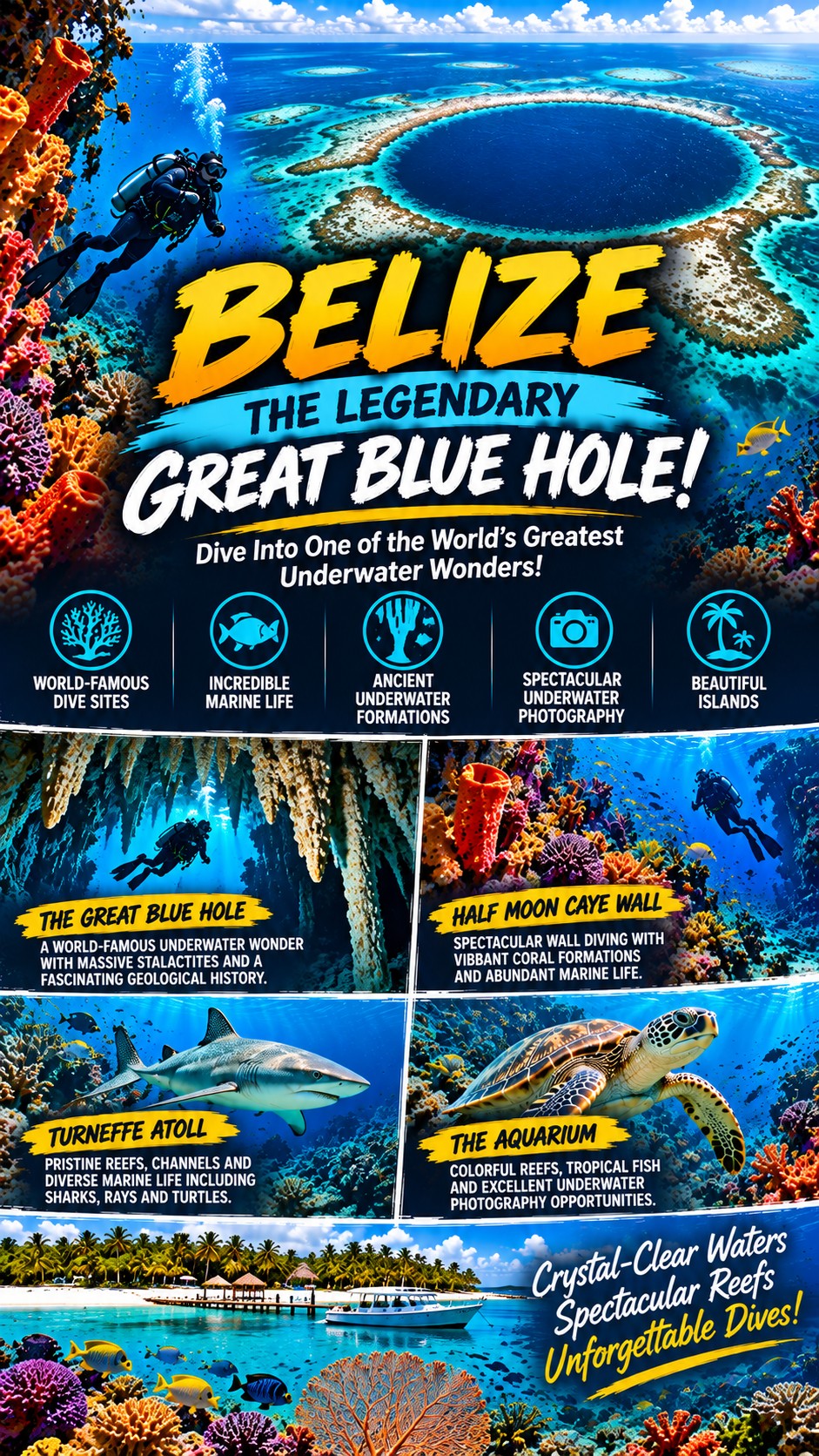
Welcome to Belize: Where Adventure Meets Underwater Mystery
Imagine flying over the turquoise waters of the Caribbean Sea when suddenly, an enormous, perfectly circular dark blue formation appears beneath you.
Surrounded by shallow coral reefs, this mysterious underwater wonder looks like a giant portal into the depths of the ocean.
Welcome to the Great Blue Hole of Belize, one of the most recognizable and extraordinary scuba diving destinations on Earth!
Located within Lighthouse Reef Atoll, approximately 43 miles (70 kilometers) off the coast of mainland Belize, the Great Blue Hole is a massive underwater sinkhole famous for its geological history, impressive depth, and spectacular underwater formations.
But Belize offers much more than one legendary dive site.
From colorful coral reefs and dramatic underwater walls to beautiful tropical islands and fascinating marine life, Belize is a destination every passionate diver should experience.
At Loves Park Scuba, we're excited to introduce Belize as the fourth destination in our series exploring the Caribbean's ten most iconic scuba diving locations.
1. What Makes Belize So Special?
Belize is home to the Belize Barrier Reef, part of the Mesoamerican Reef System, the largest barrier reef system in the Western Hemisphere.
The country's marine environments include beautiful coral reefs, offshore atolls, dramatic walls, sandy channels, and extraordinary underwater biodiversity.
Its most famous attraction, the Great Blue Hole, has become a symbol of underwater exploration and adventure.
Divers visiting Belize can discover:
-
The world-famous Great Blue Hole.
-
Spectacular coral walls and underwater formations.
-
Beautiful offshore atolls.
-
Colorful Caribbean coral reefs.
-
Sea turtles, nurse sharks, reef sharks, and eagle rays.
-
Extraordinary underwater photography opportunities.
-
A combination of recreational reef diving and advanced deep-diving experiences.
Why dive Belize? Because few places in the world combine underwater geological history, spectacular reefs, and tropical adventure quite like this destination!
2. The Great Blue Hole: A Journey Into Geological History
The Great Blue Hole is approximately 1,000 feet (300 meters) across and 400 feet (124 meters) deep.
This enormous marine sinkhole formed from an ancient limestone cave system during periods when sea levels were significantly lower than today.
Over thousands of years, rising sea levels flooded the cave system, creating the remarkable underwater formation visible today.
One of its most fascinating features is the presence of massive submerged stalactites, evidence of its ancient history as a dry cave.
During certain advanced dives, properly qualified divers can descend to depths where these extraordinary formations become visible.
The experience is very different from traditional tropical reef diving.
Instead of colorful coral gardens, the Great Blue Hole offers dramatic blue water, geological formations, and an atmosphere of underwater mystery.
Diving the Great Blue Hole is not simply a reef dive. It's an opportunity to witness an extraordinary chapter of Earth's geological history.
Is the Great Blue Hole Suitable for Every Diver?
Not necessarily.
The iconic stalactite dives commonly approach 130 feet (40 meters), near the maximum depth limit for appropriately trained recreational divers.
These dives require suitable certification, experience, gas planning, and careful attention to no-decompression limits.
Some operators require Advanced Open Water certification or equivalent experience.
Divers should never exceed their training, certification limits, or personal comfort level.
For those who prefer shallower diving, Belize offers many beautiful alternatives.
3. Top Dive Sites in Belize
Great Blue Hole — The Ultimate Underwater Landmark
The Great Blue Hole is Belize's most famous diving attraction.
Its enormous circular shape and deep blue water create one of the world's most recognizable natural landmarks.
Divers who meet the necessary requirements can explore its dramatic underwater environment and ancient limestone formations.
Highlights: Geological history, deep diving, massive stalactites, and a world-famous underwater landmark.
Half Moon Caye Wall — Spectacular Caribbean Reef Diving
Located near Lighthouse Reef Atoll, Half Moon Caye Wall offers beautiful coral formations, dramatic drop-offs, and abundant marine life.
Divers can explore colorful sponges, reef structures, and impressive underwater scenery.
Sea turtles, rays, and reef sharks may occasionally be encountered.
Highlights: Wall diving, coral formations, marine life, and underwater photography.
The Aquarium — A Colorful Underwater Paradise
The Aquarium, located within the Lighthouse Reef area, is famous for its beautiful reef environment and abundant tropical fish.
The site's coral formations and clear water provide excellent opportunities for underwater photography.
Highlights: Tropical fish, colorful reefs, and marine biodiversity.
Turneffe Atoll — Discover a World of Marine Life
Turneffe Atoll is one of Belize's most celebrated offshore diving regions.
Its underwater habitats include reef walls, coral gardens, channels, and areas of rich marine biodiversity.
Divers may encounter turtles, groupers, reef sharks, eagle rays, and schools of tropical fish.
Highlights: Reef diving, wall diving, marine life, and underwater photography.
Hol Chan Marine Reserve — A Shallow Marine Paradise
Located near Ambergris Caye, Hol Chan Marine Reserve is one of Belize's most famous protected marine areas.
Its relatively shallow reef environments provide excellent opportunities for snorkeling and guided diving.
The area is known for colorful fish, coral formations, and marine-life encounters.
Highlights: Shallow reefs, snorkeling, tropical fish, and marine conservation.
4. Marine Life: What Can You Encounter in Belize?
Belize is home to an extraordinary variety of Caribbean marine species.
Caribbean Reef Sharks
These impressive predators may be observed around offshore reef systems and deeper dive sites.
Nurse Sharks
Nurse sharks are commonly associated with reef environments and sandy areas.
Sea Turtles
Green, hawksbill, and loggerhead sea turtles inhabit Belizean waters.
Spotted Eagle Rays
These graceful animals occasionally glide along reef walls and sandy channels.
Groupers and Tropical Fish
Large groupers, angelfish, butterflyfish, parrotfish, and schools of other reef fish contribute to Belize's remarkable biodiversity.
Whale Sharks
Seasonal whale shark encounters have historically occurred in southern Belize, particularly around the Gladden Spit area.
However, sightings are unpredictable, and recent encounters have been less reliable than in earlier years.
Every dive offers an opportunity to discover something extraordinary, but wildlife sightings are never guaranteed.
5. When Is the Best Time to Dive Belize?
Belize offers diving opportunities throughout the year, although weather, rainfall, wind, and sea conditions vary by season.
| Season | Diving experience |
|---|---|
| December – April | Popular dry-season travel period |
| May – June | Warmer water and changing seasonal conditions |
| July – September | Warm water, with increased tropical-weather considerations |
| October – November | More variable weather and rainfall |
Typical water temperatures range from approximately 78°F to 84°F (26–29°C).
Visibility at offshore dive sites can often range from 60 to 100 feet, although actual conditions vary.
Travelers should also consider the Atlantic hurricane season, which runs from June through November.
6. Is Belize Suitable for Beginner Divers?
Absolutely!
Although the Great Blue Hole is famous for advanced deep diving, Belize offers many other dive sites suitable for recreational divers with different levels of experience.
Shallow reefs around Ambergris Caye, Caye Caulker, and other locations provide opportunities for less experienced divers when conditions are appropriate.
However, some offshore dives involve greater depths, currents, or longer boat journeys.
At Loves Park Scuba, we recommend considering:
-
Open Water Diver: Begin exploring the underwater world.
-
Advanced Adventure / Advanced Open Water: Gain experience with deeper diving and different environments.
-
Deep Diving Specialty: Develop additional knowledge and skills for deeper recreational dives.
-
Enriched Air Nitrox: Learn to plan dives using enriched air within appropriate depth limits.
-
Perfect Buoyancy: Improve underwater control and protect coral environments.
-
Underwater Photography: Capture beautiful reef scenery and marine life.
For the Great Blue Hole specifically, divers must understand that enriched air does not automatically make deep dives safer; oxygen exposure limits and gas selection are critical.
The best preparation always includes proper training, suitable equipment, and realistic dive planning.
7. Beyond the Great Blue Hole: Explore Belize Above the Surface
Belize offers extraordinary experiences beyond scuba diving.
Visitors can discover beautiful islands, tropical rainforests, ancient Maya archaeological sites, and fascinating cultural traditions.
Some popular attractions include:
-
Ambergris Caye: A vibrant island known for diving, snorkeling, and Caribbean hospitality.
-
Caye Caulker: A relaxed island destination famous for its laid-back atmosphere.
-
Half Moon Caye: A beautiful protected island with exceptional natural scenery.
-
Maya Archaeological Sites: Explore Belize's remarkable ancient history.
-
Rainforest Adventures: Discover waterfalls, caves, and tropical wildlife.
-
Local Cuisine: Enjoy fresh seafood and Belizean culinary traditions.
Belize combines underwater adventure with incredible natural and cultural experiences.
8. Responsible Diving: Protecting Belize's Marine Ecosystems
Belize's reef systems are among the country's most valuable natural treasures.
The Belize Barrier Reef Reserve System is recognized as a UNESCO World Heritage Site.
Protecting these ecosystems is essential for marine biodiversity and future generations of divers.
At Loves Park Scuba, we encourage responsible diving practices:
-
Maintain excellent buoyancy.
-
Never touch or stand on coral.
-
Avoid disturbing marine animals.
-
Secure gauges and other equipment.
-
Follow local marine reserve regulations.
-
Respect protected habitats.
-
Support responsible diving and conservation operators.
Every diver has the opportunity to become an ambassador for ocean conservation.
9. Why Belize Belongs on Your Diving Bucket List
There are many spectacular diving destinations throughout the Caribbean, but Belize offers a unique combination of experiences.
The legendary Great Blue Hole.
Beautiful coral walls.
Extraordinary marine biodiversity.
Remote tropical atolls.
Fascinating geological history.
For divers who dream of exploring one of the world's most recognizable underwater landmarks, Belize offers an adventure unlike any other.
It's a destination where natural history, marine life, and underwater exploration come together in one unforgettable experience.
10. Your Belize Adventure Starts at Loves Park Scuba!
At Loves Park Scuba, we believe scuba diving is about more than exploring beautiful underwater environments.
It's about discovering the world, expanding our knowledge, developing new skills, and creating unforgettable memories.
Whether you're dreaming of diving the Great Blue Hole, exploring colorful Caribbean reefs, or improving your advanced diving skills, we're here to help you prepare.
From Open Water certification to advanced training, equipment selection, and dive travel opportunities, our team is ready to support your next underwater adventure.
Are you ready to discover Belize and the legendary Great Blue Hole?
Visit Loves Park Scuba and let us help you
