
CANARY ISLANDS, SPAIN: VOLCANIC UNDERWATER ADVENTURES! Top 10 Iconic Scuba Diving Destinations in the Atlantic Ocean — Episode 6
Martin Gomez Oct 29, 2026
CANARY ISLANDS, SPAIN: VOLCANIC UNDERWATER ADVENTURES!
Top 10 Iconic Scuba Diving Destinations in the Atlantic Ocean — Episode 6
Explore Spectacular Volcanic Reefs, Underwater Lava Formations, Angel Sharks, Shipwrecks, and the Extraordinary Marine Life of Spain's Atlantic Islands!
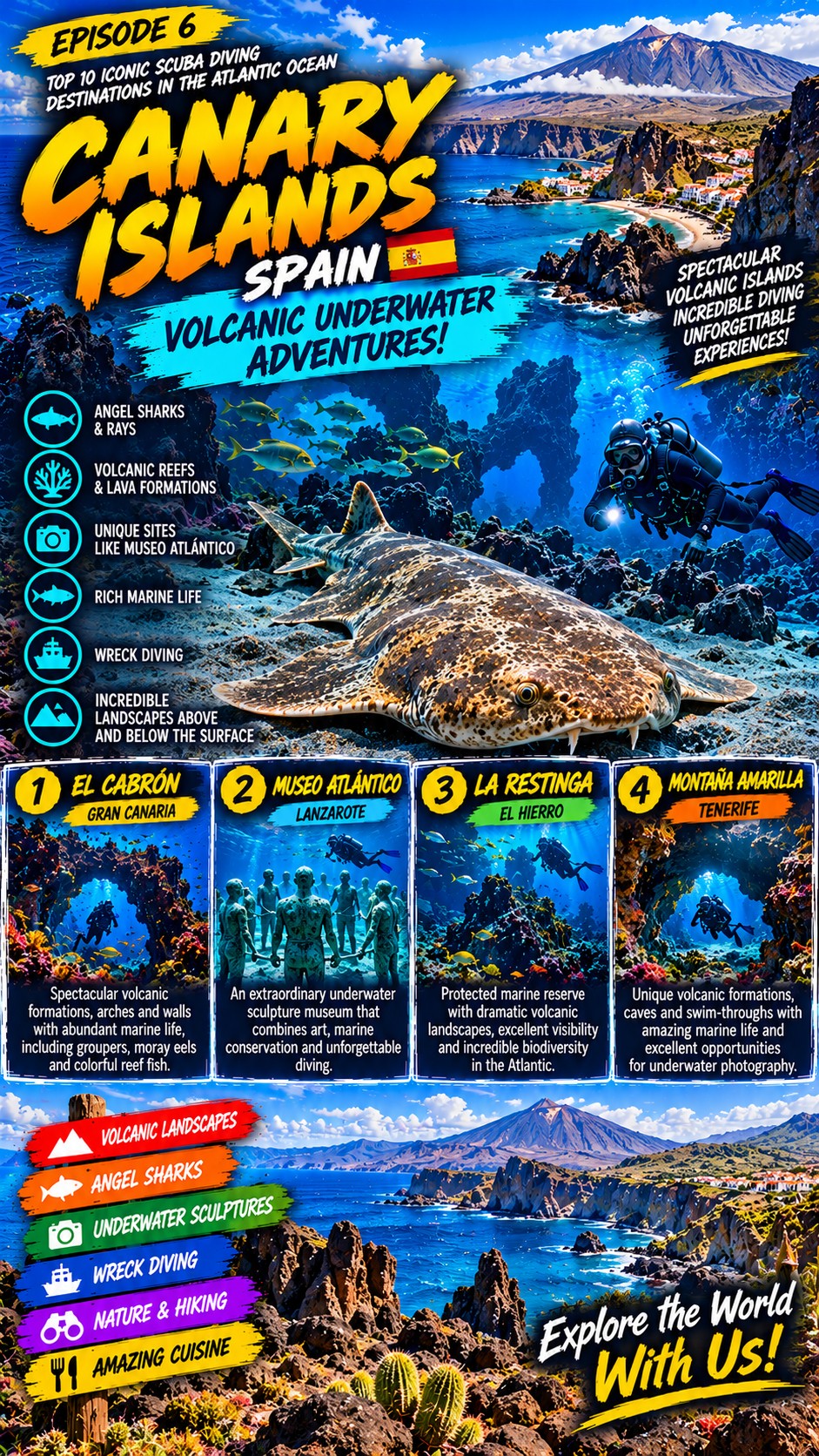
Welcome to the Canary Islands: An Underwater World Born From Volcanoes!
Imagine descending into the crystal-blue waters of the Atlantic Ocean, surrounded by dramatic volcanic rock formations.
Below you, ancient lava flows have created underwater arches, caves, tunnels, and impressive rocky landscapes.
A graceful stingray glides across the sandy bottom.
Schools of colorful fish move around volcanic pinnacles.
Suddenly, you notice an unusual shape resting on the ocean floor.
It's an angel shark, perfectly camouflaged against the sand.
Above the surface, towering volcanic mountains, black-sand beaches, spectacular cliffs, and picturesque coastal villages create one of Europe's most fascinating island landscapes.
Welcome to the Canary Islands, Spain, an Atlantic archipelago famous for its volcanic origins, diverse marine ecosystems, and extraordinary scuba diving opportunities.
Located off the northwestern coast of Africa, the Canary Islands combine European culture, subtropical weather, and spectacular underwater adventures.
At Loves Park Scuba, we're excited to introduce the Canary Islands as the sixth destination in our series exploring the Top 10 Iconic Scuba Diving Destinations in the Atlantic Ocean.
1. What Makes the Canary Islands So Special?
The Canary Islands were formed by volcanic activity over millions of years.
Today, that geological history is visible throughout the archipelago, both above and below the water.
Underwater lava formations create spectacular landscapes unlike those found in traditional tropical coral reef destinations.
Divers can enjoy:
-
Dramatic volcanic reefs and underwater lava formations.
-
Rocky arches, walls, pinnacles, and caves.
-
Encounters with angel sharks.
-
Rays, groupers, moray eels, and colorful Atlantic fish.
-
Fascinating shipwrecks and artificial reefs.
-
Underwater sculpture installations.
-
Shore diving and boat diving.
-
Generally mild weather throughout the year.
-
Extraordinary landscapes and outdoor adventures.
The Canary Islands are not simply a European beach destination. They're a spectacular volcanic underwater playground in the Atlantic Ocean!
2. The Islands: Different Destinations, Different Diving Experiences
The Canary Islands consist of several major islands, each offering distinctive underwater environments.
Tenerife — Volcanic Landscapes & Marine Life
Tenerife is the largest island in the archipelago.
Its dramatic coastline, underwater rock formations, and varied marine habitats make it a popular diving destination.
Divers may encounter rays, moray eels, octopuses, sea turtles, and schools of Atlantic fish.
Tenerife also offers impressive scenery above the surface, including Mount Teide, Spain's highest mountain.
Highlights: Volcanic reefs, marine life, coastal scenery, and a wide selection of dive operators.
Lanzarote — Underwater Lava & Artistic Exploration
Lanzarote is famous for its volcanic landscapes, both above and below the ocean.
Its underwater terrain includes lava formations, rocky reefs, walls, and sandy areas.
The island is also home to the extraordinary Museo Atlántico, an underwater sculpture installation near Playa Blanca.
Highlights: Volcanic reefs, underwater sculptures, marine life, and unique photography opportunities.
Gran Canaria — Reefs, Wrecks & Marine Biodiversity
Gran Canaria offers a variety of underwater environments, including rocky reefs, sandy bottoms, and wreck-diving opportunities.
Its coastline supports diverse marine life, including rays, groupers, moray eels, and schools of fish.
Highlights: Reef diving, wrecks, marine life, and accessible diving infrastructure.
El Hierro — A Hidden Atlantic Diving Treasure
El Hierro is widely admired for its volcanic landscapes and marine environments.
The area around La Restinga and the Mar de las Calmas Marine Reserve is particularly famous among divers.
Its underwater topography includes volcanic pinnacles, rocky walls, and impressive marine habitats.
Highlights: Protected marine environments, dramatic volcanic formations, and excellent underwater photography.
La Palma — The Beautiful Volcanic Island
La Palma offers fascinating underwater landscapes formed by volcanic activity.
Divers can explore rocky reefs, steep slopes, and interesting marine habitats.
Highlights: Volcanic geology, underwater scenery, and relatively uncrowded diving experiences.
3. Top Dive Sites in the Canary Islands
El Cabrón — Gran Canaria
El Cabrón is one of Gran Canaria's most celebrated diving areas.
Located along the island's eastern coast, it is known for its volcanic formations, arches, rocky reefs, and diverse marine life.
Divers may encounter moray eels, groupers, rays, and schools of fish.
Highlights: Volcanic formations, rocky reefs, marine biodiversity, and underwater photography.
Museo Atlántico — Lanzarote
Museo Atlántico is a remarkable underwater sculpture installation created by artist Jason deCaires Taylor.
Located near Playa Blanca, the sculptures form an unusual underwater environment that also serves as habitat for marine organisms.
The installation combines art, environmental awareness, and underwater exploration.
Highlights: Underwater sculptures, marine conservation themes, and photography.
La Restinga — El Hierro
La Restinga is a well-known diving center in southern El Hierro.
Nearby marine environments include impressive volcanic formations and protected underwater habitats.
The area offers opportunities to encounter schools of fish, rays, groupers, and other Atlantic marine species.
Highlights: Volcanic pinnacles, marine reserve diving, and underwater biodiversity.
Montaña Amarilla — Tenerife
Montaña Amarilla is known for its distinctive yellow volcanic rock formations.
The underwater landscape includes interesting rocky structures and opportunities to observe marine life.
Highlights: Volcanic geology, rocky reefs, and underwater photography.
Las Eras — Tenerife
Las Eras is a popular diving area with rocky reefs, volcanic formations, and diverse marine life.
Conditions vary with weather and sea state.
Highlights: Shore diving, volcanic reefs, and marine encounters.
Important: Site access, currents, depth, weather conditions, and diver experience requirements should always be confirmed with an authorized local operator.
4. Angel Sharks: One of the Canary Islands' Most Extraordinary Animals
One of the most fascinating animals divers may encounter in the Canary Islands is the angel shark (Squatina squatina).
Unlike many familiar shark species, angel sharks have broad, flattened bodies and spend much of their time resting on sandy bottoms.
Their unusual appearance allows them to blend into the seabed.
The Canary Islands are an important refuge for this critically endangered species.
What Makes Angel Sharks So Special?
-
Their flattened bodies resemble rays.
-
They often rest partially buried in sand.
-
They use camouflage to ambush prey.
-
They are important predators in marine ecosystems.
-
Their populations are threatened and require conservation protection.
Divers must never touch, chase, disturb, or attempt to uncover an angel shark resting in the sand.
Encountering an angel shark in its natural environment is a rare privilege and a powerful reminder of the importance of marine conservation.
Sightings are never guaranteed.
5. Marine Life: What Can You Encounter?
The Canary Islands support a fascinating mixture of Atlantic and subtropical marine species.
Angel Sharks
Among the archipelago's most remarkable and conservation-sensitive marine animals.
Stingrays and Eagle Rays
Several ray species inhabit sandy areas and rocky reef environments.
Groupers
Large groupers may be found around rocky formations and deeper reef habitats.
Moray Eels
Moray eels commonly shelter in crevices and rocky reef structures.
Octopuses
These intelligent animals inhabit rocky environments and are fascinating photography subjects.
Barracuda
Schools of barracuda may occasionally be observed in open water.
Sea Turtles
Sea turtles may be encountered in certain areas, particularly around Tenerife.
Atlantic Reef Fish
Parrotfish, damselfish, wrasses, seabream, and many other species bring color and movement to volcanic reefs.
Every dive offers an opportunity to discover the extraordinary marine biodiversity of the eastern Atlantic Ocean!
6. Volcanic Diving: Exploring an Underwater Geological Wonderland
The volcanic origins of the Canary Islands have created an extraordinary variety of underwater structures.
Divers can explore:
-
Ancient lava flows.
-
Rocky pinnacles.
-
Volcanic arches.
-
Steep underwater walls.
-
Rocky canyons.
-
Sandy areas between volcanic formations.
-
Caverns and overhangs.
These environments provide habitat for many marine species.
They also create spectacular opportunities for underwater photography.
However, underwater caves and overhead environments introduce additional hazards.
Divers should never enter such areas without specialized training, appropriate equipment, and a suitable dive plan.
Exploring the Canary Islands beneath the surface is like traveling through millions of years of volcanic history!
7. When Is the Best Time to Dive the Canary Islands?
One of the greatest advantages of the Canary Islands is their relatively mild climate throughout the year.
Diving is possible year-round at suitable sites, although conditions vary by island, coastline, and season.
| Season | General Diving Conditions |
|---|---|
| December – February | Cooler water, with variable swell and wind |
| March – May | Mild conditions and increasing daylight |
| June – August | Warmer weather, with trade winds affecting exposed sites |
| September – October | Often among the warmest water temperatures |
| November | Mild conditions with variable Atlantic weather |
Typical water temperatures range from approximately 64°F to 75°F (18–24°C).
Visibility often ranges from 30 to 100 feet (10–30 meters), although local conditions vary considerably.
For divers who prefer warmer water, September and October can be attractive months.
However, there is no single perfect season for every island or dive site.
8. Is Canary Islands Diving Suitable for Beginners?
The Canary Islands offer diving opportunities for a wide range of certification levels.
Some sheltered coastal sites are suitable for newly certified divers under appropriate conditions.
Other sites feature deeper profiles, stronger currents, or more demanding underwater terrain.
At Loves Park Scuba, we recommend considering:
Open Water Diver
Develop the essential knowledge and skills for recreational scuba diving.
Advanced Adventure / Advanced Open Water
Gain experience in different underwater environments.
Deep Diving
Learn appropriate planning and procedures for deeper recreational diving.
Enriched Air Nitrox
Understand enriched-air dive planning and oxygen exposure limits.
Perfect Buoyancy
Improve underwater control around rocky formations and sensitive marine habitats.
Underwater Photography
Capture extraordinary images of angel sharks, rays, volcanic landscapes, and colorful Atlantic fish.
Wreck Diving
Develop knowledge of wreck exploration and associated hazards.
Proper training, experience, and responsible dive planning are essential for enjoying the Canary Islands safely.
9. Marine Conservation: Protecting the Canary Islands
The Canary Islands contain important marine habitats and protected species.
Marine reserves and conservation initiatives help protect the archipelago's unique ecosystems.
The conservation of angel sharks is particularly important.
Responsible diving practices include:
-
Never touch or disturb angel sharks.
-
Maintain excellent buoyancy.
-
Avoid contact with volcanic reef habitats.
-
Respect marine reserve regulations.
-
Never collect marine organisms or artifacts.
-
Secure equipment to prevent damage.
-
Follow authorized dive operators' instructions.
-
Support responsible conservation initiatives.
Protecting these underwater ecosystems helps preserve the Canary Islands' extraordinary marine life for future generations.
10. Beyond Diving: Discover the Canary Islands
The Canary Islands offer many exciting experiences above the surface.
Teide National Park — Tenerife
Explore the extraordinary volcanic landscapes surrounding Mount Teide.
Timanfaya National Park — Lanzarote
Discover dramatic lava fields and volcanic terrain.
Maspalomas Dunes — Gran Canaria
Enjoy spectacular sand dunes beside the Atlantic Ocean.
Garajonay National Park — La Gomera
Explore ancient forests and beautiful mountain landscapes.
Roque de los Muchachos — La Palma
Visit one of the archipelago's most spectacular mountain viewpoints.
Coastal Villages and Local Cuisine
Discover traditional Canarian food, charming villages, and beautiful Atlantic beaches.
The Canary Islands offer an extraordinary combination of scuba diving, nature, adventure, and Spanish island culture.
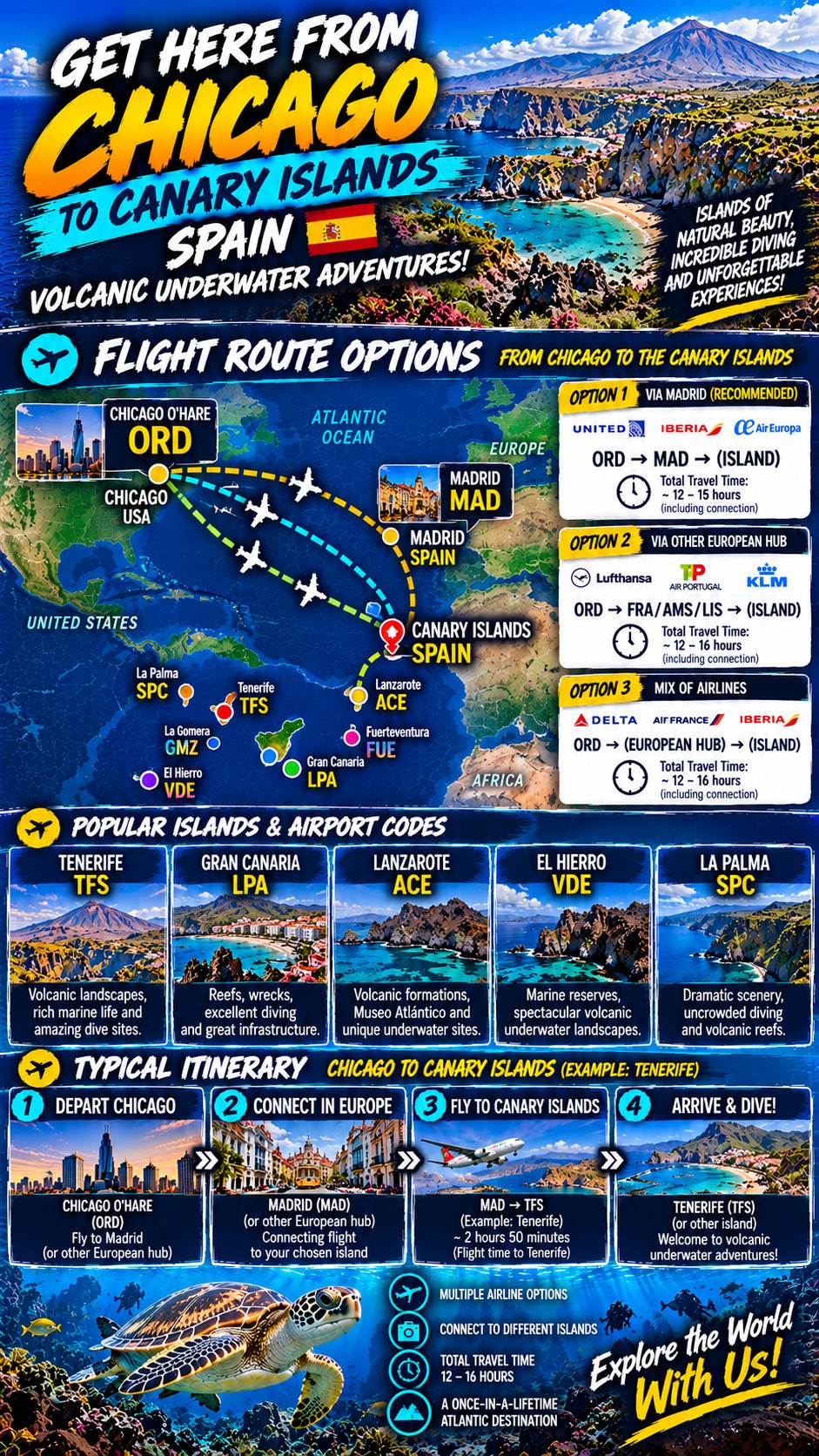
11. How Do You Get to the Canary Islands from Chicago?
Travelers departing from Chicago generally reach the Canary Islands through European airline connections.
The major airport codes include:
-
TFS — Tenerife South Airport.
-
TFN — Tenerife North Airport.
-
LPA — Gran Canaria Airport.
-
ACE — Lanzarote Airport.
-
VDE — El Hierro Airport.
-
SPC — La Palma Airport.
Possible flight itineraries include:
Chicago O'Hare (ORD) → Madrid (MAD) → Tenerife (TFS)
Chicago O'Hare (ORD) → Madrid (MAD) → Gran Canaria (LPA)
Chicago O'Hare (ORD) → European Hub → Lanzarote (ACE)
Travelers visiting El Hierro may need an additional inter-island flight or ferry connection.
Flight schedules, airline routes, baggage allowances, and entry requirements should be confirmed before booking.
For scuba divers traveling with equipment, careful planning is especially important.
Why the Canary Islands Belong on Your Diving Bucket List
There are many extraordinary scuba diving destinations throughout the Atlantic Ocean, but the Canary Islands offer something truly special.
Spectacular volcanic underwater landscapes.
Critically endangered angel sharks.
Beautiful rocky reefs.
Fascinating underwater sculptures.
Historic shipwrecks.
Extraordinary marine biodiversity.
And breathtaking volcanic scenery above the surface.
The Canary Islands are not simply another European island destination. They're an Atlantic underwater adventure waiting to be explored!
Your Canary Islands Adventure Starts at Loves Park Scuba!
At Loves Park Scuba, we believe scuba diving is about exploring the world, developing our skills, protecting marine ecosystems, and creating unforgettable memories.
Whether you dream of diving among volcanic formations, photographing angel sharks, exploring underwater sculptures, or discovering Spain's extraordinary Atlantic islands, our team is here to help you prepare.
From scuba certification and advanced training to equipment selection and dive travel opportunities, we're ready to help.
Are you ready to discover the Canary Islands — Volcanic Underwater Adventures?
Visit Loves Park Scuba and let us help you prepare for your next extraordinary Atlantic diving adventure!
LOVES PARK SCUBA
Dive Into Adventure — Explore the World With Us!
COMING NEXT IN OUR ATLANTIC DIVING SERIES
Episode 7 — Scapa Flow, Scotland: Historic World War I Shipwrecks!
Discover the legendary German High Seas Fleet wrecks, fascinating maritime history, and extraordinary cold-water diving in Scotland's Orkney Islands.
10 Iconic Atlantic Destinations. One Passion for Diving!
