
Day 5 – San Francisquito: Dancing with Barracudas
Martin Gomez Oct 05, 2026
A Week in the Sea of Cortez Aboard the Valentina
Day 5 – San Francisquito: Dancing with Barracudas
By Day 5, the sounds of life aboard the Valentina had become part of our daily routine.
This time, it wasn't the anchor that woke us.
It was the bell.
And aboard a liveaboard, that bell can mean several things—but early in the morning, it meant something very important:
Continental breakfast was ready.
Fruit, yogurt, cereal, juice, water and, of course, a good cup of coffee gave us the energy we needed before getting ready for our first dive of the day.
Our destination was another beautiful site in the northern Sea of Cortez:
La Lobera de San Francisquito.
First Dive – La Lobera de San Francisquito
From the beginning, conditions looked promising.
The water was warm, with temperatures above 80°F, visibility was good, and plenty of sunlight penetrated the water.
We were diving at depths of approximately 50 to 60 feet, surrounded by the characteristic rocky formations and marine life of the Sea of Cortez.
It was already shaping up to be a very pleasant dive.
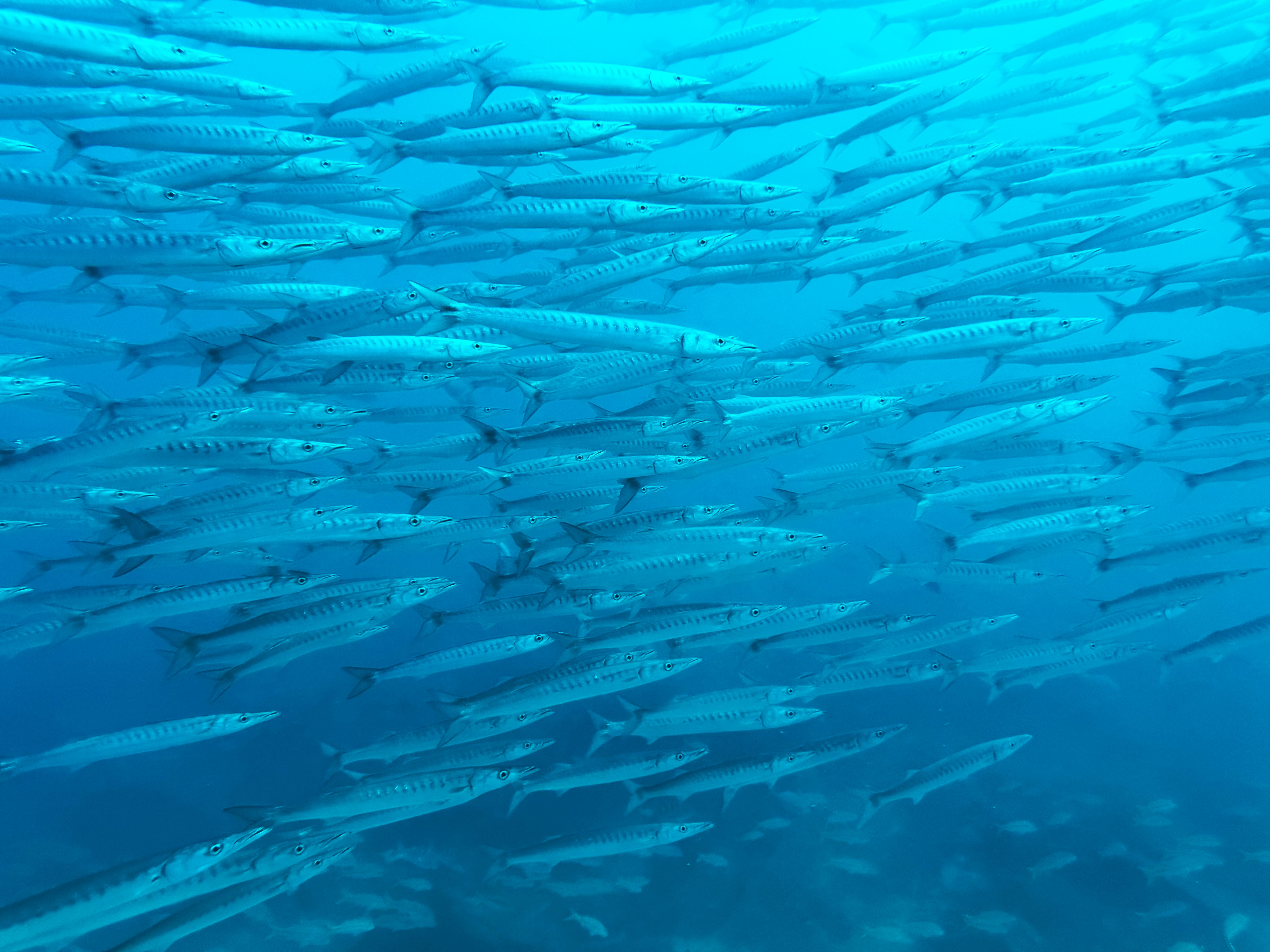
And then the barracudas arrived.
Not one.
Not ten.
Hundreds of them.
A large school of barracudas appeared in front of us and remained in the area.
Our guide Memo, a marine biologist, immediately gave us some advice that completely changed the experience.
Don't chase them.
He explained that if we tried to swim after the school, the barracudas would become uncomfortable and quickly move away.
Instead, he wanted us to stop.
Stay still.
Wait.
And allow the fish to make the decision to approach us.
So that's exactly what we did.
Sometimes the Best Thing a Diver Can Do Is Nothing
We stopped swimming.
For a few moments, we simply hovered in the water and watched.
At first, the barracudas maintained their distance.
Then something began to happen.
They came closer.
And closer.
The school began moving around us in almost perfect synchronization.
Hundreds of silver bodies changed direction together, reflecting the sunlight as if they were part of a single enormous organism.
When one section turned, the others followed.
Silver became dark.
Dark became silver again.
Light and shadow constantly changed as the school moved through the water.
And we were right in the middle of the performance.
For at least 20 minutes, the barracudas stayed with us.
Nobody needed to chase them.
Nobody needed to force the encounter.
We simply remained calm and allowed the ocean to bring the experience to us.
Memo had been absolutely right.
Sometimes one of the most valuable skills in diving is knowing when not to swim.
Light, Shadows and the Reef
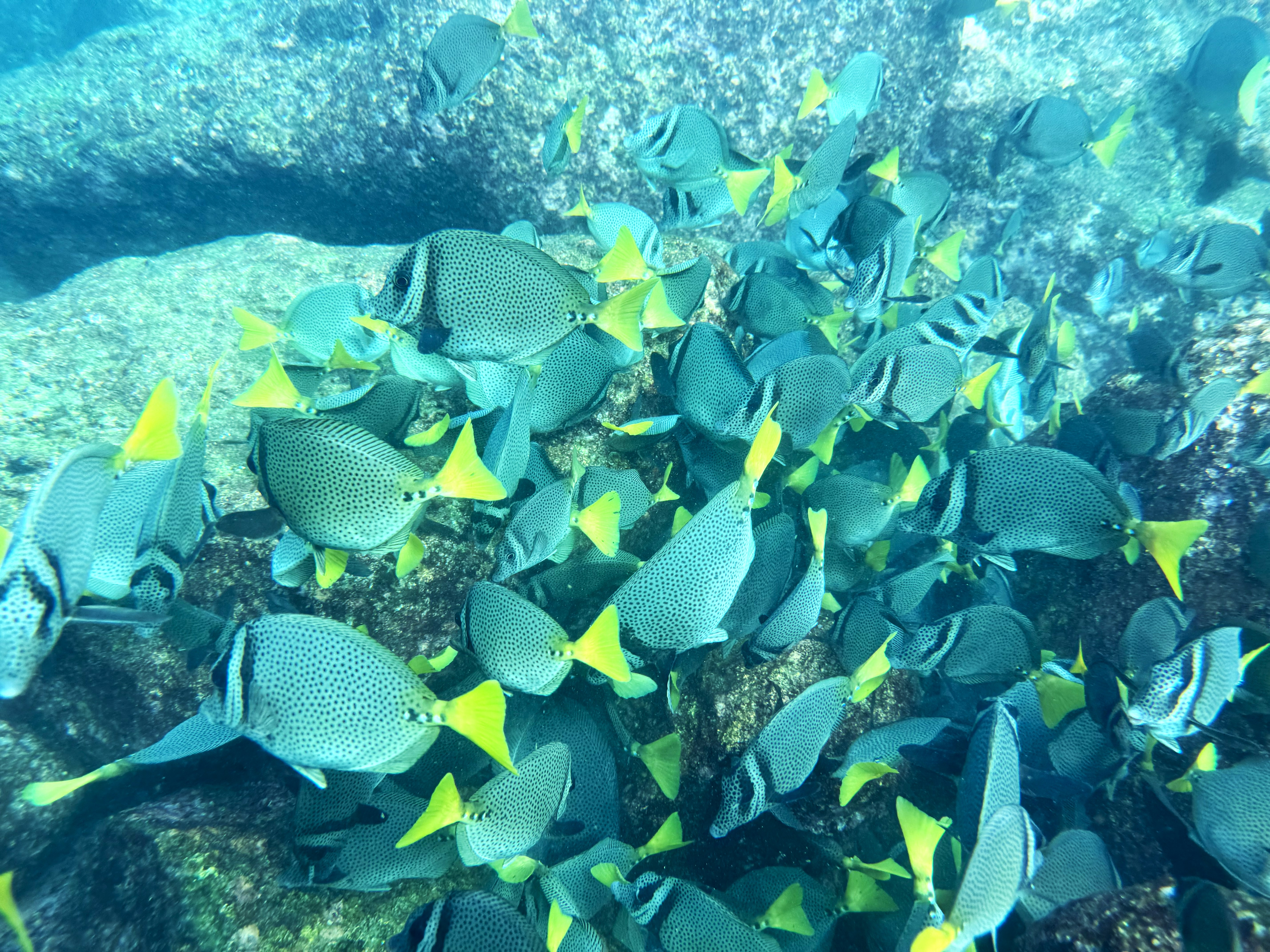
Eventually, we continued toward the rocky formations surrounding the small islet.
And there, the dive changed again.
Because of the position of the morning sun and the shape of the rocks, the underwater landscape became almost photographic.
Sunbeams penetrated the surface and illuminated sections of the reef.
Divers passing between the rocks became dark silhouettes against the bright water behind them.
Schools of fish moved through shafts of sunlight.
For anyone carrying an underwater camera, it was one of those moments when almost every direction offered another image.
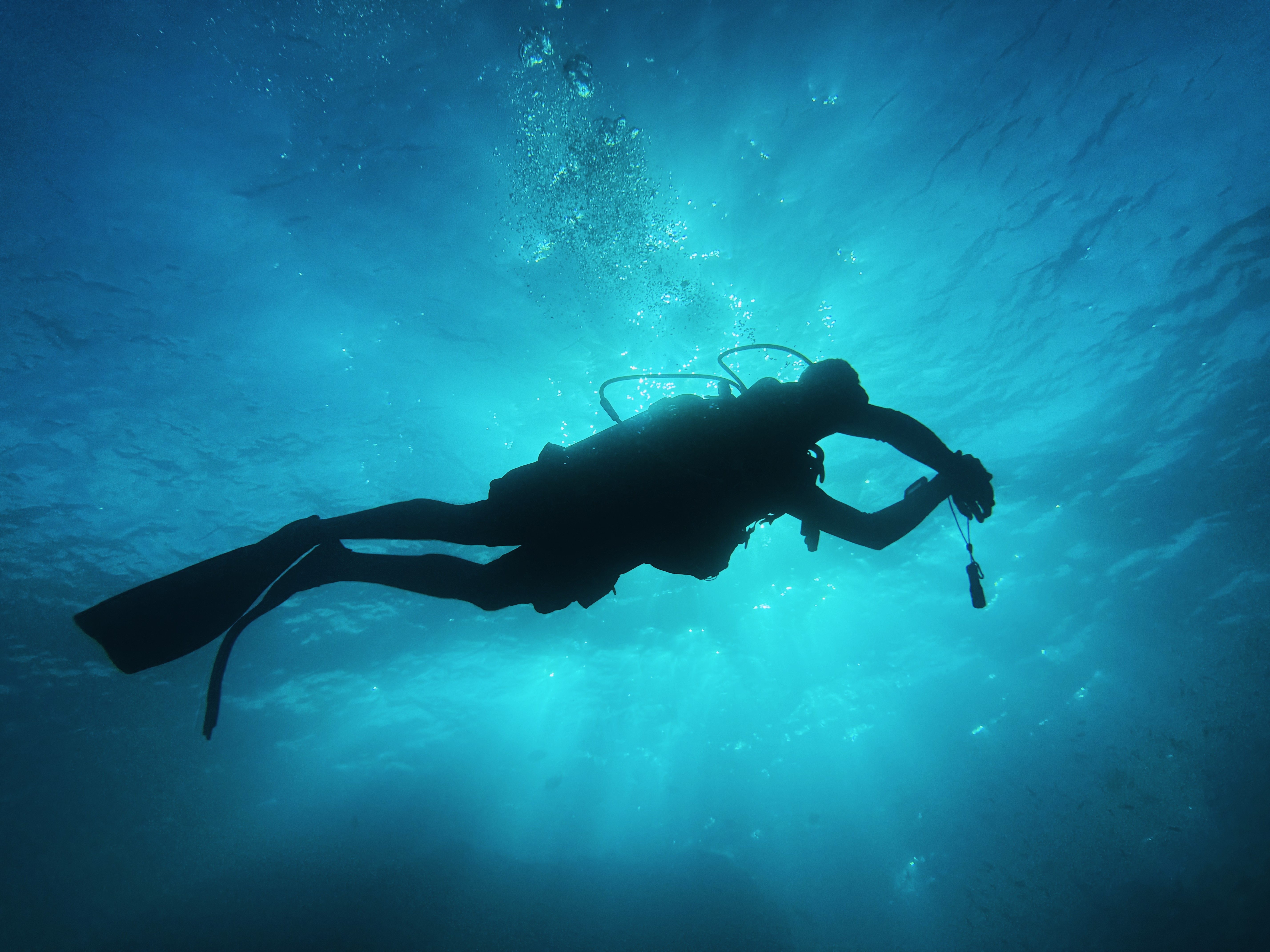
Divers. Rocks. Fish. Sunlight. Shadows.
Everything came together.
This wasn't necessarily a dive defined by one enormous animal or one dramatic event.
It was simply a really good dive.
And experienced divers know exactly what that means.
Good visibility.
Warm water.
Abundant marine life.
Interesting underwater topography.
A spectacular school of barracudas.
And enough time to slow down and appreciate all of it.
Sometimes that's all you need.
Some Very Small Visitors
Our other dives around San Francisquito continued with similarly warm conditions and plenty of marine life.
But on one of them, we encountered something a little less welcome.
Tiny jellyfish.
Very tiny jellyfish.
But apparently nobody had explained to them that their size was supposed to make them less annoying.
As we moved through the water, we began feeling the occasional sting on exposed skin.
Nothing serious.
Just enough itching and irritation to make sure we knew they were there.
It became another little story to add to the trip.
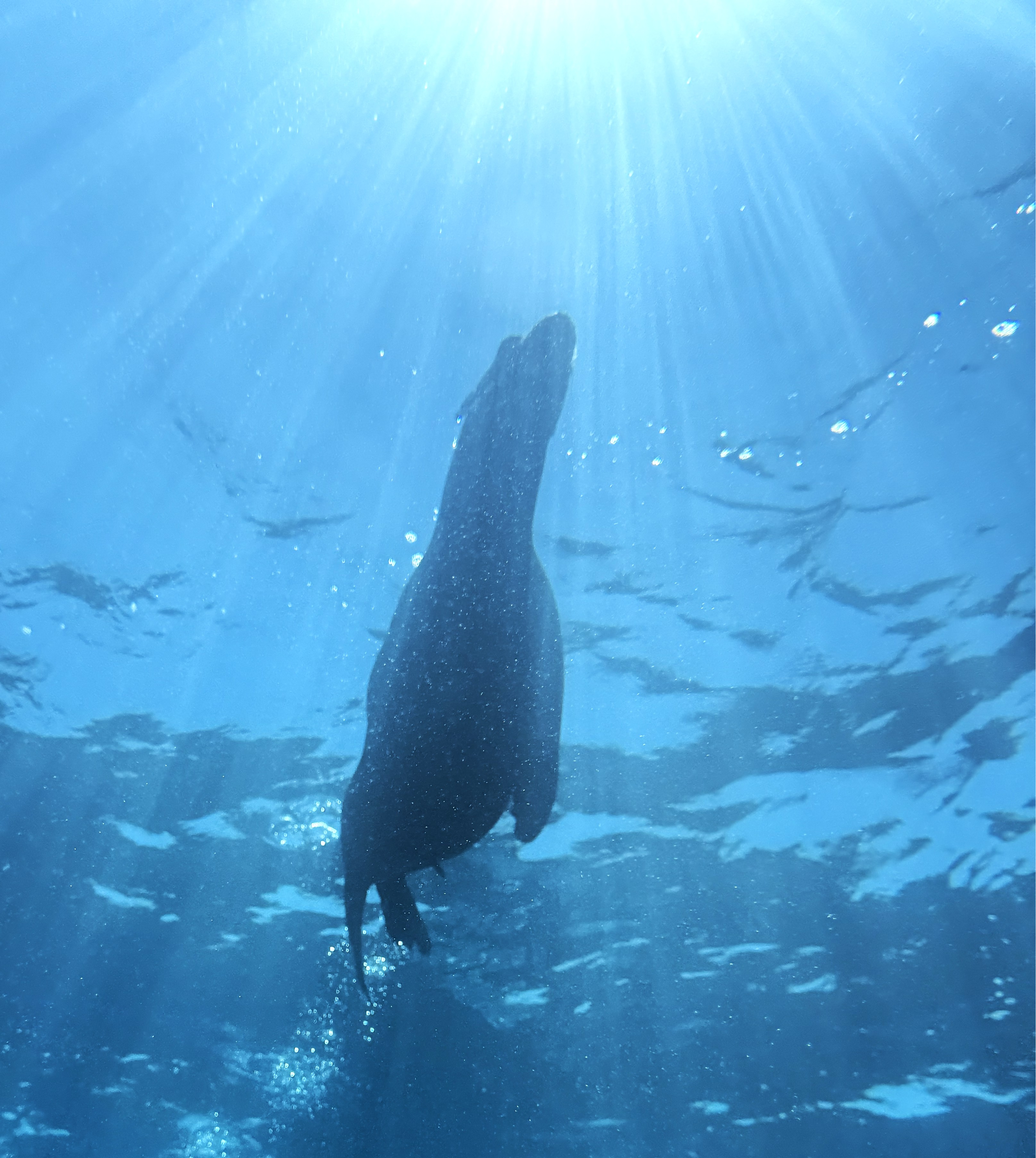
Not every memorable marine encounter needs to involve a shark, manta or sea lion.
Sometimes the smallest creatures make sure they get your attention too.
Dive. Eat. Rest. Repeat.
By this point in the expedition, we had completely surrendered to the liveaboard lifestyle.
Dive.
Come back aboard.
Eat.
Talk about the dive.
Rest.
Dive again.
Eat again.
And somehow…
dive again.
Three dives filled our daytime schedule at San Francisquito.
By the end of the third dive, we could easily have considered it another successful day in the Sea of Cortez.
But the Valentina wasn't finished with us yet.
Not even close.
Turning South
After our third dive, the crew prepared the Valentina to begin traveling south again.
We left the San Francisquito area behind and headed back toward Espíritu Santo Island.
Our destination was Ensenada Grande, where the boat would anchor for the evening.
At first, it might have seemed like just another beautiful protected bay where we would spend the night.
But there was a very specific reason we were going there.
The crew had something special planned.
Something completely different from everything we had experienced during the previous days.
A night dive.
And not just any night dive.
We were going into shallow water—less than approximately 20 feet deep—for an encounter with one of the most graceful animals in the Sea of Cortez.
Mobula rays.
Lots of them.
Underwater.
At night.
With our dive lights illuminating the darkness.
But that experience deserves more than a few paragraphs at the end of Day 5.
That dive deserves its own story.
Day 5 – Dive Log
Location: La Lobera de San Francisquito
Daytime dives: 3
Depth: approximately 50–60 ft
Water temperature: 80°F+
Good visibility
Excellent natural light
Large schools of reef fish
Hundreds of schooling barracudas
Approximately 20 minutes observing the barracuda school
Tiny jellyfish—and a few itchy reminders that they were there
Afternoon navigation south toward Espíritu Santo Island
Overnight destination: Ensenada Grande
And then, after sunset, came an experience none of us would forget.
The Mobula Night Dive.
Hundreds of miles traveled.
Days of diving.
Hammerheads that didn't appear.
Sea lions that did.
Barracudas dancing in the sunlight.
But what was about to happen after dark in Ensenada Grande would become one of the most extraordinary dives of our entire Sea of Cortez expedition.
Next: The Mobula Night Dive — Dancing with Rays in the Darkness.
