
Episode 3: Kona, Hawaii – The World-Famous Night Manta Ray Experience
Martin Gomez Aug 03, 2026
TOP DIVE DESTINATIONS IN THE USA
Episode 3: Kona, Hawaii – The World-Famous Night Manta Ray Experience
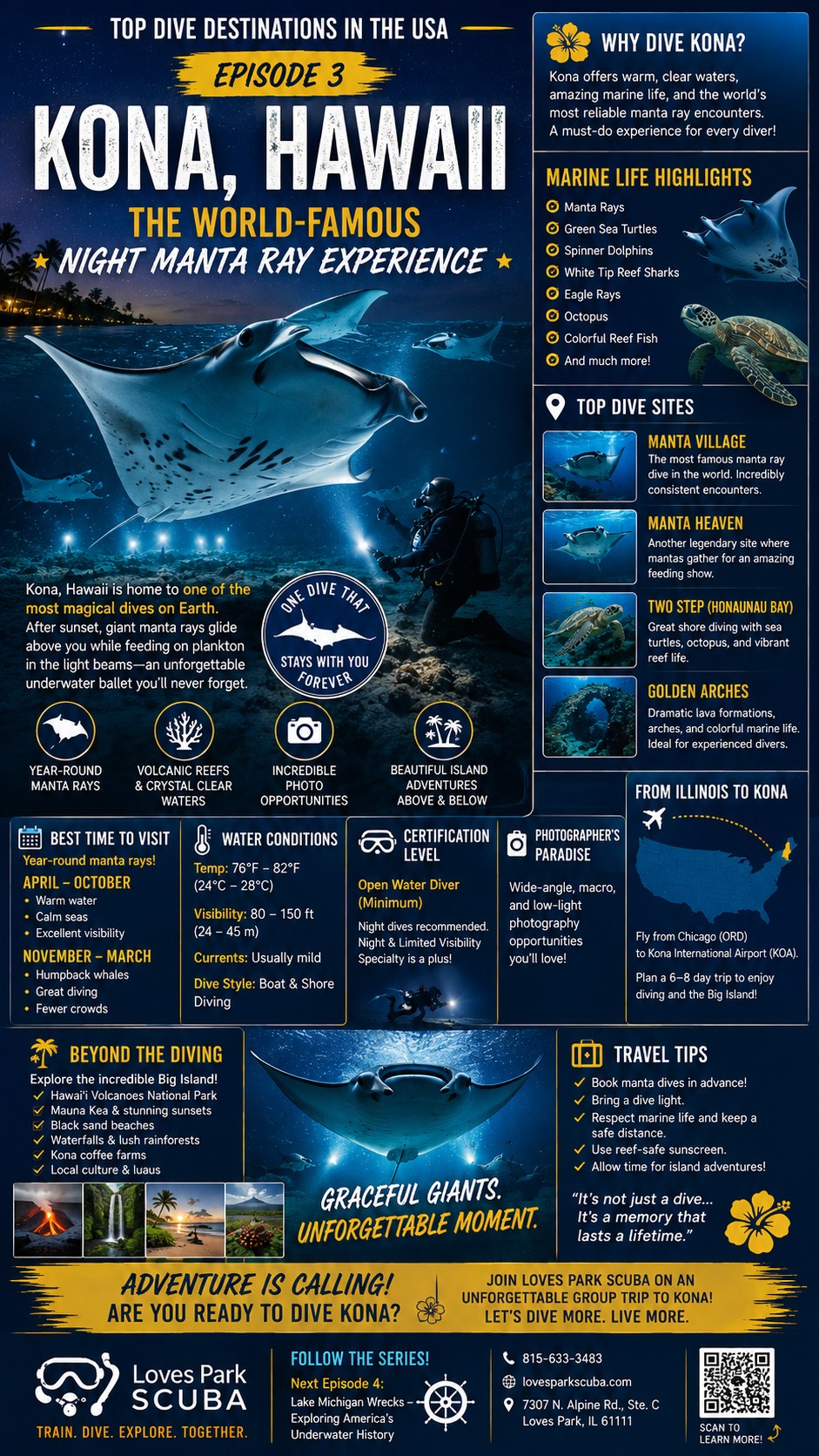
Some dive experiences are memorable. Others are life-changing.
A Night Manta Ray Dive in Kona, Hawaii, is consistently ranked among the greatest dives on Earth. Imagine descending into the warm Pacific Ocean after sunset, kneeling quietly on the sandy bottom, and watching giant manta rays gracefully glide just inches above your head as they perform an underwater ballet beneath beams of light.
It's a dive unlike any other—and one every diver should experience at least once.
Why Dive Kona?
Located on the west coast of Hawaii's Big Island, Kona is famous for its volcanic underwater landscape, exceptional visibility, and one of the world's most reliable manta ray encounters.
Unlike many destinations where manta sightings depend on luck, Kona's resident reef manta rays can be seen throughout the year, making it one of the most dependable wildlife dives anywhere in the world.
The Legendary Night Manta Dive
As darkness falls, dive boats anchor over sandy volcanic bottoms near cleaning stations.
Powerful underwater lights attract clouds of microscopic plankton—the manta rays' favorite meal.
Within minutes, giant mantas begin to arrive.
They swoop, glide, and perform effortless barrel rolls through the light beams while feeding, creating one of the most breathtaking underwater spectacles imaginable.
Many divers describe it as:
"Watching giant birds fly underwater."
Meet the Giants
The reef manta rays of Kona are gentle giants.
Size
-
Wingspan: 10–16 feet (3–5 meters)
-
Weight: Up to 1,500 pounds (680 kg)
Despite their impressive size, manta rays have no teeth, no stinger, and no venom. They feed exclusively on tiny plankton and are completely harmless to divers.
Many of Kona's resident mantas have been identified, named, and tracked by researchers for years, allowing scientists to study their behavior and movements.
More Marine Life You'll See
Kona offers much more than manta rays.
Marine Life Highlights
-
Green Sea Turtles
-
Hawaiian Green Sea Turtles (Honu)
-
Spinner Dolphins
-
White Tip Reef Sharks
-
Eagle Rays
-
Octopus
-
Frogfish
-
Moray Eels
-
Reef Triggerfish
-
Butterflyfish
-
Moorish Idols
-
Schools of Surgeonfish
-
Colorful Hawaiian Endemic Species
Every dive reveals a unique combination of volcanic reefs and abundant marine life.
Best Dive Sites
Manta Village
The world's most famous manta ray dive site.
Located just offshore from Keauhou Bay, this site offers incredibly consistent manta encounters throughout the year.
Manta Heaven
Another legendary location where multiple mantas often gather for spectacular nighttime feeding displays.
Two Step (Honaunau Bay)
Perfect for shore diving.
Known for:
-
Crystal-clear water
-
Lava rock formations
-
Sea turtles
-
Colorful reef fish
Golden Arches
A dramatic underwater lava formation featuring arches, caverns, and beautiful reef life.
Ideal for experienced divers.
Water Conditions
-
Water Temperature: 76°F–82°F (24°C–28°C)
-
Visibility: 80–150 feet (24–45 meters)
-
Current: Usually mild
-
Dive Style: Boat and Shore Diving
The calm conditions make Kona suitable for divers of many experience levels.
Best Time to Visit
One of Kona's greatest advantages is that manta rays can be seen year-round.
April – October
-
Calmer seas
-
Warm water
-
Excellent visibility
-
Fantastic snorkeling and diving conditions
November – March
-
Slightly cooler water
-
Humpback whales migrate through Hawaiian waters
-
Excellent opportunities for whale watching between dives
No matter when you visit, the manta rays are waiting.
Recommended Certification
Open Water Diver
The Night Manta Dive is accessible to certified Open Water divers who are comfortable diving at night.
For those who want to expand their skills, a Night & Limited Visibility Specialty is an excellent way to prepare for this unforgettable experience.
Travel Tips from Illinois
-
Fly from Chicago (ORD) to Kona International Airport (KOA).
-
Plan a 6–8 day trip to fully enjoy the island.
-
Combine daytime reef dives with at least one Night Manta Dive.
-
Rent a car to explore volcanoes, waterfalls, black sand beaches, and coffee plantations.
-
Book manta dives well in advance—they are among Hawaii's most popular dive experiences.
Did You Know?
Researchers estimate that over 80% of Night Manta Dives in Kona result in manta ray encounters, making it one of the most reliable wildlife dives in the world.
Many of the resident manta rays have unique spot patterns on their undersides, allowing scientists to identify each individual—just like a human fingerprint.
Beyond the Diving
The Big Island offers incredible adventures above the surface as well.
Don't miss:
-
Hawai'i Volcanoes National Park
-
Mauna Kea Summit
-
Kona Coffee Farms
-
Black Sand Beaches
-
Snorkeling with Sea Turtles
-
Sunset Sailing Cruises
-
Traditional Hawaiian Luaus
Loves Park Scuba Recommendation
Kona is more than a dive destination—it's an experience that stays with you forever.
The graceful movements of giant manta rays, the crystal-clear Pacific waters, and the island's breathtaking scenery make this one of the most magical underwater adventures on Earth.
Whether you're planning your first tropical dive vacation or adding another dream destination to your logbook, Kona deserves a place at the very top of your diving bucket list.
Coming Next...
Episode 4: Lake Michigan Wrecks – Exploring America's Underwater History
Discover why the Great Lakes are home to some of the best-preserved shipwrecks in the world and why every wreck diver should experience the incredible underwater history just a short drive from Loves Park Scuba.
