
Episode 4: The Cenotes of the Riviera Maya – Diving into Another World
Martin Gomez Aug 03, 2026
TOP DIVE DESTINATIONS IN MEXICO
Episode 4: The Cenotes of the Riviera Maya – Diving into Another World
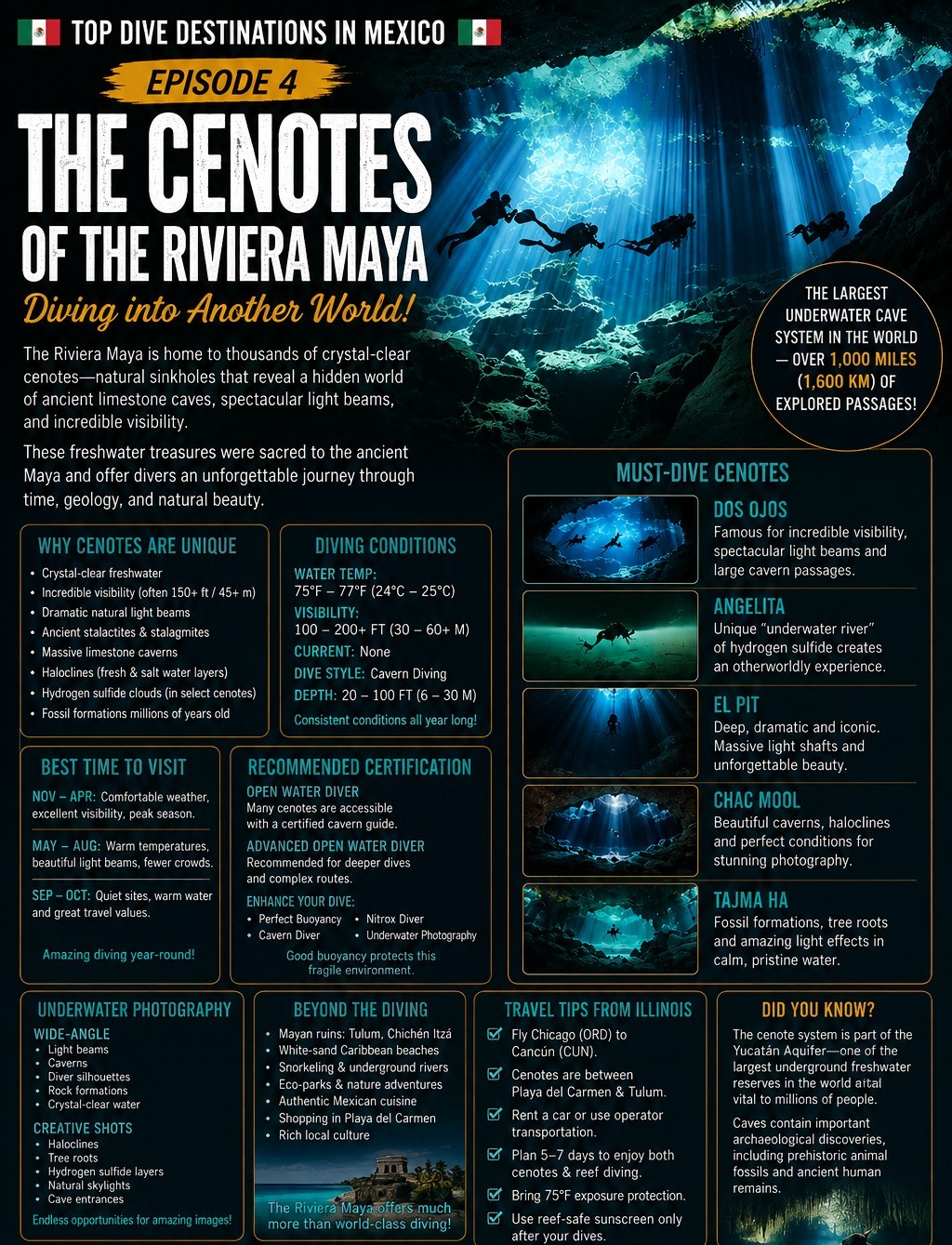
Imagine descending into crystal-clear freshwater where sunlight pierces through the ceiling, illuminating ancient limestone formations that have been hidden beneath the Yucatán Peninsula for thousands of years.
Welcome to the Cenotes of the Riviera Maya, one of the most extraordinary diving experiences on Earth.
Unlike reef or wreck diving, cenote diving offers an unforgettable journey through flooded caves, prehistoric geology, and one of the largest underground freshwater systems in the world. Every dive reveals a hidden world sculpted by nature over millions of years.
For many divers, exploring a cenote is a life-changing experience.
Why Dive the Cenotes?
The Yucatán Peninsula is home to more than 6,000 cenotes, many of which are connected by an extensive network of underwater caves stretching hundreds of miles beneath the jungle.
These crystal-clear springs are fed by freshwater from the Yucatán Aquifer and offer visibility that often exceeds 150 feet (45 meters).
The result is an underwater environment unlike anywhere else on the planet.
A Journey Through Time
The cenotes were formed when ancient limestone caves collapsed thousands of years ago, exposing the freshwater beneath.
These natural sinkholes held deep spiritual significance for the ancient Maya, who considered them sacred gateways to the underworld.
Today, divers explore these breathtaking caverns while surrounded by stalactites, stalagmites, fossilized formations, and spectacular light beams.
Every dive feels like entering another world.
What Makes Cenotes Unique?
Unlike ocean diving, cenotes offer experiences found nowhere else.
Divers encounter:
-
Crystal-clear freshwater
-
Incredible visibility
-
Dramatic light beams
-
Ancient stalactites
-
Stalagmites
-
Massive limestone caverns
-
Haloclines where fresh and salt water meet
-
Hydrogen sulfide clouds in selected cenotes
-
Fossil formations millions of years old
The silence and beauty of these underwater caverns create an unforgettable sense of peace.
Must-Dive Cenotes
Dos Ojos
One of the world's most famous cenotes.
Known for:
-
Incredible visibility
-
Spectacular light beams
-
Large cavern passages
-
Ideal for first-time cenote divers
Angelita
A truly unique dive.
Famous for:
-
Hydrogen sulfide cloud
-
"Underwater river" illusion
-
Dramatic photography
-
Advanced recreational experience
El Pit
One of the deepest and most photographed cenotes.
Highlights include:
-
Extraordinary light shafts
-
Deep blue water
-
Halocline effects
-
Massive open chamber
Chac Mool
Perfect for cavern divers.
Features:
-
Beautiful light rays
-
Haloclines
-
Large caverns
-
Excellent photography opportunities
Tajma Ha
A favorite among photographers.
Known for:
-
Fossil formations
-
Tree roots
-
Light effects
-
Calm diving conditions
Diving Conditions
The cenotes provide some of the most consistent diving conditions in the world.
Typical conditions include:
-
Water Temperature: 75°F–77°F (24°C–25°C)
-
Visibility: 100–200+ feet (30–60+ meters)
-
Current: None
-
Dive Style: Cavern Diving
-
Depth: 20–100 feet (6–30 meters)
The absence of waves and currents allows divers to focus entirely on the stunning surroundings.
Best Time to Visit
One of the greatest advantages of cenote diving is that it is spectacular year-round.
November – April
-
Comfortable weather
-
Excellent visibility
-
Peak diving season
May – August
-
Warm temperatures
-
Fewer crowds in some cenotes
-
Beautiful light beams
September – October
-
Quiet dive sites
-
Warm water
-
Great travel values
Every season offers breathtaking underwater scenery.
Recommended Certification
Open Water Diver
Many cenotes are accessible to Open Water Divers when diving with certified cavern guides.
Advanced Open Water Diver
Recommended for:
-
Deeper cenotes
-
Complex cavern routes
-
Advanced buoyancy control
Specialties that enhance your experience include:
-
Perfect Buoyancy
-
Nitrox Diver
-
Cavern Diver
-
Underwater Photography
Proper buoyancy is essential to protect the fragile cave environment.
Underwater Photography
The Riviera Maya cenotes are among the most photographed dive sites in the world.
Wide-Angle Subjects
-
Sunlight beams
-
Massive caverns
-
Limestone formations
-
Diver silhouettes
-
Crystal-clear water
Creative Photography
-
Haloclines
-
Tree roots
-
Hydrogen sulfide layers
-
Cave entrances
-
Natural skylights
Every dive presents opportunities to capture breathtaking images.
Beyond the Diving
The Riviera Maya offers countless adventures above the surface.
Visitors can enjoy:
-
Mayan archaeological sites
-
Tulum
-
Chichén Itzá
-
White-sand Caribbean beaches
-
Snorkeling
-
Underground rivers
-
Eco-parks
-
Authentic Mexican cuisine
-
Local culture
-
Shopping in Playa del Carmen
It is one of Mexico's most complete travel destinations.
Travel Tips from Illinois
-
Fly from Chicago (ORD) to Cancún International Airport (CUN).
-
Most cenotes are located between Playa del Carmen and Tulum.
-
Renting a vehicle is recommended, although many dive operators provide transportation.
-
Plan a 5–7 day trip to combine cenote and Caribbean reef diving.
-
Bring exposure protection suitable for 75°F water.
-
Use environmentally friendly sunscreen only after your dives to help protect these fragile ecosystems.
Did You Know?
The underwater cave systems of the Yucatán Peninsula form the largest flooded cave network on Earth, with more than 1,000 miles (1,600 km) of mapped passages—and explorers continue discovering new connections every year.
These caves also contain important archaeological discoveries, including prehistoric animal fossils and ancient human remains that have helped scientists better understand the earliest inhabitants of the Americas.
Loves Park Scuba Recommendation
The Cenotes of the Riviera Maya are unlike anything you'll experience in the ocean.
There are no waves.
No currents.
No colorful coral reefs.
Instead, you'll discover crystal-clear water, ancient geological formations, breathtaking beams of light, and a peaceful underwater world that feels almost surreal.
Whether you're visiting Mexico for the first time or returning for another adventure, cenote diving is an experience every diver should enjoy at least once.
Some dives take you beneath the surface...
The cenotes take you back in time.
Coming Next...
Episode 5: La Paz & Espíritu Santo – Sea Lions, Whale Sharks & Sea of Cortez Adventures
Discover playful sea lions, gentle whale sharks, pristine reefs, and the incredible biodiversity that inspired Jacques Cousteau to call the Sea of Cortez "The Aquarium of the World."
