
Episode 5: Devil's Den, Florida – Diving into a Prehistoric Underground Spring
Martin Gomez Aug 03, 2026
TOP DIVE DESTINATIONS IN THE USA
Episode 5: Devil's Den, Florida – Diving into a Prehistoric Underground Spring
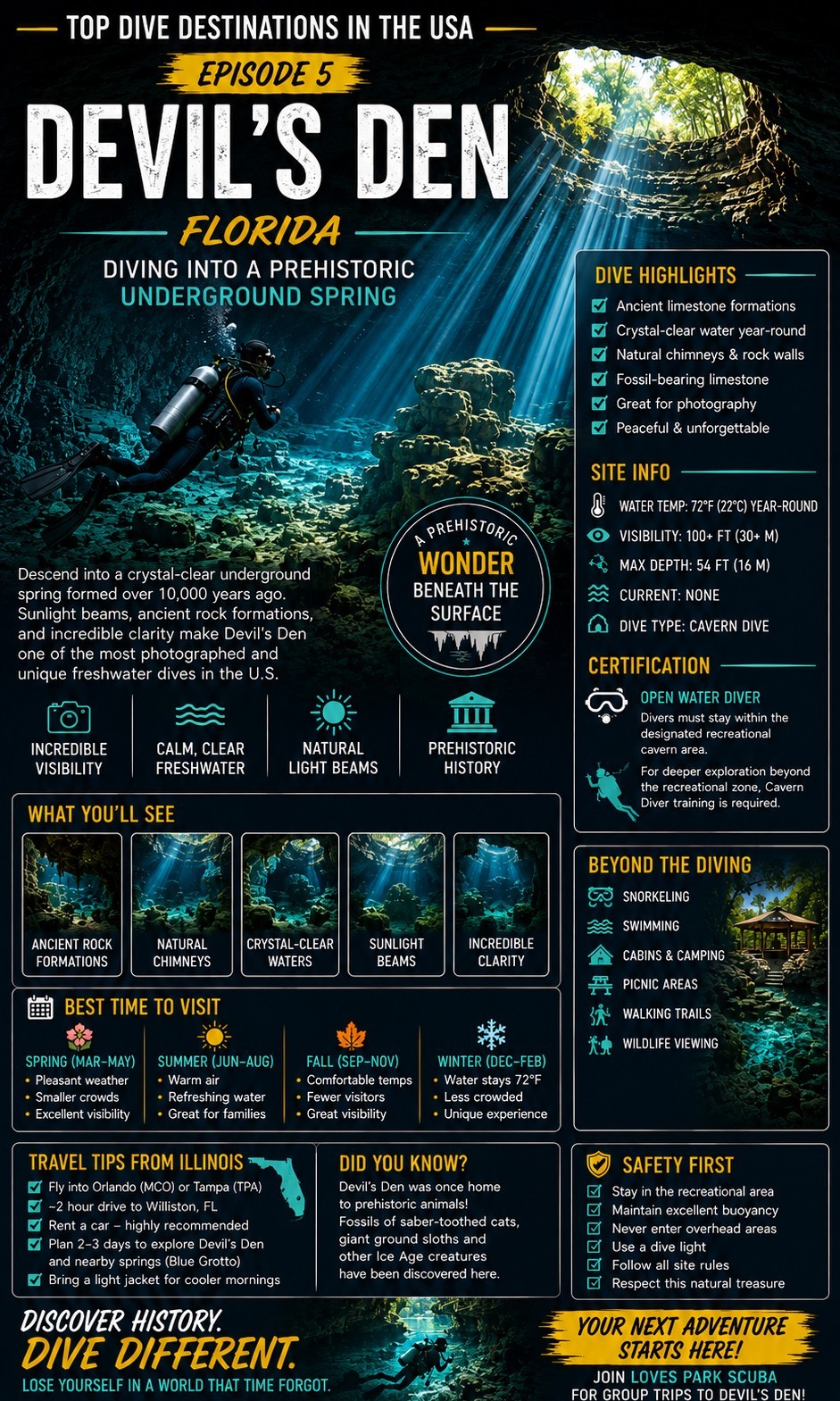
Imagine descending through a natural opening in the earth into a crystal-clear underground spring where sunlight streams through the ceiling, illuminating ancient rock formations that have existed for thousands of years.
Welcome to Devil's Den, one of the most unique freshwater dive sites in the United States and one of Florida's most photographed underwater destinations.
Unlike tropical reefs or shipwrecks, Devil's Den offers divers the rare opportunity to explore a prehistoric underground cavern filled with pristine spring water, fossil history, and breathtaking natural beauty.
Why Dive Devil's Den?
Located near Williston, Florida, Devil's Den is a privately owned prehistoric spring formed inside a collapsed underground cave estimated to be over 10,000 years old.
The name "Devil's Den" dates back to the early settlers who noticed steam rising from the opening on cool mornings, giving the appearance that smoke was coming from the earth.
Today, it has become one of America's most iconic freshwater diving destinations.
A Natural Wonder
The underground spring maintains exceptional water clarity throughout the year thanks to a constant flow of fresh groundwater.
As sunlight enters through the cave opening, beams of light create one of the most spectacular underwater scenes in North America.
For many divers, this is the closest experience to diving inside a natural cathedral.
What You'll See Underwater
Although Devil's Den is not known for large marine life, its beauty comes from its geological formations and crystal-clear water.
Highlights include:
-
Ancient limestone formations
-
Massive underwater rock walls
-
Natural chimneys
-
Cavern ceiling openings
-
Sunlight beams
-
Crystal-clear spring water
-
Fossil-bearing limestone
-
Freshwater fish
-
Turtles (occasionally)
-
Incredible underwater photography opportunities
Every dive offers a peaceful and surreal experience unlike any ocean dive.
Water Conditions
One of Devil's Den's greatest advantages is its consistency.
-
Water Temperature: 72°F (22°C) year-round
-
Visibility: Often exceeds 100 feet (30+ meters)
-
Maximum Depth: Approximately 54 feet (16 meters)
-
Current: None
-
Dive Style: Cavern Dive
The calm conditions make it an excellent destination for training, skill development, and underwater photography.
Best Time to Visit
Devil's Den can be enjoyed throughout the year.
Spring & Fall
-
Comfortable weather
-
Smaller crowds
-
Excellent visibility
Summer
-
Warm air temperatures
-
Refreshing spring water
-
Ideal for combining diving with snorkeling
Winter
-
The warm 72°F spring water feels especially comfortable compared to the cooler outside temperatures.
Recommended Certification
Open Water Diver
Certified Open Water Divers are welcome to dive Devil's Den.
Because the site is technically a cavern environment, divers must remain within the designated recreational diving area and follow all facility rules.
Divers interested in exploring beyond the recreational section should obtain specialized Cavern Diver and eventually Cave Diver training.
A Photographer's Dream
Devil's Den is considered one of the most photogenic dive sites in the United States.
The combination of:
-
Crystal-clear water
-
Dramatic light rays
-
Ancient rock formations
-
Natural skylight
-
Calm conditions
creates breathtaking images for both photographers and videographers.
Whether using a GoPro or a professional underwater camera, this is one of the easiest places to capture unforgettable underwater photos.
Beyond the Diving
The property offers much more than diving.
Visitors can enjoy:
-
Snorkeling
-
Swimming
-
Cabins
-
RV camping
-
Picnic areas
-
Walking trails
-
Wildlife viewing
It's a perfect weekend getaway for divers and non-divers alike.
Travel Tips from Illinois
-
Fly into Orlando (MCO) or Tampa (TPA).
-
Devil's Den is approximately a two-hour drive from either airport.
-
Renting a car is highly recommended.
-
Plan two to three days to explore the spring and nearby freshwater dive sites such as Blue Grotto.
-
Bring a light jacket if visiting during cooler months—the contrast between the warm spring water and cool morning air is unforgettable.
Did You Know?
Long before it became a world-famous dive site, Devil's Den served as a natural shelter for prehistoric animals.
Fossils from extinct species—including saber-toothed cats, giant ground sloths, and other Ice Age mammals—have been discovered in the cave, making it an important archaeological and paleontological site as well as a unique diving destination.
Safety First
Although Devil's Den is an easy and enjoyable dive, divers should remember:
-
Never leave the designated recreational diving area.
-
Maintain excellent buoyancy control.
-
Stay aware of overhead environments.
-
Carry a dive light for better visibility.
-
Follow all site rules and dive briefings.
-
Respect the natural formations—leave them exactly as you found them.
This is not a cave dive; it is a cavern environment designed for recreational divers.
Loves Park Scuba Recommendation
If you're looking for something completely different from ocean reefs or Great Lakes shipwrecks, Devil's Den is the perfect adventure.
It combines geology, history, crystal-clear water, and unforgettable scenery into one of the most unique freshwater dives in America.
Whether you're earning new experience, practicing buoyancy, capturing incredible underwater photographs, or simply checking another bucket-list destination off your logbook, Devil's Den is a dive you'll never forget.
Sometimes the most extraordinary underwater adventures aren't found beneath the ocean...
They're hidden beneath the earth.
Coming Next...
Episode 6: Monterey, California – Exploring the Giant Kelp Forests of the Pacific
Discover towering underwater kelp forests, playful California sea lions, giant Pacific octopuses, and one of the richest cold-water marine ecosystems in the world.
