
Episode 6: Magdalena Bay & the Northern Pacific Islands – Mexico’s Wild Pacific Frontier
Martin Gomez Aug 03, 2026
TOP DIVE DESTINATIONS IN MEXICO
Episode 6: Magdalena Bay & the Northern Pacific Islands – Mexico’s Wild Pacific Frontier
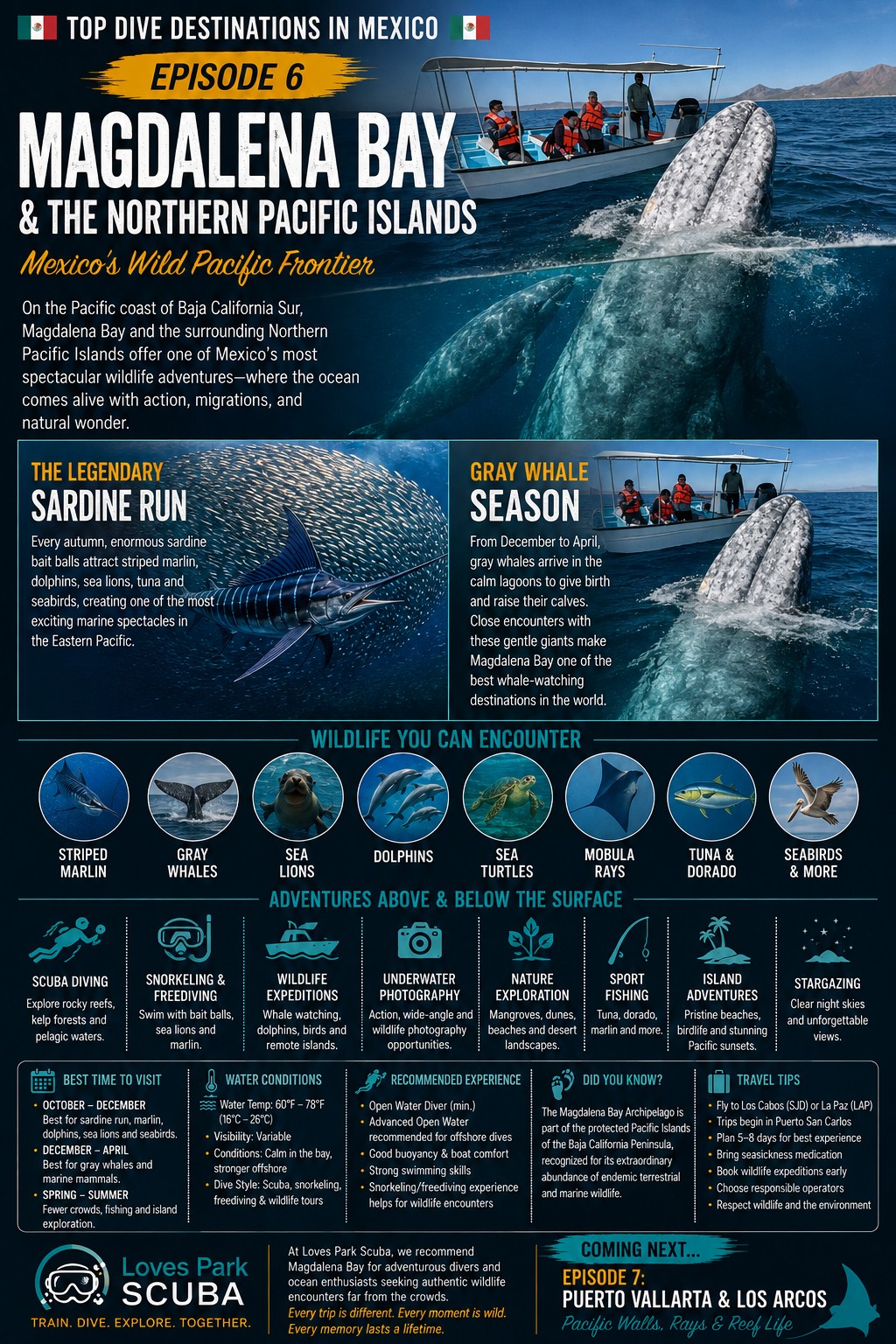
On the Pacific side of Baja California Sur lies a remote marine wilderness shaped by powerful currents, desert islands, mangrove channels, and some of the most dramatic wildlife gatherings in Mexico.
Magdalena Bay, together with Isla Magdalena, Isla Santa Margarita, and the surrounding Pacific islands, offers a completely different experience from the warm reefs of the Caribbean or the sheltered waters of the Sea of Cortez.
This is not a destination built around colorful coral gardens.
It is an expedition into the open Pacific—where sardines form enormous bait balls, striped marlin hunt at incredible speed, gray whales arrive to breed and raise their calves, and dolphins, sea lions, seabirds, and pelagic predators gather around one of Baja California Sur’s most productive marine ecosystems.
Why Explore Magdalena Bay?
Magdalena Bay is a vast coastal lagoon system on the western side of the Baja California Peninsula. The bay is approximately 50 kilometers long and is sheltered by the barrier islands of Magdalena and Santa Margarita, creating calmer interior waters alongside the powerful open Pacific. (Visit Mexico)
Mangroves, coastal dunes, channels, beaches, and offshore waters provide habitat for birds, marine mammals, fish, and many other species. Mexico’s National Commission of Natural Protected Areas identifies the Magdalena Bay Archipelago as an important area for observing marine mammals, birds, mangroves, and wintering gray whales. (CONANP)
The result is one of Mexico’s most exciting destinations for divers, snorkelers, freedivers, photographers, and wildlife enthusiasts.
The Legendary Sardine Run
One of Magdalena Bay’s greatest natural events is the seasonal gathering of sardines and other small schooling fish.
These enormous bait balls attract:
-
Striped marlin
-
Sea lions
-
Dolphins
-
Tuna
-
Dorado
-
Seabirds
-
Other open-ocean predators
Watching marlin charge through a tightly packed school of fish is one of the most exciting wildlife spectacles in the Eastern Pacific.
Most sardine-run encounters are conducted at the surface using snorkeling or freediving, rather than traditional scuba. The animals move quickly, and surface-based encounters allow participants to enter and exit the water rapidly as the bait balls change position.
Striped Marlin Encounters
Magdalena Bay has become famous for close encounters with striped marlin.
These fast, highly visual predators work individually or in groups to separate sardines from the bait ball. Divers and snorkelers may see them accelerate through the water, flash their colors, and use their long bills to stun prey.
The experience is fast-moving, unpredictable, and completely different from a traditional reef dive.
It is wildlife exploration in its purest form.
Gray Whale Season
Every winter, gray whales migrate south from Arctic feeding grounds to the protected lagoons of Baja California.
Magdalena Bay is one of the areas where they gather between approximately December and April, along with dolphins, porpoises, seals, and sea lions. (Visit Mexico)
Visitors may encounter:
-
Adult gray whales
-
Mothers with calves
-
Breaching whales
-
Spyhopping
-
Tail slaps
-
Curious whales approaching small boats
Whale interactions are conducted from licensed sightseeing boats under local wildlife regulations—not as scuba dives.
The Northern Pacific Islands
The islands along Baja California’s Pacific coast contribute significantly to Mexico’s extraordinary biodiversity and support abundant terrestrial and marine wildlife, including endemic species. (CONANP)
Around Isla Magdalena and Isla Santa Margarita, explorers may encounter:
-
Rocky reefs
-
Kelp and algae-covered habitats
-
Sea lion colonies
-
Large schools of fish
-
Rays
-
Dolphins
-
Pelagic fish
-
Seabirds
-
Dramatic underwater rock formations
The exposed Pacific side can experience waves, surge, current, and rapidly changing visibility, while the protected bay generally offers calmer surface conditions.
Marine Life Highlights
Depending on the season, visitors may encounter:
-
Striped Marlin
-
Gray Whales
-
California Sea Lions
-
Bottlenose Dolphins
-
Common Dolphins
-
Sardine Bait Balls
-
Tuna
-
Dorado
-
Sea Turtles
-
Mobula Rays
-
Stingrays
-
Groupers
-
Large Schools of Fish
-
Pelicans
-
Cormorants
-
Frigatebirds
-
Other Migratory Seabirds
This is a destination where the experience changes constantly with the movement of wildlife.
Principal Exploration Areas
Magdalena Bay
The protected bay offers mangrove channels, sandbars, calm lagoons, marine mammals, and access to the surrounding islands.
It is the principal departure point for wildlife expeditions.
Isla Magdalena
This long barrier island separates much of the bay from the open Pacific.
Highlights include:
-
Coastal dunes
-
Mangroves
-
Remote beaches
-
Birdlife
-
Marine mammal encounters
-
Access to open-Pacific wildlife areas
Isla Santa Margarita
The largest island protecting Magdalena Bay.
Its rugged Pacific coastline and offshore waters provide opportunities for:
-
Pelagic encounters
-
Rocky-reef exploration
-
Sea lion sightings
-
Photography
-
Remote expedition-style adventures
Puerto San Carlos
Puerto San Carlos is the principal gateway for excursions into Magdalena Bay and the surrounding islands. Local operators depart from this fishing community for whale watching, wildlife expeditions, and seasonal ocean encounters. (Visit Mexico)
Diving and Water Conditions
Conditions vary significantly between the protected bay and the open Pacific.
Typical conditions may include:
-
Water temperature: Approximately 60°F–78°F (16°C–26°C), depending on season
-
Visibility: Highly variable
-
Dive style: Boat diving, snorkeling, freediving, and wildlife expeditions
-
Current: Mild inside protected waters; moderate to strong offshore
-
Surface conditions: Can change quickly in the open Pacific
-
Exposure protection: A 5–7 mm wetsuit may be appropriate depending on the season
Unlike destinations with established daily reef-diving schedules, Magdalena Bay experiences are often planned around wildlife activity, weather, and ocean conditions.
Best Time to Visit
October – December
This is generally the most popular period for the sardine run and striped marlin encounters.
Possible highlights include:
-
Large bait balls
-
Striped marlin
-
Dolphins
-
Sea lions
-
Tuna
-
Seabirds
December – April
The primary season for gray whale observation.
Visitors may see:
-
Gray whale mothers and calves
-
Dolphins
-
Sea lions
-
Migratory birds
-
Calmer wildlife-viewing opportunities inside the bay
Spring and Summer
Wildlife remains present, but conditions and sightings become more variable.
This period may offer:
-
Fewer visitors
-
Fishing
-
Island exploration
-
Bird watching
-
Selected diving opportunities
Recommended Experience Level
Because many excursions take place in remote areas and open-ocean conditions, participants should be comfortable on boats and in deep water.
Recommended training and experience include:
-
Open Water Diver for suitable scuba sites
-
Advanced Open Water for offshore dives
-
Good buoyancy control
-
Boat-diving experience
-
Comfort with surface entries
-
Strong swimming skills
-
Snorkeling or freediving experience
-
Nitrox certification for repetitive scuba diving
Participants joining sardine-run expeditions should be comfortable entering the water quickly, swimming at the surface, and following the instructions of experienced guides.
Underwater Photography
Magdalena Bay is an exceptional destination for action and wildlife photography.
Wide-Angle Subjects
-
Bait balls
-
Striped marlin
-
Sea lions
-
Dolphins
-
Mobula rays
-
Divers surrounded by schooling fish
-
Rocky Pacific landscapes
Surface Photography
-
Gray whales
-
Breaching behavior
-
Seabird feeding activity
-
Desert islands
-
Mangrove channels
-
Pacific sunsets
Because encounters move rapidly, photographers should use streamlined equipment and be prepared to enter the water quickly.
Beyond the Water
The Magdalena Bay region offers much more than marine encounters.
Visitors can experience:
-
Mangrove tours
-
Whale watching
-
Bird watching
-
Desert hiking
-
Coastal dunes
-
Sport fishing
-
Island exploration
-
Local fishing communities
-
Beach camping
-
Stargazing
-
Fresh seafood
This remote region offers a quieter and more authentic side of Baja California Sur.
Travel Tips from Illinois
-
Fly from Chicago (ORD) to Los Cabos (SJD), La Paz (LAP), or another regional airport depending on the expedition.
-
Most Magdalena Bay trips begin in Puerto San Carlos.
-
Driving times can be long, so organized transportation is often the easiest option.
-
Plan a 5–8 day trip to allow for weather and wildlife movement.
-
Bring seasickness medication.
-
Pack layered clothing for cool mornings and boat rides.
-
Use a wetsuit appropriate for Pacific water temperatures.
-
Protect cameras and electronics from salt spray.
-
Book seasonal wildlife expeditions well in advance.
-
Choose operators who follow Mexican wildlife regulations and responsible interaction practices.
Did You Know?
The Magdalena Bay Archipelago forms part of the protected Pacific Islands of the Baja California Peninsula, a region recognized for its extraordinary abundance of endemic terrestrial and marine wildlife. (CONANP)
The bay’s sheltered waters, barrier islands, dunes, mangroves, and open-ocean access create an environment capable of supporting both calm-water nurseries and dramatic pelagic feeding events.
Responsible Wildlife Encounters
This ecosystem depends on responsible tourism.
Visitors should:
-
Follow the guide’s instructions.
-
Never chase or touch marine animals.
-
Maintain a respectful distance.
-
Avoid surrounding wildlife with boats or swimmers.
-
Use licensed local operators.
-
Minimize single-use plastics.
-
Never remove natural objects.
-
Respect protected islands and nesting areas.
-
Allow wildlife to control every interaction.
The goal is not simply to see wildlife.
It is to experience it without changing its natural behavior.
Loves Park Scuba Recommendation
Magdalena Bay is ideal for adventurous travelers who want something beyond conventional reef diving.
This destination combines open-ocean action, remote islands, marine conservation, photography, and some of Mexico’s most dramatic seasonal wildlife events.
One day may place you beside a wall of sardines pursued by striped marlin.
The next may bring a gray whale and her calf alongside your boat.
Every expedition is different.
Every encounter is earned.
And every moment reminds you that the Pacific still holds truly wild places.
This is not ordinary diving.
This is Baja at its wildest.
Coming Next...
Episode 7: Puerto Vallarta & Los Arcos – Pacific Walls, Rays & Reef Life
Discover dramatic underwater arches, rocky pinnacles, schools of tropical fish, eagle rays, sea turtles, and some of the most accessible Pacific diving in Mexico.
