
How to Learn Backstroke
Martin Gomez Aug 20, 2026
How to Learn Backstroke
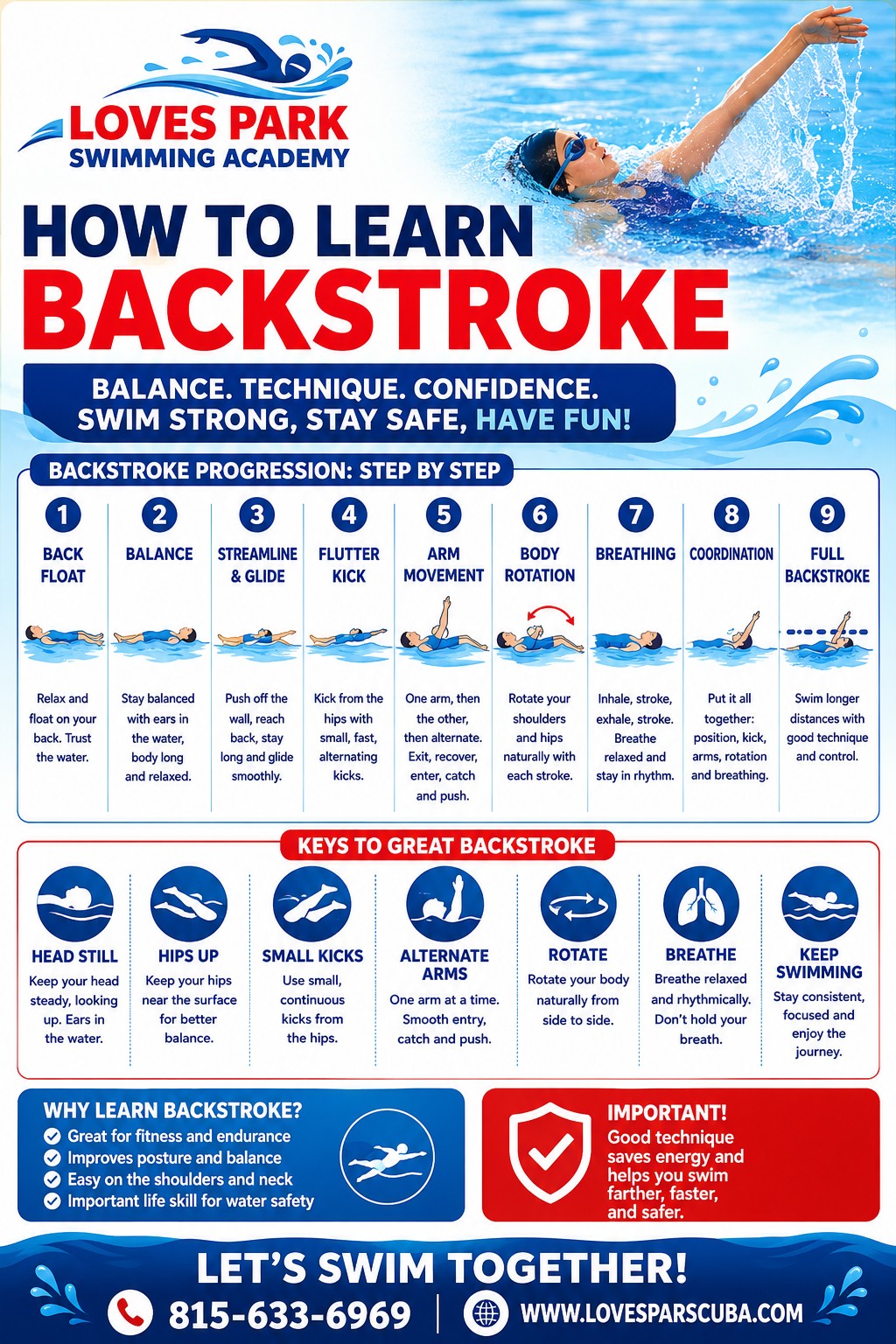
After learning freestyle, swimmers can begin developing backstroke using skills they already know: floating, streamline, flutter kick, body rotation, breathing, and coordination.
1. Body Position
Keep the body long, horizontal, relaxed, and close to the surface. The head should remain still, looking upward, with the ears near or in the water.
Avoid lifting the head too much because this can cause the hips and legs to sink.
Head Still → Hips Up → Body Long
2. Back Float & Balance
Before swimming, become comfortable floating on the back.
Back Float → Relax → Balance → Recover
The goal is to trust the water and maintain balance without unnecessary movement.
3. Back Streamline & Glide
Next, learn to move through the water while maintaining good alignment:
Push → Back Streamline → Glide
This teaches swimmers to maintain a long, efficient body position.
4. Flutter Kick
The backstroke kick is similar to freestyle: small, alternating, and continuous, with the movement coming mainly from the hips.
Keep the legs relaxed and avoid excessive bending of the knees.
Back Float → Small Kicks → Continuous Kick
5. Arm Movement
Introduce the arms gradually:
One Arm → Other Arm → Alternating Arms
A simple way to understand the arm cycle is:
Exit → Recover → Enter → Catch → Push
The arms work continuously and alternately to create propulsion.
6. Body Rotation
Backstroke should not be completely flat. The shoulders and hips rotate naturally from side to side with each arm stroke.
Arm Stroke + Shoulder Rotation + Hip Rotation
Good rotation creates a smoother and more efficient stroke.
7. Breathing
Because the face remains above the water, breathing is easier, but swimmers should still develop a relaxed and consistent rhythm.
Inhale → Stroke → Exhale → Stroke
Avoid holding your breath unnecessarily.
8. Coordination
Now combine all the skills:
Body Position + Kick + Arms + Rotation + Breathing
Start with short distances and focus on control and technique before increasing speed.
9. Direction & Awareness
Because backstroke swimmers cannot easily see where they are going, they need to develop spatial awareness.
Learn to use lane lines, ceiling markers when available, and other safe visual references to maintain direction and recognize when you are approaching the wall.
Backstroke Learning Progression
BACK FLOAT → BALANCE → BACK STREAMLINE → GLIDE → FLUTTER KICK → ONE ARM → ALTERNATING ARMS → BODY ROTATION → BREATHING → COORDINATION → FULL BACKSTROKE
Easy Way to Remember
HEAD STILL → HIPS UP → SMALL KICKS → ALTERNATE ARMS → ROTATE → BREATHE → KEEP SWIMMING
The goal at the beginning is not speed. First develop balance, body position, coordination, and control. Then gradually build distance, endurance, and speed.
