
Learning How to Float in the Water
Martin Gomez Aug 20, 2026
Learning How to Float in the Water
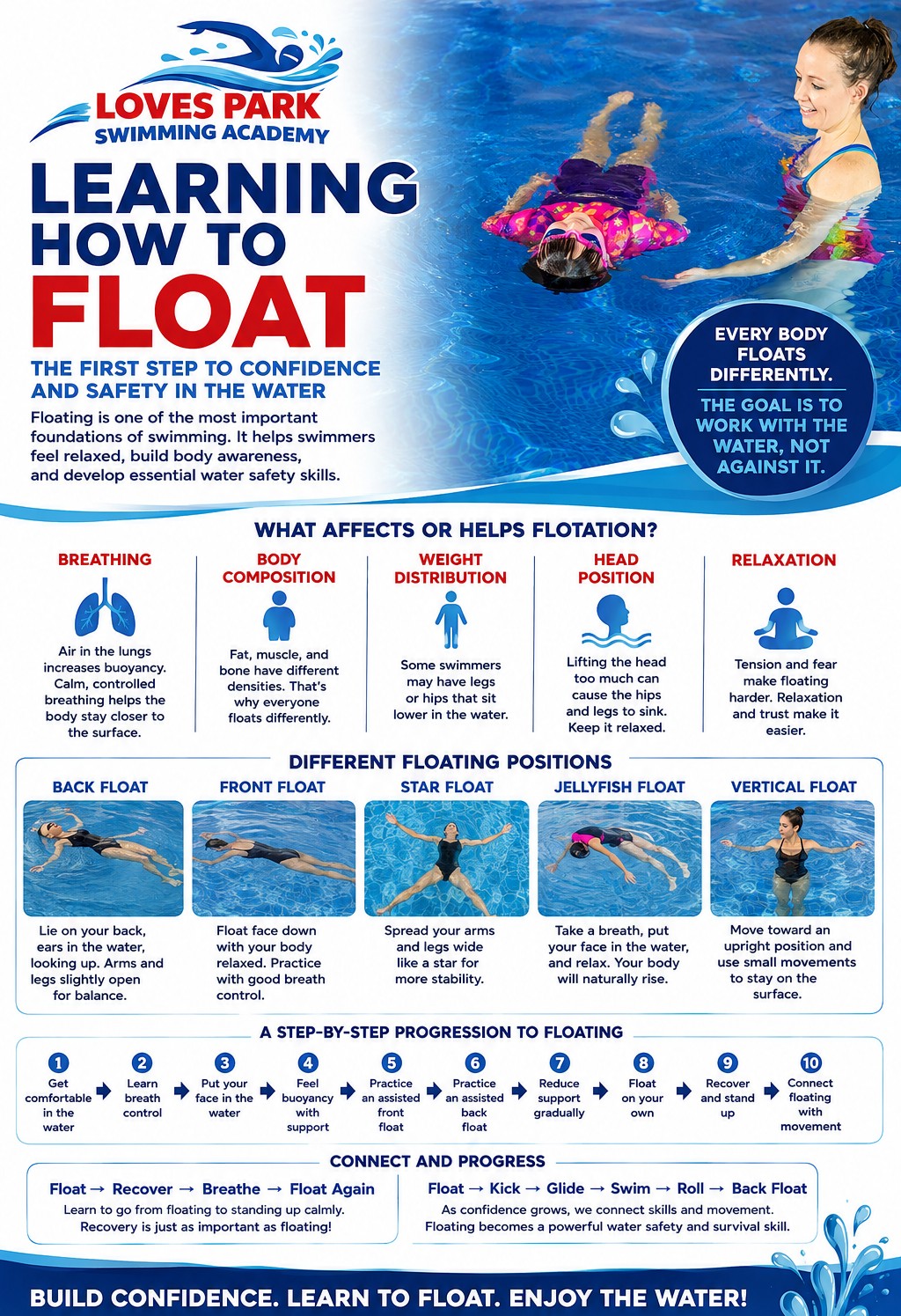
Learning to float is one of the most important foundations of swimming. Before focusing on kicking, strokes, or speed, swimmers need to understand that the water can support their body and learn how to work with the water instead of fighting against it.
What Affects or Helps Flotation?
Several factors influence how a person floats:
-
Breathing: Air in the lungs increases buoyancy. Calm, controlled breathing can help the body stay closer to the surface.
-
Body composition: Fat, muscle, and bone have different densities. This is why two people of similar height and weight may float differently.
-
Weight distribution: Some swimmers may have legs or hips that naturally sit lower in the water.
-
Head position: Lifting the head too much can cause the hips and legs to sink. A relaxed, neutral head position usually improves balance.
-
Relaxation: Fear and muscle tension can make floating more difficult. Relaxation and breathing control are essential.
Different Bodies Float Differently
Not everyone will float in exactly the same position.
Some swimmers naturally float almost horizontally, while others may have their legs or hips slightly lower in the water. Some people need to spread their arms and legs wider to find stability.
This does not mean that someone cannot float. It means they need to discover how their individual body balances in the water.
Swimmers can experiment with arm position, leg position, head position, breathing, and relaxation to find their natural balance.
Different Floating Positions
Back Float
The swimmer lies on their back with the ears in the water and eyes looking upward. The arms and legs can be slightly spread for stability.
Front Float
The swimmer floats face down with the body relaxed. This position should be practiced together with breath control and learning how to comfortably put the face in the water.
Star Float
The arms and legs are spread out like a star. This creates a wider position and can help beginners develop balance and confidence.
Jellyfish Float
The swimmer takes a breath, places their face in the water, relaxes, and allows the arms and legs to hang naturally. This is a great way to experience the body's natural buoyancy.
Vertical Float / Treading Water Preparation
As swimmers progress, they can explore a more vertical position and begin using small movements of the arms and legs to stay at the surface. This prepares them for treading water.
A Step-by-Step Floating Progression
A good progression is:
1. Become comfortable in the water
↓
2. Learn breath control
↓
3. Practice putting the face in the water
↓
4. Experience buoyancy with support
↓
5. Practice an assisted front float
↓
6. Practice an assisted back float
↓
7. Gradually reduce assistance
↓
8. Float independently
↓
9. Learn to recover from a float and stand up
↓
10. Connect floating with movement and swimming
Learning how to recover is just as important as learning how to float. Swimmers should know how to calmly move from a floating position back to a vertical position.
As confidence develops, we can connect the skills:
Float → Recover → Breathe → Float Again
Then progress to:
Float → Kick → Glide → Swim → Roll → Back Float
At this point, floating becomes more than an exercise. It becomes an important water safety and survival skill.
Remember
Every body floats differently. The goal is not to fight the water, but to understand how your body works with it.
Instead of saying:
“I can't float.”
We want our students to think:
“I haven't learned how my body floats yet.”
