
LEARNING TO SWIM IS A LIFELONG SKILL
Martin Gomez Aug 20, 2026
LEARNING TO SWIM IS A LIFELONG SKILL
Learning to swim is much more than learning a sport. It is an important life skill that promotes safety, health, confidence, and independence at every age. Swimming lessons provide physical, physiological, emotional, and social benefits that can last a lifetime.
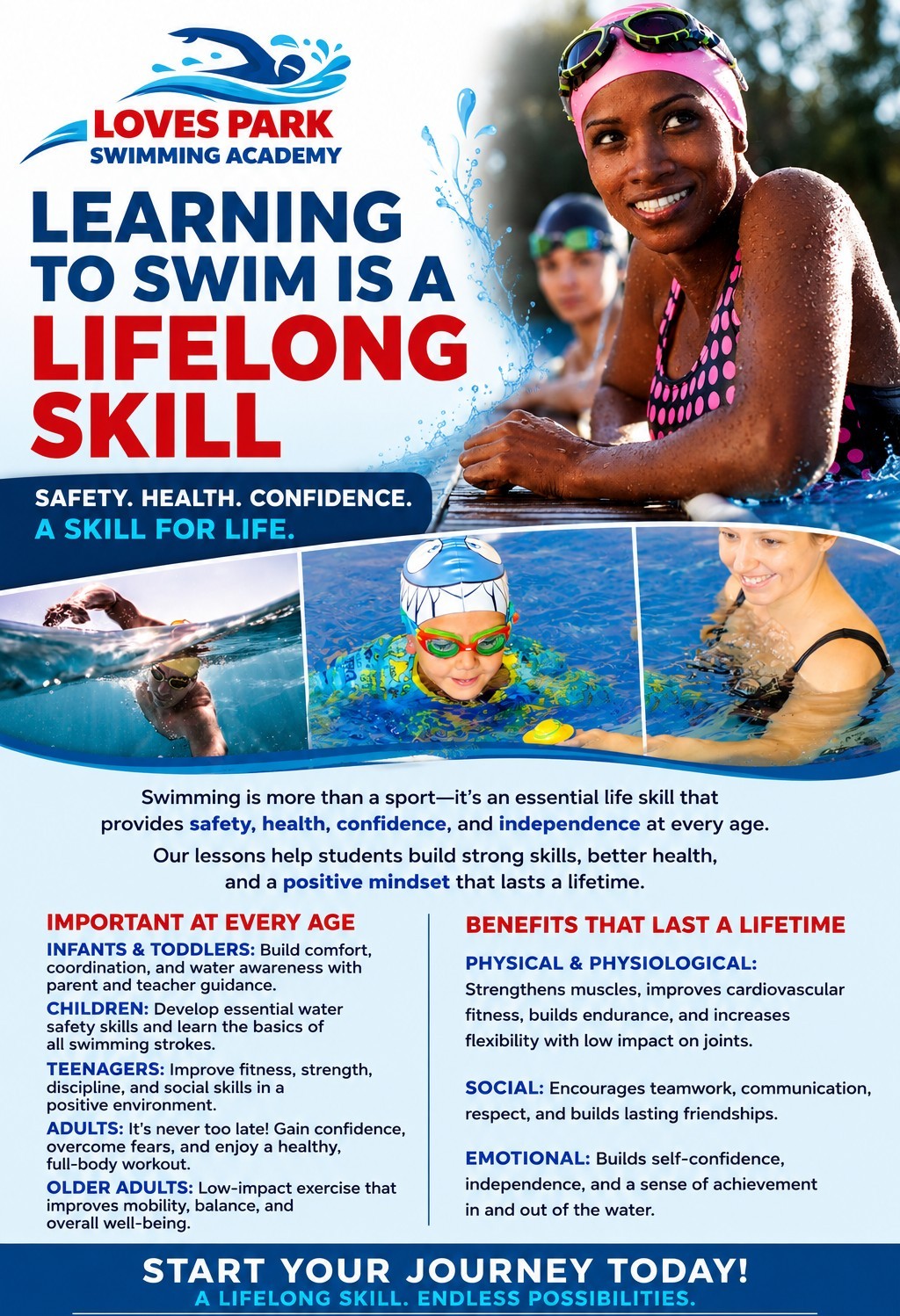
The Importance of Swimming at Every Age
Infants and Toddlers
At this stage, the main goal is not to turn a young child into an independent swimmer, but to help them become comfortable and confident in the water. Swimming lessons can support coordination, body awareness, and familiarity with the aquatic environment. Constant and responsible adult supervision around water remains essential.
Children
Childhood is an excellent time to develop strong swimming skills. Children can learn breathing techniques, floating, kicking, coordination, water safety, and the basic swimming strokes. Learning to swim also gives children an important safety skill they can carry with them throughout their lives.
Teenagers
For teenagers, swimming is both an important life skill and an excellent form of physical activity. It can improve endurance, strength, coordination, and cardiovascular fitness. Swimming lessons and swim programs can also encourage discipline, confidence, teamwork, and positive social interaction.
Adults
It is never too late to learn how to swim. For adults, swimming can provide greater confidence and independence when enjoying pools, beaches, lakes, vacations, and other water activities. It is also an excellent form of exercise and can help adults overcome fear or previous negative experiences with water.
Older Adults
Swimming and aquatic exercise can be especially beneficial for older adults because water reduces the impact and stress placed on the joints. Aquatic activities can help maintain mobility, strength, balance, flexibility, and endurance while providing an enjoyable way to remain physically and socially active.
Physical and Physiological Benefits
Swimming engages many of the body's major muscle groups. It helps strengthen the arms, legs, back, and core while improving coordination, flexibility, and endurance.
Regular swimming can also support cardiovascular and respiratory fitness, increase physical stamina, and contribute to overall health and well-being. Because the water supports the body, swimming provides an effective workout with less impact on the joints than many land-based activities.
Social and Emotional Benefits
Swimming lessons are also an opportunity to learn, interact, and build relationships. Children learn to follow instructions, take turns, respect rules, communicate, and interact with instructors and classmates.
For teenagers, adults, and older adults, swimming can create opportunities to meet people, participate in group activities, and develop a sense of community.
There is also an important emotional benefit. Learning a new skill and seeing personal progress can create a strong sense of accomplishment. Moving from being afraid or uncomfortable in the water to floating, swimming, and feeling confident can significantly increase self-confidence and independence.
Safety, Health, and Confidence
Swimming can be summarized through three important pillars:
SAFETY — HEALTH — CONFIDENCE
Learning to swim should not be viewed only as learning a sport. It means developing water awareness, building confidence, improving physical health, and gaining a skill that can be valuable at every stage of life.
Learning to swim is a lifelong skill.
