
MADEIRA, PORTUGAL: VOLCANIC REEFS & GIANT GROUPERS! Top 10 Iconic Scuba Diving Destinations in the Atlantic Ocean — Episode 5
Martin Gomez Oct 29, 2026
MADEIRA, PORTUGAL: VOLCANIC REEFS & GIANT GROUPERS!
Top 10 Iconic Scuba Diving Destinations in the Atlantic Ocean — Episode 5
Discover Spectacular Volcanic Reefs, Protected Marine Reserves, Giant Groupers, and the Extraordinary Underwater Beauty of Portugal's Atlantic Island!
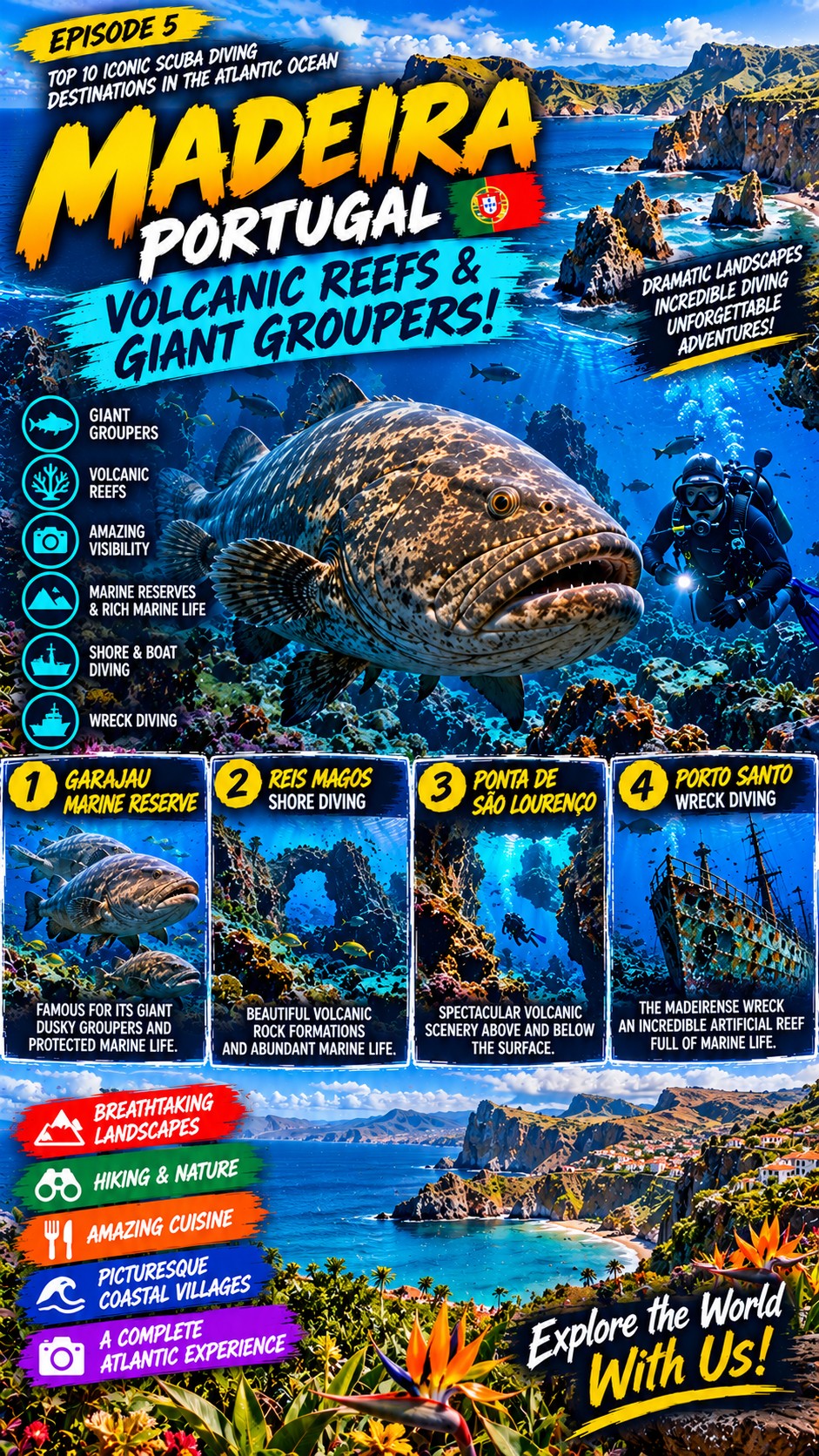
Welcome to Madeira: Where Volcanic Mountains Meet the Atlantic Ocean!
Imagine descending into the deep blue waters of the Atlantic Ocean beside a spectacular volcanic island.
Below the surface, enormous rock formations create underwater cliffs, caves, arches, and fascinating marine habitats.
Schools of colorful fish swim among the rocks.
A stingray glides across the sandy bottom.
Suddenly, a massive grouper emerges from the shadows and slowly approaches, seemingly curious about its underwater visitors.
Above the surface, dramatic mountains rise from the ocean, surrounded by lush green forests, picturesque villages, and breathtaking coastal landscapes.
Welcome to Madeira, Portugal, one of the Atlantic Ocean's most fascinating diving destinations!
Located approximately 1,000 kilometers southwest of mainland Portugal, Madeira is a volcanic island known for its extraordinary natural beauty, rich marine ecosystems, and excellent opportunities for recreational scuba diving.
At Loves Park Scuba, we're excited to introduce Madeira as the fifth destination in our series exploring the Top 10 Iconic Scuba Diving Destinations in the Atlantic Ocean.
1. What Makes Madeira So Special?
Madeira's volcanic origins have created a distinctive underwater landscape.
Unlike tropical destinations dominated by extensive coral reefs, Madeira features rocky reefs, submerged cliffs, caves, arches, and dramatic underwater formations.
Its location in the Atlantic Ocean also supports an interesting mixture of marine species.
Divers can enjoy:
-
Spectacular volcanic underwater landscapes.
-
Encounters with large dusky groupers.
-
Protected marine reserves.
-
Rocky reefs filled with Atlantic marine life.
-
Interesting caves, arches, and underwater formations.
-
Excellent underwater photography opportunities.
-
Shore diving and boat diving.
-
Beautiful coastal scenery and outdoor adventures.
Madeira offers an extraordinary combination of volcanic geology, marine biodiversity, and unforgettable Atlantic diving experiences!
2. Garajau Marine Reserve: The Home of the Giant Groupers
One of Madeira's most famous diving attractions is the Garajau Partial Nature Reserve, located along the island's southeastern coast.
Established in 1986, the reserve protects an important marine environment and is internationally recognized among divers for its impressive dusky groupers.
Meet the Dusky Grouper
The dusky grouper (Epinephelus marginatus) is a large, powerful reef fish that inhabits rocky environments throughout parts of the Atlantic Ocean and Mediterranean Sea.
These fish can grow to more than one meter in length and weigh many kilograms.
Some individuals living within protected areas become accustomed to the presence of divers.
Their impressive size, distinctive coloration, and calm movements make them extraordinary underwater photography subjects.
Why Is Garajau So Special?
The reserve provides important protection for marine habitats and fish populations.
Divers may encounter:
-
Large dusky groupers.
-
Schools of seabream.
-
Barracuda.
-
Moray eels.
-
Rays.
-
Colorful rocky-reef fish.
-
Fascinating volcanic formations.
Encountering a massive grouper in the clear Atlantic waters of Garajau is one of Madeira's most unforgettable diving experiences!
As always, encounters with wildlife are never guaranteed. Divers should maintain respectful distances and never touch or feed marine animals.
3. Top Dive Sites in Madeira
Garajau — The Famous Grouper Encounter
Garajau is one of Madeira's signature diving locations.
Its protected rocky reefs offer opportunities to observe large dusky groupers and other Atlantic marine species.
Highlights: Giant groupers, marine conservation, rocky reefs, and underwater photography.
Reis Magos — Beautiful Shore Diving
Located near Caniço, Reis Magos is a popular shore-diving area.
Its rocky seabed, marine life, and accessible coastal setting make it attractive for a variety of recreational diving experiences.
Highlights: Shore diving, rocky reefs, fish life, and underwater photography.
Ponta de São Lourenço — Dramatic Volcanic Scenery
Madeira's eastern peninsula is famous for its spectacular volcanic coastline.
Diving in the surrounding region can reveal rocky formations and interesting marine habitats.
Conditions and access vary by location, and some sites require boat access or more experience.
Highlights: Volcanic geology, dramatic underwater scenery, and Atlantic marine life.
Porto Santo — Sandy Bottoms and Wreck Diving
Porto Santo is a neighboring island within the Madeira archipelago.
It offers beautiful beaches and additional diving opportunities.
One of its most notable wrecks is the Madeirense, a former ferry intentionally sunk to create an artificial reef.
Highlights: Shipwreck diving, artificial reefs, fish schools, and island scenery.
T-Reef — An Underwater Rock Formation
T-Reef, near Madeira's southeastern coast, is known for its submerged rocky structures and interesting underwater topography.
Depending on the conditions, divers may encounter schools of fish and other marine life around the formations.
Highlights: Rocky formations, marine life, and underwater exploration.
Important: Dive-site depths, access, current conditions, and certification requirements should always be confirmed with an authorized local dive operator.
4. Marine Life: What Can You Encounter?
Madeira's underwater ecosystems support an impressive variety of Atlantic marine species.
Dusky Groupers
Among the island's most iconic underwater residents, particularly within protected marine environments.
Barracuda
Schools of barracuda may be observed in open water near rocky reefs.
Moray Eels
Moray eels often shelter among rocks and crevices.
Stingrays
Different ray species may be encountered over sandy bottoms and around rocky habitats.
Seabream
These fish are commonly found around Madeira's reefs.
Octopuses
Octopuses inhabit rocky environments and can be fascinating subjects for patient underwater photographers.
Mediterranean Parrotfish
These colorful fish may be observed around shallow rocky reefs.
Other Pelagic Visitors
Depending on location and season, divers may occasionally encounter larger open-water species.
Madeira's combination of rocky habitats and Atlantic waters creates an underwater environment full of surprises!
5. Volcanic Reefs: Diving Through Madeira's Geological History
Madeira was formed through volcanic activity over millions of years.
Today, that geological history is visible both above and below the ocean's surface.
Underwater, volcanic rock formations create:
-
Steep walls.
-
Rocky pinnacles.
-
Underwater arches.
-
Crevices and overhangs.
-
Caves and sheltered areas.
-
Interesting habitats for fish and invertebrates.
These structures make Madeira especially attractive for underwater photography and geological exploration.
However, divers should never enter overhead environments without the appropriate specialized training, equipment, and dive plan.
Exploring Madeira's volcanic reefs is like discovering the geological history of an Atlantic island beneath the waves!
6. When Is the Best Time to Dive Madeira?
Scuba diving is possible throughout much of the year, although conditions vary with seasonal weather and Atlantic swell.
| Season | General Diving Conditions |
|---|---|
| December – February | Cooler water and potentially rougher seas |
| March – May | Improving conditions at selected sites |
| June – August | Warmer water and popular summer diving |
| September – October | Often attractive water temperatures and diving conditions |
| November | Cooling conditions and variable Atlantic weather |
Typical water temperatures range from approximately 64°F to 77°F (18–25°C), depending on the season and depth.
Visibility commonly ranges from approximately 30 to 100 feet (10–30 meters), although it can be lower or higher depending on local conditions.
For many recreational divers, June through October offers an attractive balance of water temperature and diving opportunities.
However, ocean conditions can change quickly, and the best dive sites depend on wind, swell, and local conditions.
7. Is Madeira Suitable for Beginner Divers?
Madeira offers diving experiences for different certification and experience levels.
Some sheltered shore-diving sites are suitable for beginners under appropriate supervision.
Other locations feature deeper profiles, stronger currents, or more challenging underwater terrain.
At Loves Park Scuba, we recommend considering:
Open Water Diver
Develop the essential knowledge and skills for recreational scuba diving.
Advanced Adventure / Advanced Open Water
Gain experience in different underwater environments and deeper recreational dives.
Deep Diving
Learn appropriate planning and procedures for deeper recreational profiles.
Enriched Air Nitrox
Understand enriched-air dive planning and oxygen exposure limits.
Perfect Buoyancy
Improve underwater control around rocky reefs and sensitive marine habitats.
Underwater Photography
Capture extraordinary images of groupers, rays, and volcanic formations.
Wreck Diving
Develop skills for responsible wreck exploration, particularly when planning dives around Porto Santo.
Proper training, experience, and dive planning help make Madeira's underwater adventures both enjoyable and safe.
8. Marine Conservation: Protecting Madeira's Underwater Treasures
Marine conservation plays an important role in protecting Madeira's underwater ecosystems.
Protected areas such as Garajau help preserve important habitats and marine species.
Responsible divers should:
-
Never touch or feed groupers.
-
Maintain excellent buoyancy.
-
Avoid disturbing marine organisms.
-
Respect marine reserve regulations.
-
Never collect underwater animals or artifacts.
-
Secure equipment to prevent reef contact.
-
Follow the instructions of authorized dive operators.
-
Support responsible marine conservation efforts.
Protecting Madeira's marine ecosystems helps preserve these extraordinary diving experiences for future generations.
9. Beyond Diving: Discover the Beauty of Madeira
Madeira is famous for its dramatic landscapes and outdoor activities.
Funchal
The island's capital offers beautiful waterfront areas, historic architecture, restaurants, and local culture.
Cabo Girão
One of Madeira's most famous coastal viewpoints, featuring spectacular cliffs and ocean scenery.
Pico do Arieiro
A dramatic mountain viewpoint offering breathtaking landscapes above the clouds.
Ponta de São Lourenço
A spectacular peninsula known for volcanic scenery and beautiful coastal hiking trails.
Laurisilva Forest
A UNESCO World Heritage Site featuring ancient subtropical forest ecosystems.
Porto Moniz Natural Pools
Beautiful natural swimming pools formed within volcanic coastal rock.
Traditional Madeiran Cuisine
Enjoy local seafood, traditional dishes, and the island's famous hospitality.
Madeira combines excellent diving with some of Europe's most spectacular island scenery.
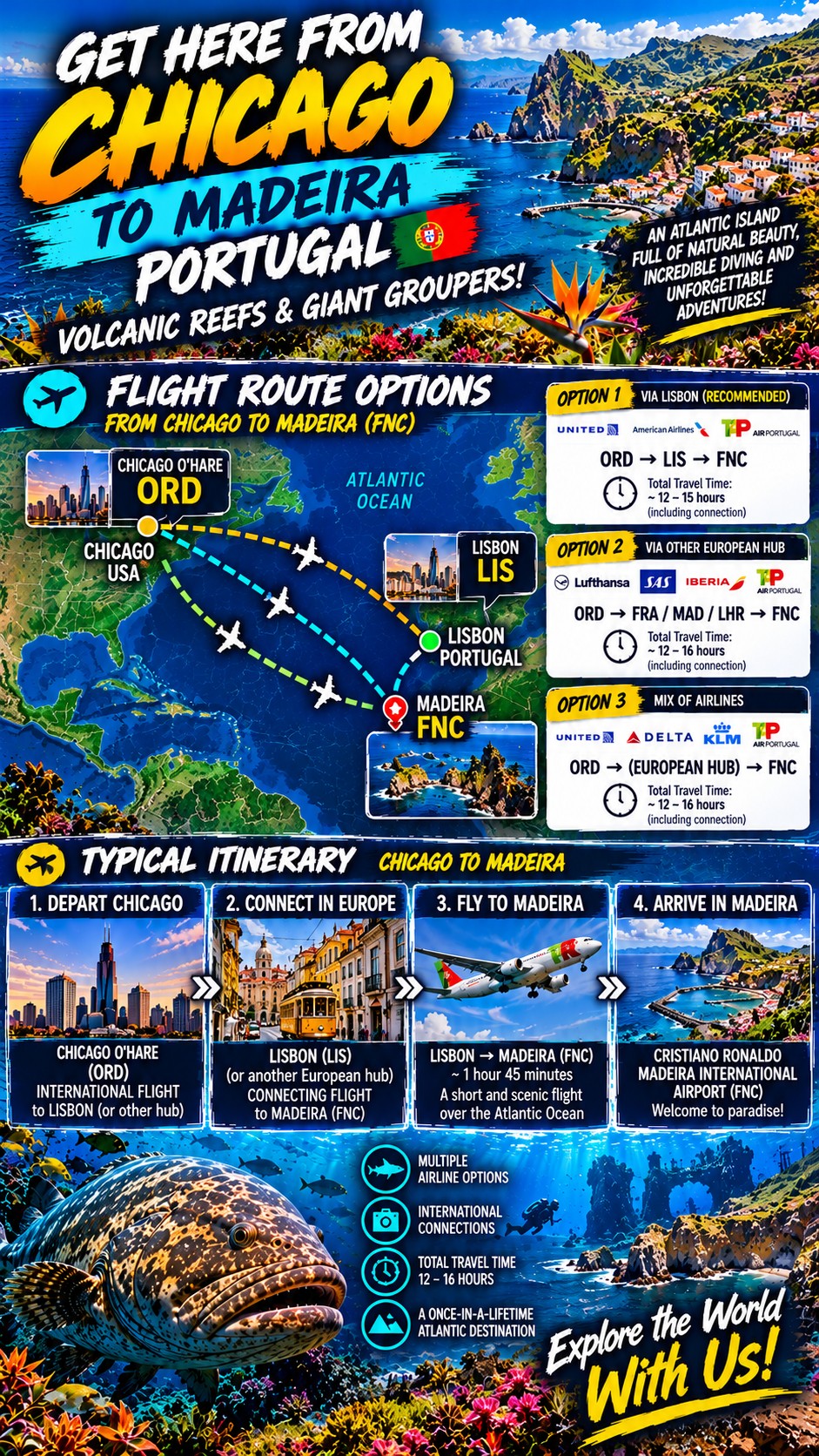
10. How Do You Get to Madeira from Chicago?
For travelers departing from Chicago, Madeira is accessible through international flight connections.
The island's main airport is Cristiano Ronaldo Madeira International Airport (FNC).
Possible flight routes include:
Chicago O'Hare (ORD) → Lisbon (LIS) → Madeira (FNC)
Chicago O'Hare (ORD) → European Hub → Madeira (FNC)
Depending on airline schedules, connections may be available through cities such as Lisbon, London, or other European gateways.
Flights between Lisbon and Madeira typically take approximately 1 hour and 45 minutes.
Travelers should confirm current airline schedules, baggage allowances, and entry requirements before booking.
For divers carrying equipment, advance planning is especially important.
Why Madeira Belongs on Your Diving Bucket List
There are many extraordinary scuba diving destinations throughout the Atlantic Ocean, but Madeira offers something truly special.
Dramatic volcanic underwater landscapes.
Large dusky groupers.
Protected marine reserves.
Beautiful rocky reefs.
Fascinating wrecks.
Extraordinary marine biodiversity.
And breathtaking landscapes above the surface.
Madeira is not simply another European island. It is an Atlantic underwater adventure waiting to be explored!
Your Madeira Adventure Starts at Loves Park Scuba!
At Loves Park Scuba, we believe scuba diving is about exploring the world, developing our skills, protecting marine ecosystems, and creating unforgettable memories.
Whether you dream of encountering giant groupers, exploring volcanic reefs, photographing Atlantic marine life, or discovering the beauty of Portugal, our team is here to help you prepare.
From scuba certification and advanced training to equipment selection and dive travel opportunities, we're ready to help.
Are you ready to discover Madeira — Volcanic Reefs & Giant Groupers?
Visit Loves Park Scuba and let us help you prepare for your next extraordinary Atlantic diving adventure!
LOVES PARK SCUBA
Dive Into Adventure — Explore the World With Us!
COMING NEXT IN OUR ATLANTIC DIVING SERIES
Episode 6 — Canary Islands, Spain: Volcanic Underwater Adventures!
Discover spectacular volcanic formations, fascinating marine life, and extraordinary diving opportunities in the Atlantic waters surrounding Spain's Canary Islands.
10 Iconic Atlantic Destinations. One Passion for Diving!
