
SAINT LUCIA: DIVE BENEATH THE MAJESTIC PITONS! Top 10 Iconic Scuba Diving Destinations in the Caribbean — Episode 6
Martin Gomez Oct 28, 2026
SAINT LUCIA: DIVE BENEATH THE MAJESTIC PITONS!
Top 10 Iconic Scuba Diving Destinations in the Caribbean — Episode 6
Spectacular Volcanic Landscapes, Colorful Coral Reefs, Dramatic Underwater Walls, and Unforgettable Caribbean Adventures!
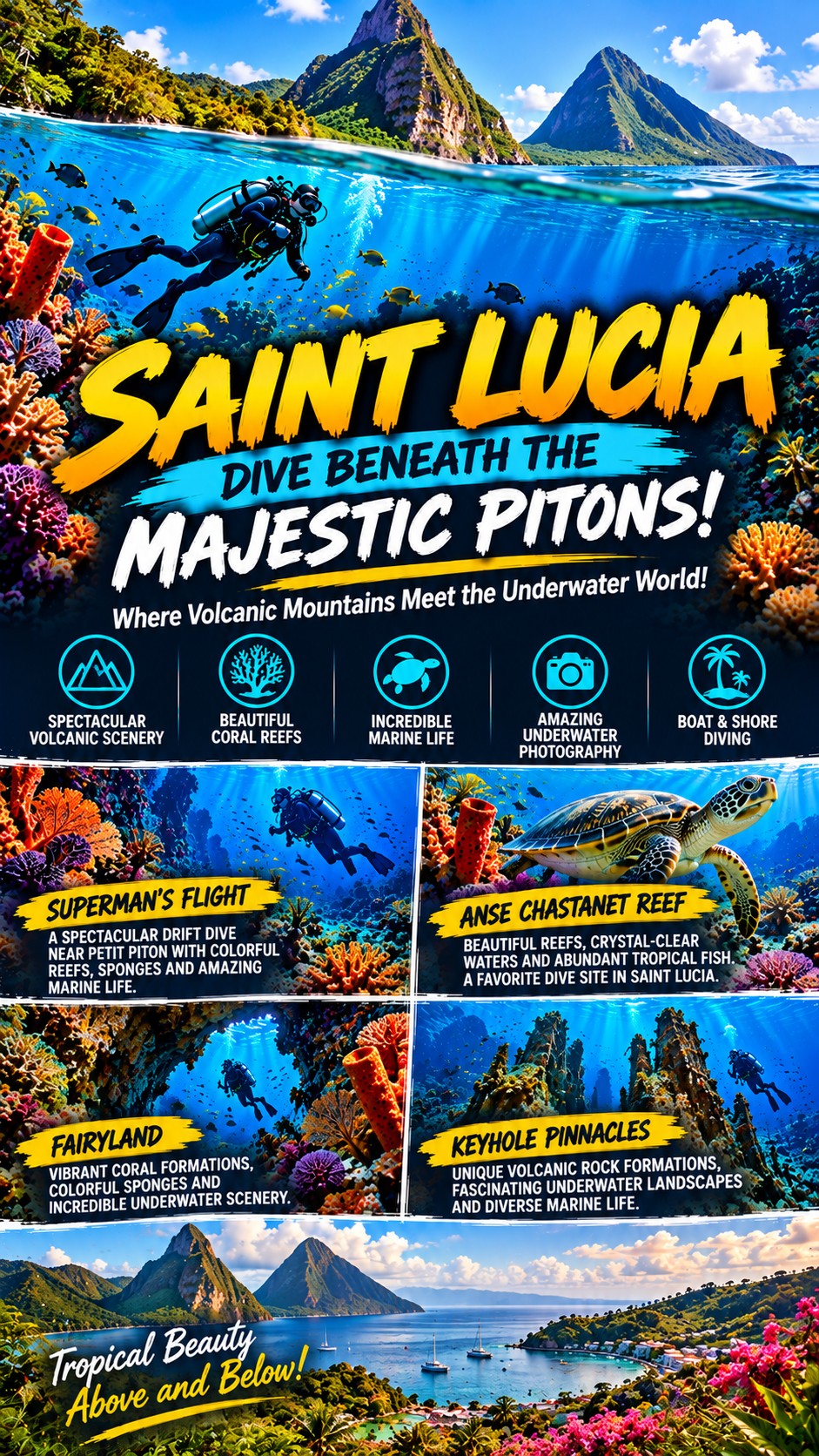
Welcome to Saint Lucia: Where Mountains Meet the Underwater World
Imagine descending into warm, crystal-clear Caribbean waters while two magnificent volcanic peaks rise dramatically above the coastline.
Beneath the surface, colorful coral reefs, towering sponges, and extraordinary underwater formations create a breathtaking landscape.
As you explore the reef, schools of tropical fish move around you, sea fans sway gently with the current, and the dramatic volcanic terrain reminds you that this island is unlike any other Caribbean destination.
Welcome to Saint Lucia, one of the Caribbean's most spectacular combinations of natural beauty and underwater adventure!
Located in the eastern Caribbean, Saint Lucia is internationally recognized for its majestic Pitons, lush tropical landscapes, and beautiful marine environments.
The island's iconic peaks, Gros Piton and Petit Piton, rise dramatically above the Caribbean Sea and form part of the UNESCO-listed Pitons Management Area.
At Loves Park Scuba, we're excited to introduce Saint Lucia as the sixth destination in our series exploring the Caribbean's ten most iconic scuba diving locations.
1. What Makes Saint Lucia So Special?
Saint Lucia offers an extraordinary combination of volcanic geography, tropical marine life, and beautiful underwater scenery.
Unlike destinations dominated by broad, shallow reef systems, Saint Lucia features dramatic underwater slopes, steep reef formations, and volcanic rock structures.
Many of its most celebrated dive sites are located along the island's western coast near Soufrière and the Pitons.
Divers can discover:
-
Spectacular coral reefs beneath volcanic mountains.
-
Dramatic underwater walls and steep slopes.
-
Colorful sponges, sea fans, and reef formations.
-
Sea turtles, moray eels, and tropical fish.
-
Excellent macro and wide-angle underwater photography.
-
Beautiful shore and boat diving opportunities.
-
Warm Caribbean water and extraordinary island scenery.
Why dive Saint Lucia? Because few places in the Caribbean offer such a spectacular combination of volcanic landscapes and underwater beauty!
2. Diving Beneath the Majestic Pitons
One of Saint Lucia's most unforgettable attractions is the opportunity to dive near its iconic volcanic peaks.
Gros Piton and Petit Piton dominate the southwestern coastline, creating one of the most recognizable landscapes in the Caribbean.
These steep volcanic formations continue beneath the surface, where underwater slopes and reefs provide habitats for diverse marine life.
Imagine preparing for a dive while looking toward the towering Pitons.
Minutes later, you're exploring a beautiful underwater environment filled with colorful sponges, coral formations, and tropical fish.
The combination of spectacular scenery above and below the water makes Saint Lucia a remarkable destination for underwater photographers and nature enthusiasts.
Diving in Saint Lucia is more than exploring coral reefs. It's experiencing the extraordinary relationship between the island's volcanic history and its marine environment.
3. Top Dive Sites in Saint Lucia
Superman's Flight — A Spectacular Drift Dive
Superman's Flight is one of Saint Lucia's most celebrated dive sites.
Located near Petit Piton, this beautiful reef slope offers an opportunity to experience drift diving when conditions allow.
Divers may encounter colorful sponges, sea fans, reef fish, and impressive underwater scenery.
The site's name is associated with the nearby landscapes featured in the Superman film series.
Highlights: Drift diving, volcanic underwater slopes, colorful reefs, and tropical marine life.
Anse Chastanet Reef — A Caribbean Underwater Garden
Anse Chastanet Reef is one of Saint Lucia's best-known dive sites.
Located near a beautiful beach, the reef features coral formations, colorful sponges, and abundant marine life.
Its varied depths make it attractive for both snorkeling and scuba diving, depending on conditions and experience.
Divers may encounter trumpetfish, angelfish, parrotfish, moray eels, and other fascinating reef creatures.
Highlights: Reef diving, shore access, tropical fish, and underwater photography.
Fairyland — A Colorful Reef Paradise
Fairyland is famous for its vibrant reef environment and impressive coral formations.
Its underwater landscape includes colorful sponges, sea fans, and a wide variety of tropical marine life.
The site is especially popular with underwater photographers.
Highlights: Coral formations, marine biodiversity, and underwater photography.
Keyhole Pinnacles — A Unique Underwater Landscape
Keyhole Pinnacles is one of Saint Lucia's most distinctive dive sites.
Its dramatic underwater rock formations rise from the seabed, creating a remarkable volcanic landscape.
These structures attract marine life and offer interesting opportunities for underwater exploration.
Highlights: Volcanic pinnacles, underwater topography, and marine life.
Coral Gardens — Discover the Beauty of the Reef
Coral Gardens offers beautiful coral formations and opportunities to observe tropical reef fish.
Its scenic underwater environment makes it a memorable destination for divers who enjoy reef exploration.
Highlights: Coral gardens, reef fish, and underwater photography.
4. Marine Life: What Can You Encounter in Saint Lucia?
Saint Lucia's underwater environments support a remarkable variety of Caribbean marine species.
Sea Turtles
Green and hawksbill sea turtles may be encountered around the island's reefs.
Watching a turtle swim peacefully through the water is always a memorable experience.
Moray Eels
Green and spotted moray eels can be found sheltering among coral formations and rocky crevices.
Seahorses
Some sheltered reef environments provide opportunities to encounter seahorses, although sightings are never guaranteed.
Frogfish
These fascinating ambush predators are highly prized subjects for underwater macro photographers.
Their camouflage makes them particularly challenging and rewarding to discover.
Tropical Reef Fish
Angelfish, butterflyfish, parrotfish, trumpetfish, and many other species bring incredible color and movement to the reefs.
Rays and Other Marine Life
Depending on the site and conditions, divers may occasionally encounter rays and other larger marine animals.
Every dive offers another opportunity to discover the remarkable biodiversity of the Caribbean.
5. When Is the Best Time to Dive Saint Lucia?
Saint Lucia offers scuba diving opportunities throughout the year.
However, rainfall, wind, sea conditions, and underwater visibility vary by season.
| Season | Diving experience |
|---|---|
| December – April | Popular drier-season travel period |
| May – June | Warm water and changing seasonal conditions |
| July – September | Warm tropical water with increased rainfall potential |
| October – November | More variable weather and tropical storm considerations |
Typical water temperatures range from approximately 79°F to 84°F (26–29°C).
Underwater visibility often ranges from 40 to 100 feet, depending on the dive site and conditions.
The Atlantic hurricane season extends from June through November, so weather considerations are important when planning travel.
6. Is Saint Lucia Suitable for Beginner Divers?
Absolutely!
Saint Lucia offers dive sites suitable for different experience levels.
Some shallow reefs provide excellent opportunities for newly certified Open Water divers when conditions are appropriate.
Other locations feature steeper slopes, deeper profiles, or currents that require additional experience.
At Loves Park Scuba, we recommend considering:
-
Open Water Diver: Begin your underwater adventures.
-
Advanced Adventure / Advanced Open Water: Develop experience in different diving environments.
-
Perfect Buoyancy: Improve underwater control and reef protection.
-
Deep Diving: Prepare for deeper recreational dive profiles.
-
Enriched Air Nitrox: Learn appropriate enriched-air dive planning.
-
Drift Diving: Develop skills for diving in moving water.
-
Underwater Photography: Capture beautiful reef environments and marine life.
The most important consideration is choosing dive sites that match your certification, experience, and comfort level.
7. Underwater Photography: A Dream Destination
Saint Lucia is a wonderful destination for underwater photographers.
Its volcanic formations, colorful reefs, and diverse marine life create opportunities for both wide-angle and macro photography.
Wide-angle photographers can capture dramatic underwater slopes, coral-covered formations, and spectacular reef scenery.
Macro photographers can search for shrimp, crabs, seahorses, frogfish, and other small reef inhabitants.
The combination of unusual underwater geography and marine biodiversity makes Saint Lucia a rewarding destination for divers who enjoy capturing the beauty of the ocean.
8. Beyond Diving: Discover Saint Lucia Above the Surface
Saint Lucia offers extraordinary experiences beyond scuba diving.
Visitors can explore:
-
The Pitons: Two of the Caribbean's most iconic volcanic peaks.
-
Sulphur Springs: A geothermal attraction near Soufrière.
-
Diamond Falls Botanical Gardens: Tropical vegetation and beautiful waterfalls.
-
Pigeon Island National Landmark: Historic ruins, scenic viewpoints, and coastal landscapes.
-
Tropical Rainforests: Beautiful trails and natural scenery.
-
Caribbean Beaches: Relax beside turquoise water after an exciting day of diving.
Saint Lucia is an excellent destination for combining scuba diving with hiking, photography, nature exploration, and a relaxing tropical vacation.
9. Responsible Diving: Protecting Saint Lucia's Reefs
Saint Lucia's marine ecosystems are valuable natural resources that require protection.
Several popular dive sites are located within or near the Soufrière Marine Management Area, where conservation measures help protect marine habitats.
At Loves Park Scuba, we encourage every diver to practice responsible underwater exploration.
Important guidelines include:
-
Maintain excellent buoyancy.
-
Never touch or stand on coral.
-
Avoid disturbing marine animals.
-
Secure gauges and other equipment.
-
Follow local marine management regulations.
-
Respect protected habitats.
-
Support responsible dive operators.
Protecting the underwater environment today helps preserve Saint Lucia's beauty for future generations.
10. Why Saint Lucia Belongs on Your Diving Bucket List
There are many spectacular diving destinations throughout the Caribbean, but Saint Lucia offers something truly extraordinary.
Majestic volcanic peaks.
Beautiful coral reefs.
Dramatic underwater slopes.
Colorful marine life.
Spectacular tropical scenery.
From the famous Superman's Flight to the beautiful reefs of Anse Chastanet, every dive offers an opportunity to discover another side of this remarkable island.
Saint Lucia is not simply a Caribbean diving destination. It's an unforgettable adventure where mountains, ocean, and marine life come together.
Your Saint Lucia Adventure Starts at Loves Park Scuba!
At Loves Park Scuba, we believe scuba diving is about exploring new destinations, developing our skills, protecting marine environments, and creating unforgettable memories.
Whether you're interested in your first Caribbean dive vacation, spectacular reef exploration, or underwater photography, our team is here to help.
From scuba certification and advanced training to equipment selection and dive travel opportunities, we're ready to help you prepare for your next adventure.
Are you ready to dive beneath the majestic Pitons of Saint Lucia?
Visit Loves Park Scuba and let us help you prepare for your next extraordinary Caribbean diving experience.
LOVES PARK SCUBA
Dive Into Adventure — Explore the World With Us!
Coming Next in Our Caribbean Diving Series:
Episode 7 — Curaçao: Colorful Reefs and Historic Wrecks!
