
SEA OF CORTEZ, MEXICO — THE AQUARIUM OF THE WORLD! TOP 10 ICONIC SCUBA DIVING DESTINATIONS IN THE PACIFIC OCEAN — EPISODE 4
Martin Gomez Oct 29, 2026
SEA OF CORTEZ, MEXICO — THE AQUARIUM OF THE WORLD!
TOP 10 ICONIC SCUBA DIVING DESTINATIONS IN THE PACIFIC OCEAN — EPISODE 4
Swim with Playful Sea Lions, Explore Thriving Marine Parks, Discover Massive Schools of Fish, and Experience One of the Most Extraordinary Marine Ecosystems on Earth!
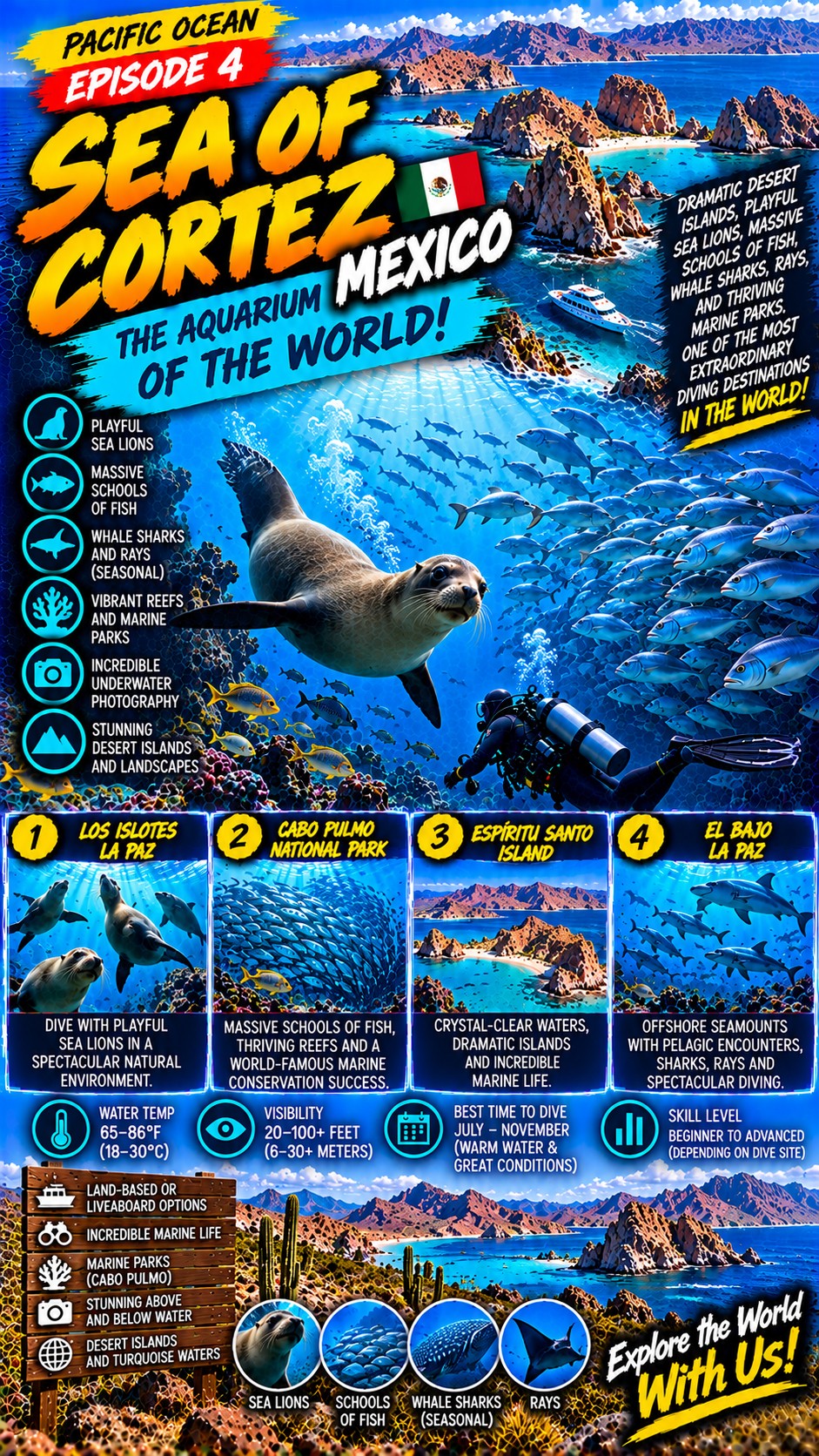
Welcome to the Sea of Cortez — Where the Desert Meets an Underwater Paradise!
Imagine descending into crystal-blue water surrounded by spectacular desert islands.
Sunlight illuminates dramatic underwater rock formations.
Hundreds of colorful fish swim through the reef.
Suddenly, a curious sea lion approaches.
It twists effortlessly through the water, circles around your group, and disappears into a cloud of bubbles.
Moments later, another sea lion arrives, gliding past you with incredible speed and agility.
On another dive, you find yourself surrounded by an enormous school of jacks, moving together like a living silver tornado.
Beyond the reefs, whale sharks, mobula rays, dolphins, and migrating whales travel through the nutrient-rich waters of the eastern Pacific.
Above the surface, rugged desert mountains rise directly from turquoise bays.
Welcome to the Sea of Cortez, Mexico — The Aquarium of the World!
At Loves Park Scuba, we are excited to continue our journey through the most spectacular diving destinations in the Pacific Ocean.
Our fourth episode takes us to one of the world's most fascinating marine environments, where extraordinary biodiversity meets breathtaking landscapes.
1. Where Is the Sea of Cortez?
The Sea of Cortez, also known as the Gulf of California, is located between the Baja California Peninsula and mainland Mexico.
It stretches approximately 700 miles (1,100 kilometers) from its northern reaches toward the southern tip of Baja California.
This remarkable body of water connects to the Pacific Ocean and supports an extraordinary variety of marine habitats.
Its ecosystems include:
-
Rocky reefs.
-
Coral communities.
-
Underwater pinnacles.
-
Sandy seabeds.
-
Deep ocean basins.
-
Coastal lagoons.
-
Mangrove habitats.
-
Remote desert islands.
The region supports hundreds of fish species, numerous marine mammals, sea turtles, sharks, rays, and countless invertebrates.
The islands and protected areas of the Gulf of California are internationally recognized for their ecological importance.
Why Is It Called the Aquarium of the World?
The famous ocean explorer Jacques Cousteau helped popularize the description “The Aquarium of the World” because of the remarkable abundance and diversity of marine life.
And once you dive here, the reason becomes obvious.
The Sea of Cortez is a living showcase of Pacific Ocean biodiversity!
2. Los Islotes — The Kingdom of Playful Sea Lions!
One of the most iconic wildlife encounters in the Sea of Cortez takes place at Los Islotes, near Espíritu Santo Island, north of La Paz.
This rocky island group is famous for its California sea lion colony.
Imagine Diving with Sea Lions!
You enter the water near the rocky coastline.
Schools of fish move along the underwater formations.
Then a sea lion approaches.
It swims around you, rolls upside down, and effortlessly changes direction.
Another appears from behind the rocks.
Soon, you are watching these remarkable animals explore their underwater environment.
What Makes Los Islotes Special?
-
A resident sea lion colony.
-
Spectacular rocky underwater scenery.
-
Large schools of fish.
-
Fascinating animal behavior.
-
Excellent opportunities for underwater photography.
Important Wildlife Protection Rules
Sea lion encounters are regulated, and access may be restricted during breeding periods or other protected seasons.
Divers must follow current park rules and authorized guide instructions.
Never chase, touch, feed, or attempt to play physically with sea lions.
Los Islotes offers one of the most memorable marine mammal encounters in recreational diving!
3. Cabo Pulmo National Park — A Marine Conservation Success Story!
Located on the eastern coast of the Baja California Peninsula, Cabo Pulmo National Park is one of Mexico's most celebrated marine conservation areas.
It protects a remarkable coral reef ecosystem in the Gulf of California.
From Overfishing to Recovery
Local community conservation efforts and marine protection have helped transform Cabo Pulmo into an internationally recognized example of ecosystem recovery.
Today, the park is famous for its extraordinary fish aggregations and thriving marine life.
The Famous Schooling Jacks
One of the most spectacular experiences in Cabo Pulmo is encountering enormous schools of jacks.
Thousands of fish may move together in synchronized formations.
From a distance, the school looks like a dark underwater cloud.
As you approach, the formation changes shape, creating a swirling silver wall.
It is an incredible sight.
Marine Life at Cabo Pulmo
Divers may encounter:
-
Massive schools of jacks.
-
Groupers.
-
Snappers.
-
Reef fish.
-
Sea turtles.
-
Rays.
-
Sharks.
-
Moray eels.
Why Cabo Pulmo Matters
The park demonstrates how marine conservation can support healthier ecosystems and sustainable local tourism.
Cabo Pulmo is more than a spectacular dive destination — it is a powerful example of what ocean protection can accomplish!
4. Espíritu Santo Island — Desert Landscapes and Spectacular Diving
Espíritu Santo Island, near La Paz, is one of the most beautiful island destinations in the Sea of Cortez.
Its dramatic red and golden cliffs contrast with turquoise water.
The island and surrounding marine environments form part of an important protected area.
Underwater Highlights
-
Rocky reefs.
-
Schools of tropical and subtropical fish.
-
Rays.
-
Sea turtles.
-
Invertebrates.
-
Interesting underwater topography.
Famous Dive Areas
The region includes sites such as:
El Bajo
An offshore seamount area known for pelagic encounters and potentially demanding diving conditions.
La Salvatierra
A wreck dive near La Paz that offers a different underwater experience from the natural reefs.
Swanee Reef
A reef area known for marine life and underwater exploration.
Dive sites are selected according to weather, conditions, diver qualifications, and operator access.
Above the Surface
Espíritu Santo is also famous for:
-
Desert hiking.
-
Kayaking.
-
Snorkeling.
-
Scenic boat excursions.
-
Wildlife observation.
-
Spectacular photography.
Few places combine desert wilderness and underwater biodiversity as beautifully as Espíritu Santo Island.
5. El Bajo — The Legendary Offshore Seamounts
For experienced divers, El Bajo, also known as Las Ánimas or the El Bajo seamount area near La Paz, is one of the region's exciting offshore diving environments.
These underwater formations rise from deeper water and attract marine life.
Possible Marine Encounters
-
Schooling fish.
-
Sharks.
-
Rays.
-
Tuna.
-
Other pelagic species.
Historically, El Bajo has been associated with hammerhead shark sightings, although large aggregations should not be expected or guaranteed today.
Diving Conditions
El Bajo can involve:
-
Strong currents.
-
Deeper profiles.
-
Open-water conditions.
-
Challenging navigation.
-
Variable visibility.
This is a destination for appropriately trained and experienced divers who enjoy offshore adventure.
6. Whale Sharks — Swimming with Gentle Giants!
The Sea of Cortez is also famous for encounters with whale sharks, the largest fish in the ocean.
These magnificent animals are filter feeders that consume plankton and small organisms.
Where Can You Encounter Whale Sharks?
The waters around La Paz have historically provided seasonal opportunities for whale shark snorkeling.
Whale sharks also visit other areas of the Gulf of California.
What Makes This Experience Extraordinary?
Imagine floating at the surface as an enormous whale shark moves slowly through the water.
Its body is covered in a beautiful pattern of white spots and stripes.
Despite its enormous size, it swims with remarkable grace.
Important: Whale Shark Encounters Are Regulated
Whale shark activities near La Paz depend on seasonal authorizations, environmental conditions, and conservation restrictions.
Tour operators must comply with current regulations.
These experiences are generally conducted by snorkeling, not scuba diving.
Sightings and access are never guaranteed.
Observing a whale shark in its natural habitat is one of the great wildlife experiences of the Sea of Cortez.
7. Mobula Rays — The Flying Rays of the Pacific!
One of the most spectacular seasonal natural events in Baja California involves aggregations of mobula rays.
These beautiful rays are famous for their graceful swimming and their ability to leap out of the water.
Imagine Thousands of Rays!
During favorable seasonal conditions, large groups of mobula rays may gather in the waters of Baja California.
From a boat, visitors may observe rays jumping above the surface.
Underwater, they can form extraordinary moving schools.
Where Are Mobula Rays Commonly Observed?
The La Paz and La Ventana regions are particularly well known for seasonal mobula encounters.
When Is the Best Time?
Mobula activity varies, but late spring and early summer are often associated with significant aggregations.
Some locations also experience activity during other periods of the year.
Many excursions focus on snorkeling and freediving rather than scuba diving.
Few marine encounters compare to witnessing a large aggregation of mobula rays moving together through the blue water!
8. The Marine Giants of the Sea of Cortez
The biodiversity of the Sea of Cortez extends far beyond its reefs.
Depending on location and season, visitors may encounter:
California Sea Lions
Playful marine mammals that inhabit several rocky island colonies.
Whale Sharks
Gentle filter-feeding giants that visit productive coastal waters.
Mobula Rays
Graceful rays known for spectacular seasonal aggregations.
Dolphins
Several dolphin species inhabit or travel through the Gulf of California.
Humpback Whales
Seasonal visitors to the waters around southern Baja California.
Blue Whales
The waters near Loreto are an important seasonal habitat for these magnificent animals.
Sea Turtles
Several species occur throughout the region.
Sharks
Different shark species inhabit offshore, coastal, and reef environments.
Giant Schools of Fish
Jacks, snappers, and other schooling species create spectacular underwater formations.
The Sea of Cortez is a place where every day on the water offers a new opportunity for discovery!
9. Best Time to Dive the Sea of Cortez
The Sea of Cortez offers diving opportunities throughout much of the year, but water temperatures, visibility, and wildlife encounters change seasonally.
Summer and Early Fall: July–October
Often considered an excellent period for warm-water scuba diving.
Typical advantages include:
-
Warmer water.
-
Favorable conditions at many dive sites.
-
Active reef ecosystems.
-
Opportunities for sea lion encounters when permitted.
-
Excellent seasonal diving around La Paz and Cabo Pulmo.
Fall: September–November
A popular period for many divers, with generally warm water and potential pelagic encounters.
Tropical storms and hurricanes can affect the region during the warmer months.
Winter: December–March
Water temperatures become cooler.
However, this season offers opportunities for whale watching and other wildlife experiences.
Spring: April–June
Conditions vary, and water can remain relatively cool.
Late spring may offer opportunities for seasonal mobula encounters.
Typical Diving Conditions
| Category | General Range |
|---|---|
| Water temperature | 65–86°F (18–30°C), depending on season and location |
| Visibility | Approximately 20–100 ft (6–30 m), highly variable |
| Best general scuba season | July–November, depending on destination |
| Recommended experience | Beginner to advanced, depending on dive site |
| Diving style | Reefs, rocky formations, wrecks, sea lions, pelagic encounters |
Recommended Exposure Protection
During warmer months, a 3 mm wetsuit may be sufficient for some divers.
During cooler periods, a 5–7 mm wetsuit or additional thermal protection may be appropriate.
Always choose exposure protection based on actual conditions and personal comfort.
The Sea of Cortez offers a different underwater experience with every season!
10. Is the Sea of Cortez Suitable for Beginner Divers?
Yes! One of the advantages of the Sea of Cortez is the variety of diving environments.
Some protected reefs are suitable for newly certified divers.
Other sites require advanced experience.
Beginner-Friendly Opportunities
Depending on conditions:
-
Shallow rocky reefs.
-
Protected coastal dive sites.
-
Guided recreational dives.
-
Underwater photography.
-
Marine life observation.
Advanced Diving Opportunities
Experienced divers can explore:
-
Offshore seamounts.
-
Strong-current environments.
-
Deeper reefs.
-
Wreck dives.
-
More exposed locations.
Recommended Training at Loves Park Scuba
Open Water Diver
Start your underwater adventure with the fundamentals of safe recreational scuba diving.
Advanced Adventure
Develop confidence through additional diving experiences.
Enriched Air Nitrox
Learn enriched-air dive planning for suitable recreational profiles.
Perfect Buoyancy
Improve underwater control and protect sensitive marine habitats.
Deep Diving
Develop skills for planning deeper recreational dives.
Rescue Diver
Build awareness, confidence, and emergency response skills.
Underwater Photography
Capture marine wildlife while respecting the environment.
With the right training, the Sea of Cortez offers opportunities for divers at many experience levels!
11. Land-Based Diving or Liveaboard: Which Is Better?
The Sea of Cortez offers several ways to explore its underwater environments.
Option 1 — Land-Based Diving from La Paz
La Paz is an excellent base for exploring:
-
Los Islotes, when open to visitors.
-
Espíritu Santo Island.
-
Local reefs.
-
Selected wreck sites.
-
Other regional dive locations.
Advantages include comfortable hotel accommodation, restaurants, and opportunities for non-diving activities.
Option 2 — Land-Based Diving at Cabo Pulmo
Cabo Pulmo offers access to its protected marine park through local dive operators.
It is an excellent choice for divers interested in marine conservation, schooling fish, and coral reef ecosystems.
Option 3 — Sea of Cortez Liveaboard
Some operators offer liveaboard expeditions visiting multiple islands and remote sites.
These trips may provide access to areas that are less convenient for daily boat excursions.
Actual itineraries vary by operator, season, weather, and park regulations.
Which Option Should You Choose?
For a combination of diving and vacation activities, La Paz is an excellent starting point.
For spectacular schooling fish and marine conservation, Cabo Pulmo deserves special attention.
For more remote diving adventures, a liveaboard may be an attractive option.
The Sea of Cortez offers remarkable flexibility for planning a scuba diving vacation!
12. Above the Surface — Explore Baja California Sur!
A trip to the Sea of Cortez is about much more than scuba diving.
The Baja California Peninsula offers extraordinary desert scenery, beautiful beaches, fascinating wildlife, and authentic Mexican culture.
La Paz
Explore the waterfront promenade, local restaurants, beaches, and coastal scenery.
Balandra Beach
Famous for its shallow turquoise water and beautiful desert surroundings.
Access is regulated, and advance planning may be required.
Espíritu Santo Island
Enjoy scenic boat excursions, kayaking, and guided nature activities.
Cabo Pulmo
Discover a small coastal community closely connected to marine conservation.
La Ventana
A popular destination for outdoor activities, marine wildlife excursions, and water sports.
Loreto
Explore historic streets, desert landscapes, and the beautiful islands of Loreto Bay National Park.
Mexican Cuisine
Enjoy fresh seafood, traditional tacos, local specialties, and the hospitality of Baja California Sur.
The Sea of Cortez is a perfect destination for travelers who want to combine diving, nature, adventure, and relaxation.
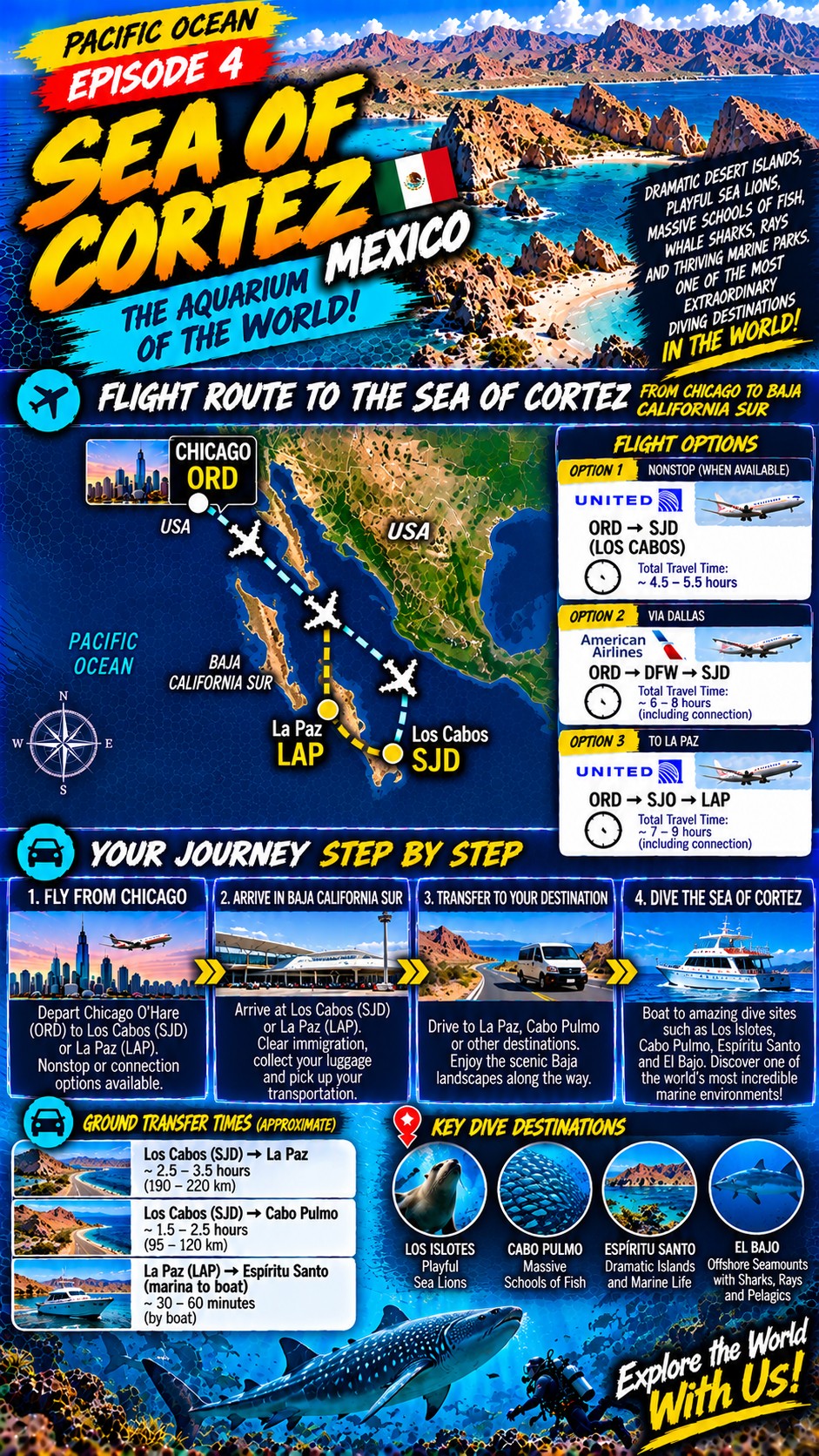
13. How Do You Get to the Sea of Cortez from Chicago?
For travelers departing from Chicago, the main airports to consider are:
Los Cabos International Airport (SJD)
Convenient for Cabo San Lucas, San José del Cabo, and Cabo Pulmo.
La Paz International Airport (LAP)
Convenient for diving excursions departing from La Paz.
Flight Option 1 — Chicago to Los Cabos
Chicago O'Hare (ORD) → Los Cabos (SJD)
Nonstop flights may be available depending on airline schedules and travel dates.
Flight Option 2 — Chicago to Los Cabos with a Connection
ORD → Dallas/Fort Worth (DFW) → SJD
Other connecting airports may be available.
Flight Option 3 — Chicago to La Paz
ORD → Mexico City (MEX) → La Paz (LAP)
Availability depends on airline schedules and connection arrangements.
Ground Transportation
From Los Cabos International Airport:
-
Cabo Pulmo: approximately 1.5–2.5 hours by road, depending on the route.
-
La Paz: approximately 2.5–3.5 hours by road, depending on traffic and the route.
From La Paz International Airport:
-
La Paz city and marina areas: generally a short ground transfer, depending on the departure location.
Travel Planning Tips
We recommend:
-
Arriving before your first scheduled diving day.
-
Confirming equipment baggage policies.
-
Reviewing marine park fees.
-
Checking seasonal wildlife restrictions.
-
Confirming boat departure locations.
-
Purchasing appropriate travel and dive insurance.
-
Allowing the recommended no-fly interval after your final dive.
From Chicago to Baja California Sur, the Sea of Cortez is an extraordinary Pacific adventure waiting to be explored!
14. Marine Conservation — Protecting the Aquarium of the World
The Sea of Cortez is one of Mexico's most important marine ecosystems.
Protected areas such as Cabo Pulmo National Park and the Espíritu Santo Archipelago play important roles in preserving marine biodiversity.
Why Conservation Matters
Marine ecosystems face challenges including:
-
Overfishing.
-
Illegal fishing.
-
Marine pollution.
-
Coastal development.
-
Climate change.
-
Ocean warming.
-
Disturbance of sensitive wildlife habitats.
Responsible Diving Practices
At Loves Park Scuba, we encourage all divers to:
-
Maintain excellent buoyancy.
-
Never touch coral or marine animals.
-
Follow protected-area regulations.
-
Avoid disturbing sea lion colonies.
-
Respect whale shark viewing restrictions.
-
Use authorized local operators.
-
Reduce single-use plastic.
-
Support marine conservation.
Every responsible diver can help protect the extraordinary marine life of the Sea of Cortez.
15. Why the Sea of Cortez Belongs on Your Diving Bucket List
Imagine swimming with curious sea lions near rocky islands.
Exploring the thriving reefs of Cabo Pulmo.
Watching enormous schools of jacks swirl through the water.
Snorkeling near a magnificent whale shark when authorized encounters are available.
Observing seasonal mobula ray aggregations.
And ending the day surrounded by spectacular desert mountains and a beautiful Pacific sunset.
The Sea of Cortez offers something truly special.
It combines adventure, wildlife, marine conservation, and breathtaking landscapes in one extraordinary destination.
This is why the Sea of Cortez has earned its legendary nickname: The Aquarium of the World!
16. Your Sea of Cortez Adventure Starts at Loves Park Scuba!
At Loves Park Scuba, we believe the best diving adventures begin with proper preparation, quality training, and a passion for ocean exploration.
Whether you dream of swimming with sea lions, exploring vibrant reefs, or discovering the extraordinary biodiversity of Baja California, our team can help you prepare for your next adventure.
We can help you develop your diving skills, choose suitable equipment, and explore future travel opportunities.
Are you ready to discover the Aquarium of the World?
Visit Loves Park Scuba and start planning your next underwater adventure!
LOVES PARK SCUBA
DIVE INTO ADVENTURE — EXPLORE THE WORLD WITH US!
COMING NEXT IN OUR PACIFIC OCEAN DIVING SERIES
EPISODE 5 — FAKARAVA, FRENCH POLYNESIA: THE WALL OF SHARKS!
Our next adventure takes us to the spectacular atolls of French Polynesia.
Imagine drifting through a narrow pass surrounded by hundreds of reef sharks.
Discover magnificent coral reefs, powerful ocean currents, and some of the most extraordinary shark-diving experiences in the South Pacific.
FAKARAVA — THE WALL OF SHARKS!
10 ICONIC PACIFIC DESTINATIONS. ONE PASSION FOR DIVING!
