
SILFRA, ICELAND: DIVING BETWEEN TWO CONTINENTS! Top 10 Iconic Scuba Diving Destinations in the Atlantic Ocean — Episode 8
Martin Gomez Oct 29, 2026
SILFRA, ICELAND: DIVING BETWEEN TWO CONTINENTS!
Top 10 Iconic Scuba Diving Destinations in the Atlantic Ocean — Episode 8
Discover Crystal-Clear Glacial Water, Extraordinary Underwater Rock Formations, and One of the Most Unique Geological Diving Experiences on Earth!
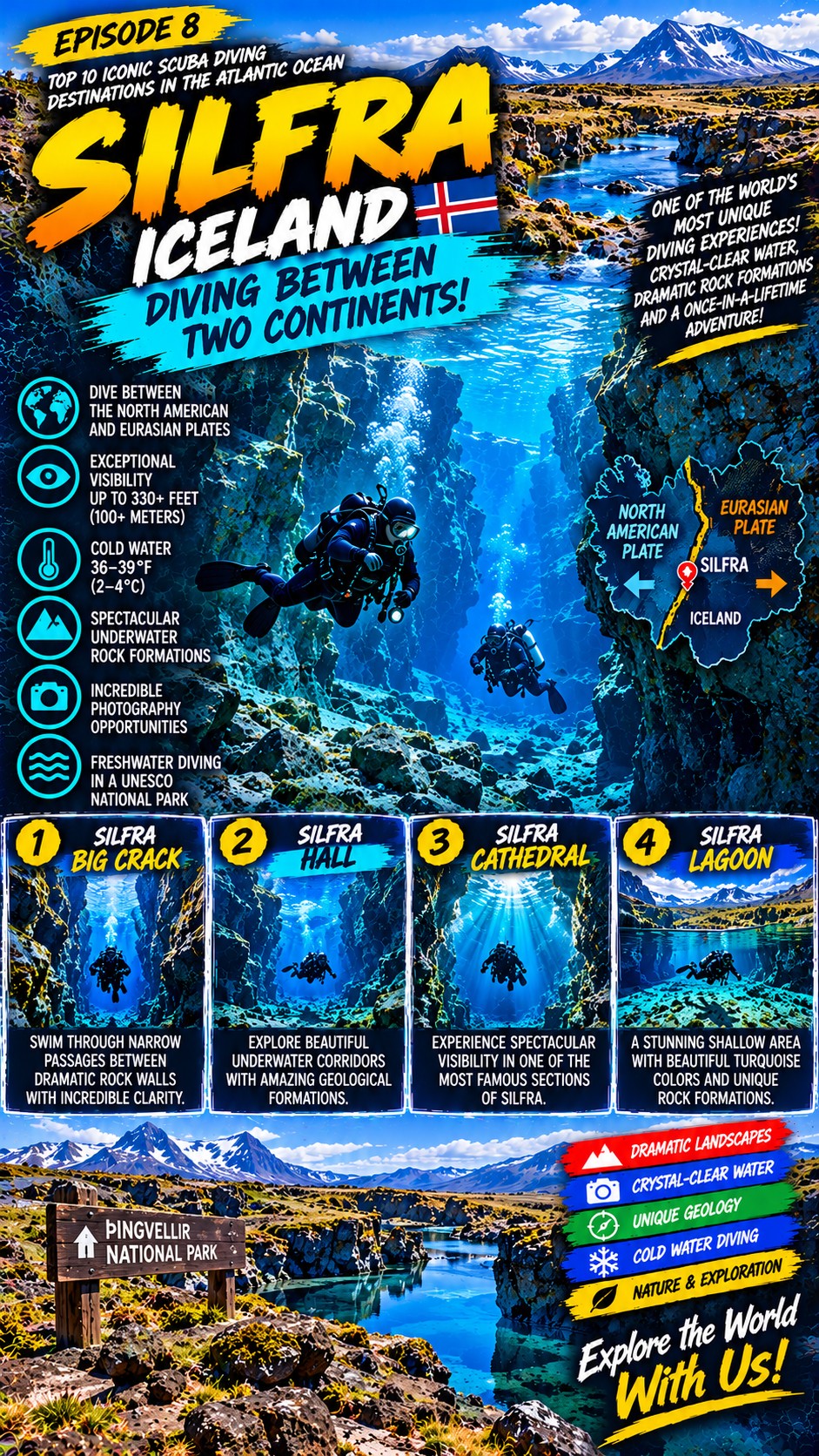
Welcome to Silfra: Where Two Continents Meet Beneath the Water!
Imagine entering some of the clearest water on Earth.
As you descend, enormous underwater rock walls rise on either side of you.
The water is so transparent that you can see extraordinary distances through the deep blue fissure.
Every rock formation appears remarkably sharp and detailed.
Above you, sunlight illuminates the water, creating beautiful shades of blue and turquoise.
You are diving within the boundary zone between two of Earth's great tectonic plates.
Welcome to Silfra, Iceland, one of the most extraordinary freshwater diving destinations in the world!
Located in Þingvellir National Park, approximately 45 kilometers (28 miles) northeast of Reykjavík, Silfra offers a truly unique underwater adventure.
At Loves Park Scuba, we're excited to introduce Silfra as the eighth destination in our series exploring the Top 10 Iconic Scuba Diving Destinations in the Atlantic Ocean.
Although Silfra is a freshwater dive site rather than an ocean dive, its geological connection to the Mid-Atlantic Ridge makes it a fascinating addition to our Atlantic exploration series.
1. What Makes Silfra So Special?
Silfra is a fissure within the tectonic rift zone separating the North American and Eurasian plates.
Iceland sits along the Mid-Atlantic Ridge, where these plates gradually move apart.
Over thousands of years, geological forces have created dramatic fractures and valleys across the region.
Silfra is one of the most remarkable places to observe this geological activity underwater.
Divers can experience:
-
Extraordinary underwater visibility.
-
Spectacular rock walls and formations.
-
Crystal-clear freshwater.
-
A fascinating tectonic environment.
-
Beautiful shades of blue and turquoise.
-
Cold-water diving with drysuits.
-
One of the world's most unusual underwater landscapes.
Silfra is not simply another dive site. It is an opportunity to explore Earth's geological history beneath the water!
2. Diving Between the North American and Eurasian Plates
One of Silfra's greatest attractions is its location within Iceland's tectonic rift zone.
The North American and Eurasian plates move apart at an average rate of approximately 2 centimeters (0.8 inches) per year.
This gradual movement contributes to Iceland's volcanic and geological activity.
Silfra lies within a complex fracture system associated with this plate boundary.
Divers often describe the experience as swimming between two continents.
Although the precise tectonic boundary is a broad deformation zone rather than two simple rock walls, the experience remains extraordinary.
At Silfra, geology becomes an unforgettable underwater adventure!
3. Why Is Silfra's Water So Clear?
Silfra is famous for its exceptional visibility.
The water originates from precipitation and meltwater that infiltrate the volcanic landscape around Iceland.
Over time, groundwater travels through porous lava rock before emerging in the Silfra fissure system.
This natural filtration contributes to the remarkable clarity of the water.
Under favorable conditions, visibility may exceed 100 meters (330 feet).
The water is also exceptionally cold, typically remaining around 2–4°C (36–39°F) throughout the year.
Unlike tropical diving destinations, Silfra's primary attraction is not abundant marine life.
Instead, divers come to experience the extraordinary beauty of its underwater geological formations.
4. The Four Main Sections of Silfra
The classic Silfra dive route passes through several distinctive underwater environments.
Silfra Big Crack — The Narrow Passage
The Big Crack is one of the most recognizable sections of Silfra.
Divers move between dramatic rock walls in an unusually narrow part of the fissure.
The extraordinary visibility makes the geological formations appear especially impressive.
Highlights: Narrow fissure, dramatic rock walls, and underwater photography.
Silfra Hall — A Spectacular Underwater Corridor
Silfra Hall is a beautiful section featuring rocky formations and open underwater spaces.
The clear water creates striking views of the surrounding geology.
Highlights: Rock formations, deep-blue water, and geological scenery.
Silfra Cathedral — Incredible Underwater Visibility
Silfra Cathedral is one of the site's most celebrated sections.
Its long underwater corridor is famous for spectacular visibility and dramatic rock formations.
Under favorable conditions, divers can see extraordinary distances through the water.
Highlights: Exceptional visibility, underwater photography, and dramatic scenery.
Silfra Lagoon — Beautiful Turquoise Water
Silfra Lagoon is a shallower, more open area.
Sunlight illuminates the water, creating beautiful shades of blue and turquoise.
This section offers an unforgettable conclusion to the dive.
Highlights: Turquoise water, shallow geological formations, and underwater photography.
Each section offers a different perspective on Silfra's extraordinary underwater landscape!
5. Is There Marine Life in Silfra?
Unlike tropical reef destinations, Silfra is not famous for large concentrations of fish or marine animals.
Its cold, exceptionally clear freshwater supports a relatively limited visible aquatic community.
Divers may observe:
Freshwater Algae
Aquatic algae may grow on submerged rocks.
Small Freshwater Organisms
Tiny aquatic organisms inhabit the freshwater ecosystem.
Occasional Fish
Fish are not a major attraction at Silfra, and sightings within the fissure are uncommon.
The real stars of Silfra are its remarkable geological formations and extraordinary water clarity.
Silfra proves that an unforgettable dive does not always require colorful reefs or large marine animals!
6. Cold-Water Diving: Preparing for Silfra
Silfra is a cold-water diving destination.
Water temperatures remain approximately 36–39°F (2–4°C) throughout the year.
These conditions require appropriate thermal protection and careful preparation.
Recommended Equipment
-
Properly fitted drysuit.
-
Appropriate thermal undergarments.
-
Cold-water-compatible regulator.
-
Hood and gloves suitable for near-freezing water.
-
Reliable dive computer.
-
Properly configured weight system.
-
Appropriate surface signaling equipment.
-
Additional equipment required by the local operator.
Drysuit buoyancy control is particularly important.
Divers should be comfortable managing their equipment while wearing thick thermal protection.
Cold-water diving requires appropriate training, experience, and equipment.
At Loves Park Scuba, we encourage divers interested in Silfra to develop their drysuit skills before traveling.
7. What Certification Is Required to Dive Silfra?
Silfra has specific diving requirements that may be stricter than those at ordinary recreational dive sites.
Commercial dive operators generally require divers to hold an appropriate scuba certification and demonstrate drysuit training or recent documented drysuit experience.
Requirements can vary by operator and applicable regulations.
Some operators require:
-
Open Water certification or higher.
-
Drysuit certification or documented recent drysuit experience.
-
A minimum number of logged drysuit dives.
-
Good physical fitness and swimming ability.
-
Compliance with minimum age and other safety requirements.
Divers must verify the current requirements directly with their chosen authorized operator.
At Loves Park Scuba, we recommend preparing with:
Open Water Diver
Develop the essential foundations of recreational scuba diving.
Dry Suit Diving
Learn drysuit buoyancy control, emergency procedures, and cold-water techniques.
Perfect Buoyancy
Improve control and stability while navigating the fissure.
Advanced Adventure / Advanced Open Water
Build confidence in varied underwater environments.
Underwater Photography
Learn to capture the extraordinary colors and rock formations of Silfra.
Proper training and preparation make this extraordinary experience safer and more enjoyable.
8. How Deep Is Silfra?
Silfra includes areas deeper than those used on standard guided recreational dives.
However, commercial recreational diving is normally conducted within defined depth limits and established routes.
Typical guided scuba dives often reach maximum depths of approximately 18 meters (60 feet).
Actual depth depends on the operator, route, regulations, and diver qualifications.
Divers should never attempt to explore deeper sections or overhead environments without specialized training and appropriate authorization.
At Silfra, the extraordinary visibility and geological scenery are the main attractions—not maximum depth.
9. When Is the Best Time to Dive Silfra?
Silfra can be dived throughout the year with authorized operators, depending on conditions.
Because its water temperature remains nearly constant, seasonal differences are more noticeable above the surface.
| Season | Diving Experience |
|---|---|
| December – February | Snowy landscapes, short daylight hours, and very cold air |
| March – May | Increasing daylight and changing spring conditions |
| June – August | Longer days and generally milder air temperatures |
| September – October | Beautiful autumn landscapes and cooler air |
| November | Shorter daylight hours and early winter conditions |
For many travelers, June through September offers an attractive combination of daylight and above-water sightseeing.
However, winter diving can provide spectacular snowy landscapes.
The water remains extremely cold regardless of the season.
10. Marine Conservation: Protecting Silfra's Unique Environment
Silfra is located within Þingvellir National Park, a UNESCO World Heritage Site.
The park is protected for its extraordinary geological, historical, and cultural significance.
Responsible diving practices include:
-
Follow all national park regulations.
-
Dive only with authorized operators where required.
-
Maintain excellent buoyancy.
-
Avoid disturbing underwater rock formations.
-
Never remove rocks or natural materials.
-
Respect designated entry and exit areas.
-
Secure all equipment.
-
Follow local environmental protection guidelines.
Protecting Silfra helps preserve one of Earth's most remarkable geological diving environments.
11. Beyond Diving: Explore Iceland's Extraordinary Landscapes
Iceland offers unforgettable experiences above the surface.
Þingvellir National Park
Explore the dramatic tectonic rift valley and discover one of Iceland's most historically important locations.
Gullfoss Waterfall
Visit one of Iceland's most famous waterfalls.
Geysir Geothermal Area
Discover spectacular geothermal activity and erupting hot springs.
Reykjavík
Explore Iceland's capital, known for its culture, architecture, restaurants, and waterfront scenery.
Northern Lights
During suitable dark-season conditions, visitors may have the opportunity to observe the aurora borealis.
Geothermal Lagoons
Enjoy Iceland's famous geothermal bathing experiences.
Volcanic Landscapes
Discover lava fields, mountains, glaciers, and extraordinary natural scenery.
Iceland combines one of the world's most unusual dive sites with some of the planet's most spectacular landscapes.
12. How Do You Get to Silfra from Chicago?
For travelers departing from Chicago, reaching Silfra is relatively straightforward compared with many remote international dive destinations.
A possible itinerary is:
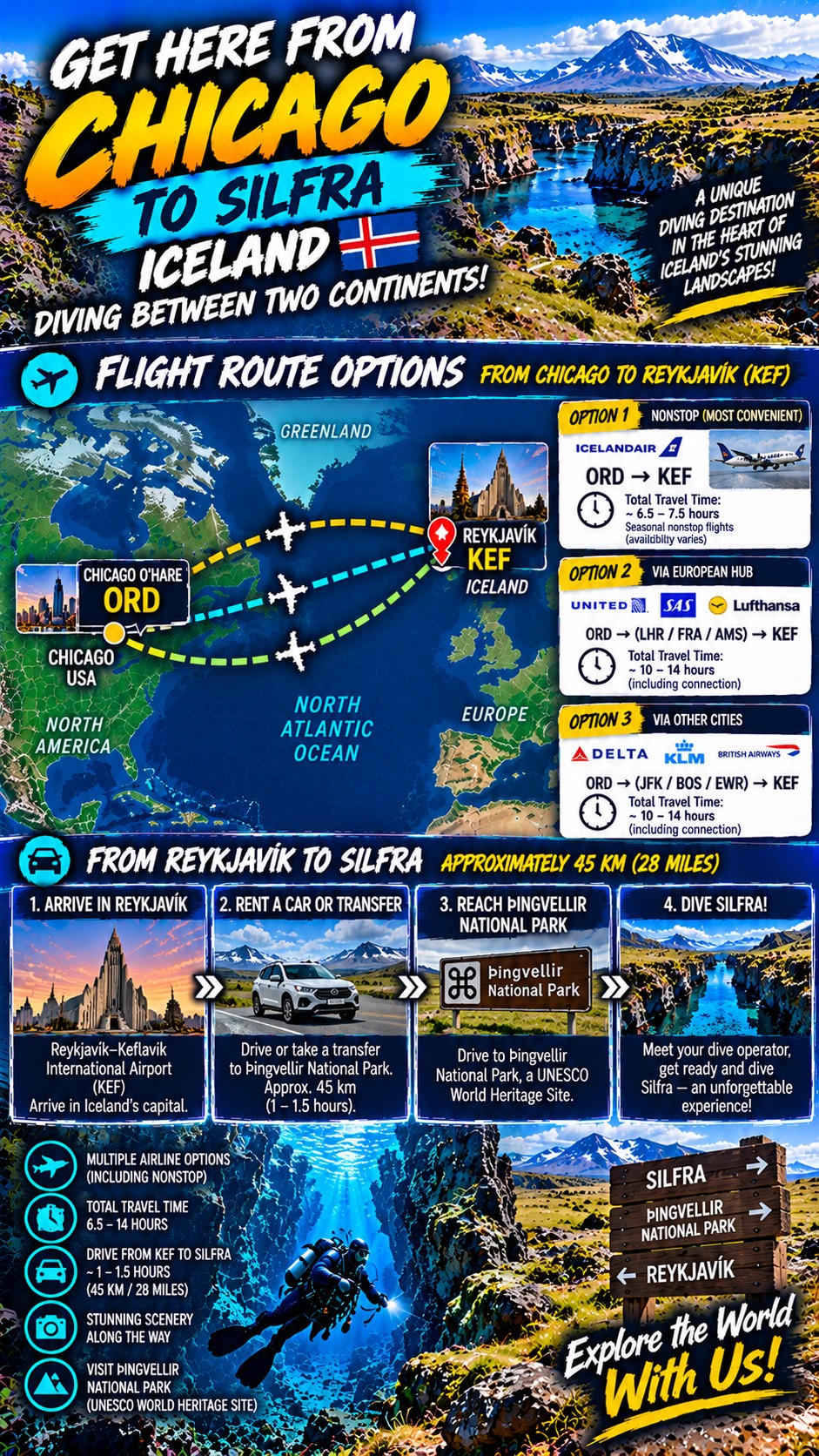
Chicago O'Hare (ORD) → Keflavík International Airport (KEF) → Þingvellir National Park → Silfra
Nonstop flights between Chicago and Iceland may be available depending on airline schedules and travel dates.
After arriving at Keflavík International Airport, travelers continue by road toward Þingvellir National Park.
The drive from Keflavík Airport to Silfra generally takes approximately 1.5–2 hours, depending on the route, weather, and road conditions.
Because Icelandic weather can change quickly, travelers should allow sufficient time for transportation and preparation.
Important Travel Considerations
-
International flight schedules.
-
Scuba equipment baggage allowances.
-
Drysuit and thermal equipment.
-
Cold-weather clothing.
-
Authorized dive operator reservations.
-
Icelandic road and weather conditions.
-
National park regulations.
-
Appropriate travel and diving insurance.
With proper planning, Silfra offers an extraordinary international diving adventure for divers traveling from Chicago!
Why Silfra Belongs on Your Diving Bucket List
There are many extraordinary scuba diving destinations throughout the Atlantic region, but Silfra offers something truly unique.
Crystal-clear freshwater.
Visibility that can exceed 330 feet.
Dramatic underwater rock walls.
An extraordinary tectonic environment.
Beautiful blue and turquoise water.
And the unforgettable experience of diving within the boundary zone between two continents.
Silfra is not simply another dive site. It is an underwater journey through the geological forces that shape our planet!
Your Iceland Diving Adventure Starts at Loves Park Scuba!
At Loves Park Scuba, we believe scuba diving is about exploring the world, developing our skills, protecting unique environments, and creating unforgettable memories.
Whether you dream of diving between tectonic plates, experiencing extraordinary underwater visibility, or discovering Iceland's remarkable landscapes, our team is here to help you prepare.
From drysuit training and buoyancy development to equipment selection and dive travel planning, we're ready to help.
Are you ready to discover Silfra — Diving Between Two Continents?
Visit Loves Park Scuba and let us help you prepare for your next extraordinary diving adventure!
LOVES PARK SCUBA
Dive Into Adventure — Explore the World With Us!
COMING NEXT IN OUR ATLANTIC DIVING SERIES
Episode 9 — Cape Town, South Africa: Kelp Forests & Marine Wildlife!
Discover spectacular underwater kelp forests, colorful marine life, fascinating rocky reefs, and extraordinary cold-water diving adventures along South Africa's Atlantic coastline.
10 Iconic Atlantic Destinations. One Passion for Diving!
