
The Right Fin Can Completely Change Your Diving Experience
Martin Gomez Jun 29, 2026
Choosing the Right Scuba or Snorkeling Fins:
Why Every Fin Is Designed for a Different Purpose
The Right Fin Can Completely Change Your Diving Experience
Many divers spend hours choosing a mask, regulator, or dive computer, yet underestimate one of the most important pieces of equipment they'll ever own—their fins.
The truth is simple:
Not all fins are created equal.
Every fin is engineered for a specific purpose, and choosing the wrong one can lead to fatigue, poor buoyancy control, higher air consumption, and an overall less enjoyable dive.
Choosing the right fin, on the other hand, can dramatically improve your comfort, efficiency, confidence, and safety underwater.
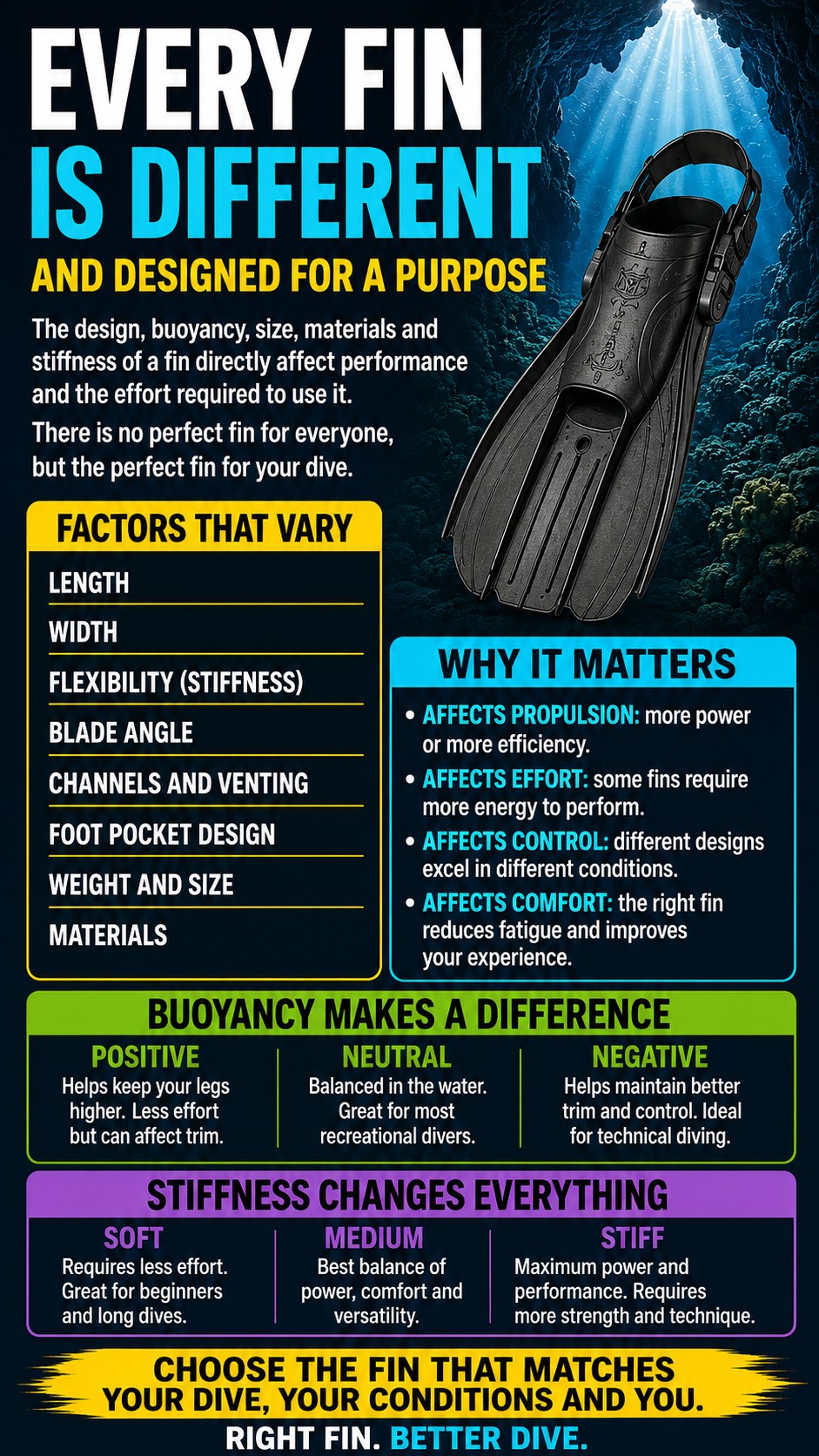
Every Fin Is Designed for a Purpose
Manufacturers don't simply change colors or shapes to create new models.
Every fin is carefully engineered by balancing multiple design elements, including:
-
Blade length
-
Blade width
-
Blade stiffness
-
Blade angle
-
Water channels and vents
-
Side rails
-
Foot pocket design
-
Heel system
-
Overall weight
-
Buoyancy characteristics
-
Construction materials
Even small changes in one of these features can completely change how a fin performs underwater.
That's why experienced divers often own more than one pair of fins—because different dives require different tools.
Freediving Fins
Freediving fins are built for maximum efficiency using a single breath.
Their long, flexible blades generate exceptional propulsion while minimizing energy expenditure, allowing divers to travel farther with fewer kicks.
Best For
-
Freediving
-
Spearfishing
-
Competitive apnea
-
Long surface swims
Although incredibly efficient, they are generally not practical for scuba diving because they are difficult to maneuver in confined spaces and are not designed for precise technical finning techniques.
Recreational Snorkeling Fins
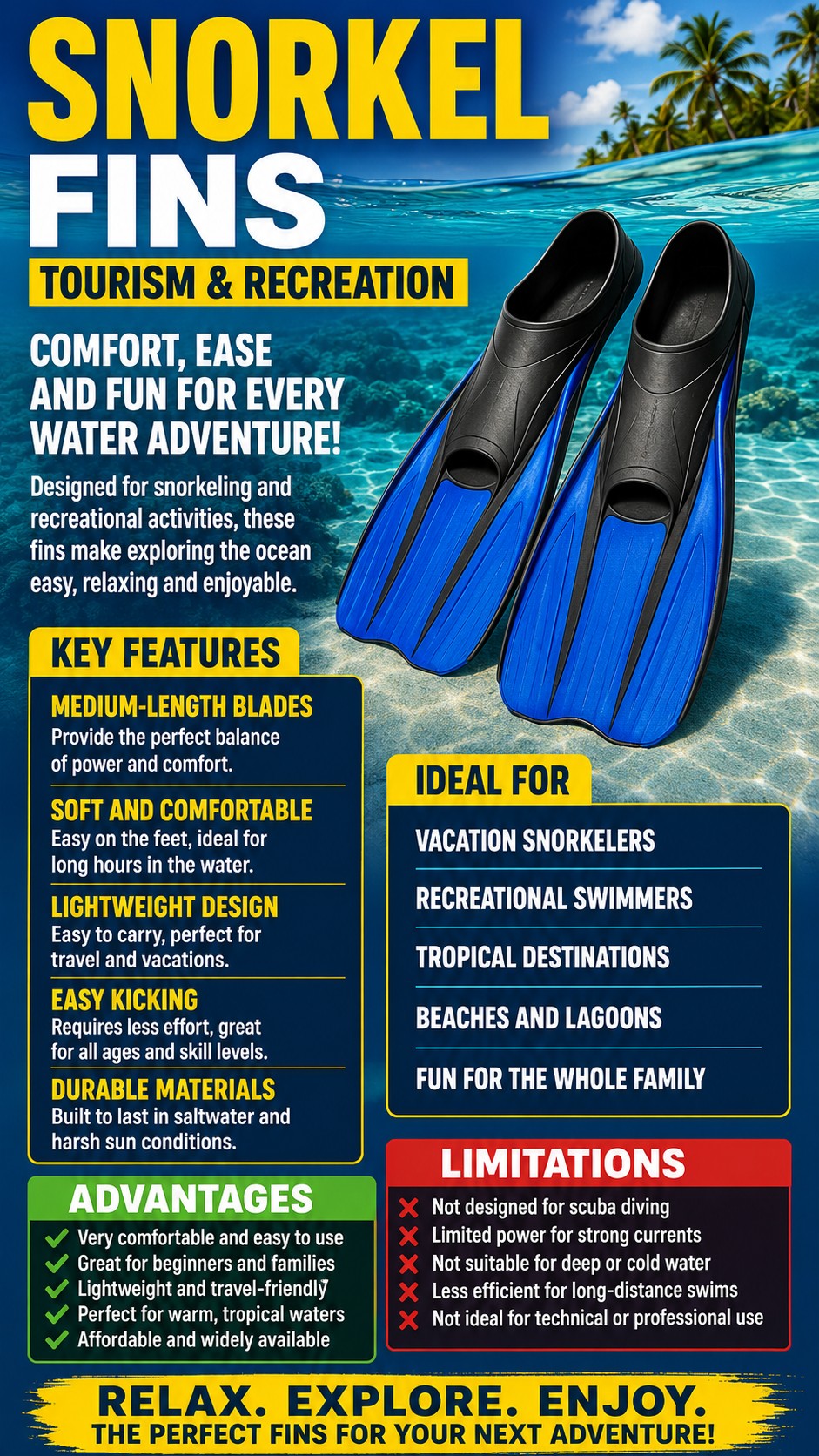
Snorkeling fins prioritize comfort, simplicity, and ease of use.
They feature shorter, softer blades that require very little effort, making them ideal for vacation snorkeling and casual swimming.
Best For
-
Vacation snorkeling
-
Family water activities
-
Tropical destinations
-
Recreational swimming
They are lightweight, affordable, and easy to pack, but they are not intended for strong currents or scuba diving.
Full-Foot Scuba Fins
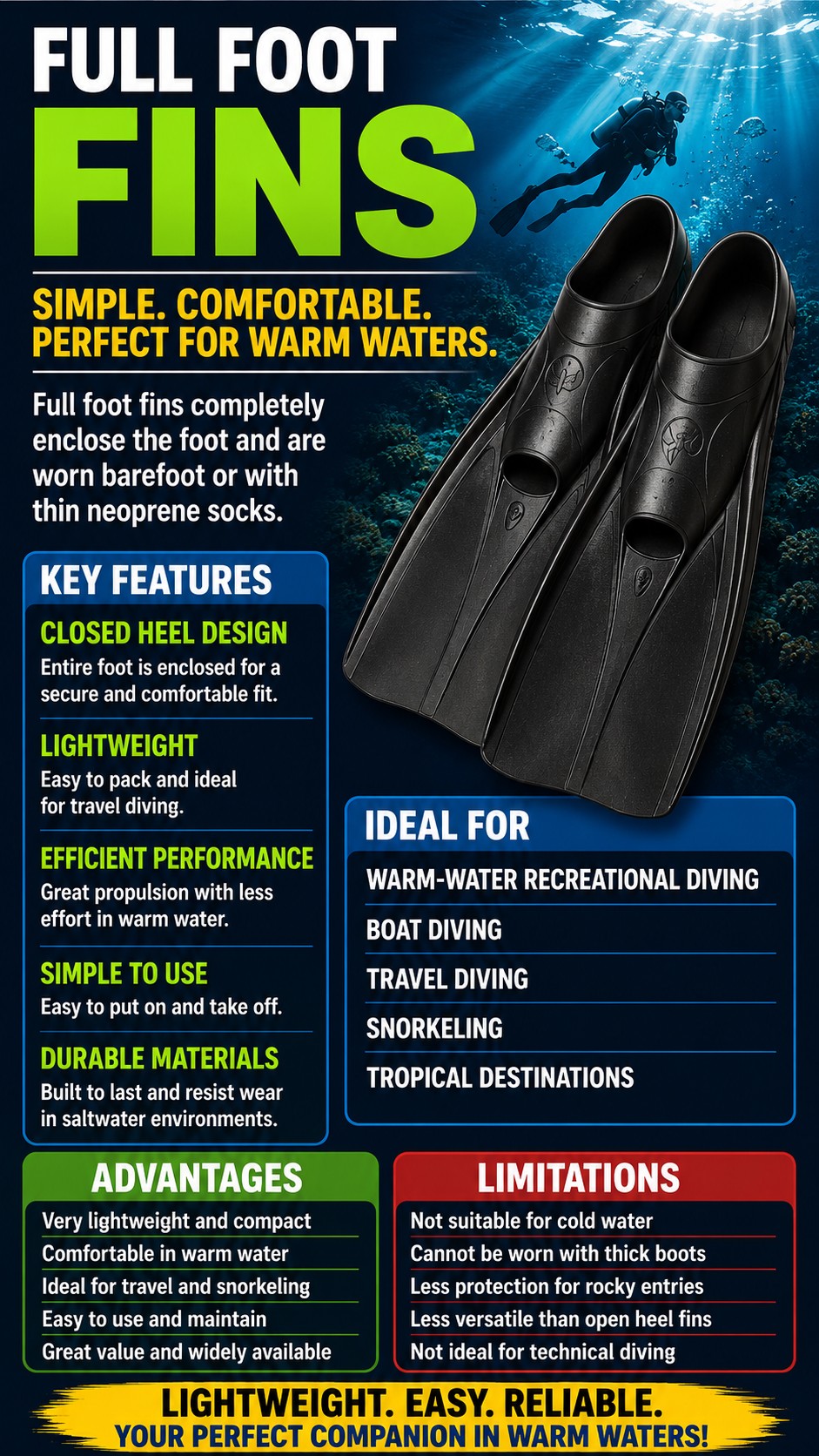
Full-foot fins completely enclose the foot and are typically worn barefoot or with thin neoprene socks.
Their lightweight design makes them an excellent choice for warm-water destinations and travel.
Best For
-
Tropical diving
-
Boat diving
-
Resort diving
-
Travel
They provide excellent comfort and efficiency but are not suitable for cold water or thick dive boots.
Open-Heel Fins
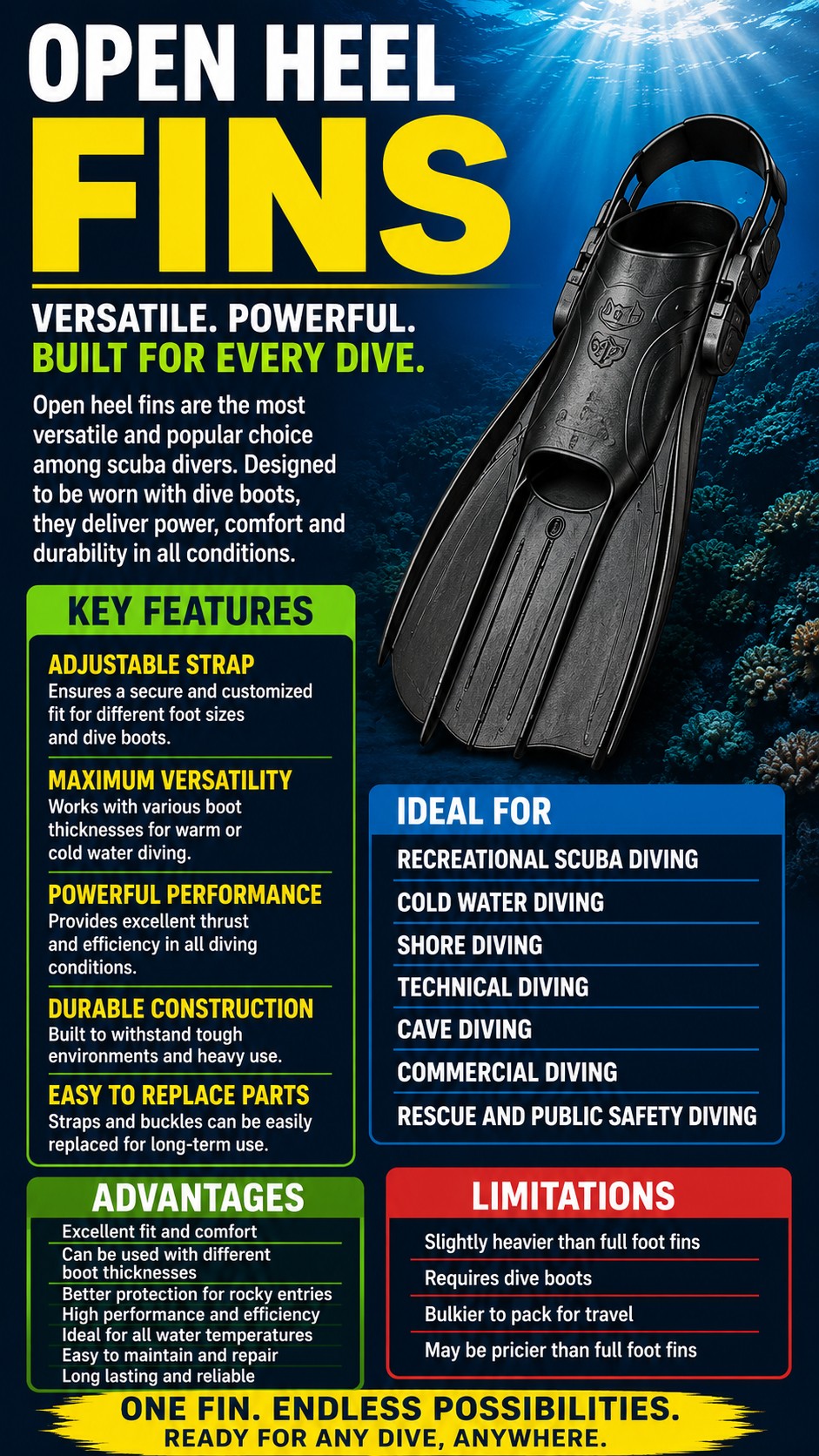
Open-heel fins are the most versatile style used in scuba diving today.
Designed to be worn with dive boots, they provide greater protection, durability, and adaptability in a wide range of diving environments.
Best For
-
Recreational scuba diving
-
Shore diving
-
Cold-water diving
-
Technical diving
-
Professional diving
Because they accept different boot thicknesses, open-heel fins perform well in both warm and cold water, making them the preferred choice for many experienced divers.
Different Diving Styles Require Different Fins
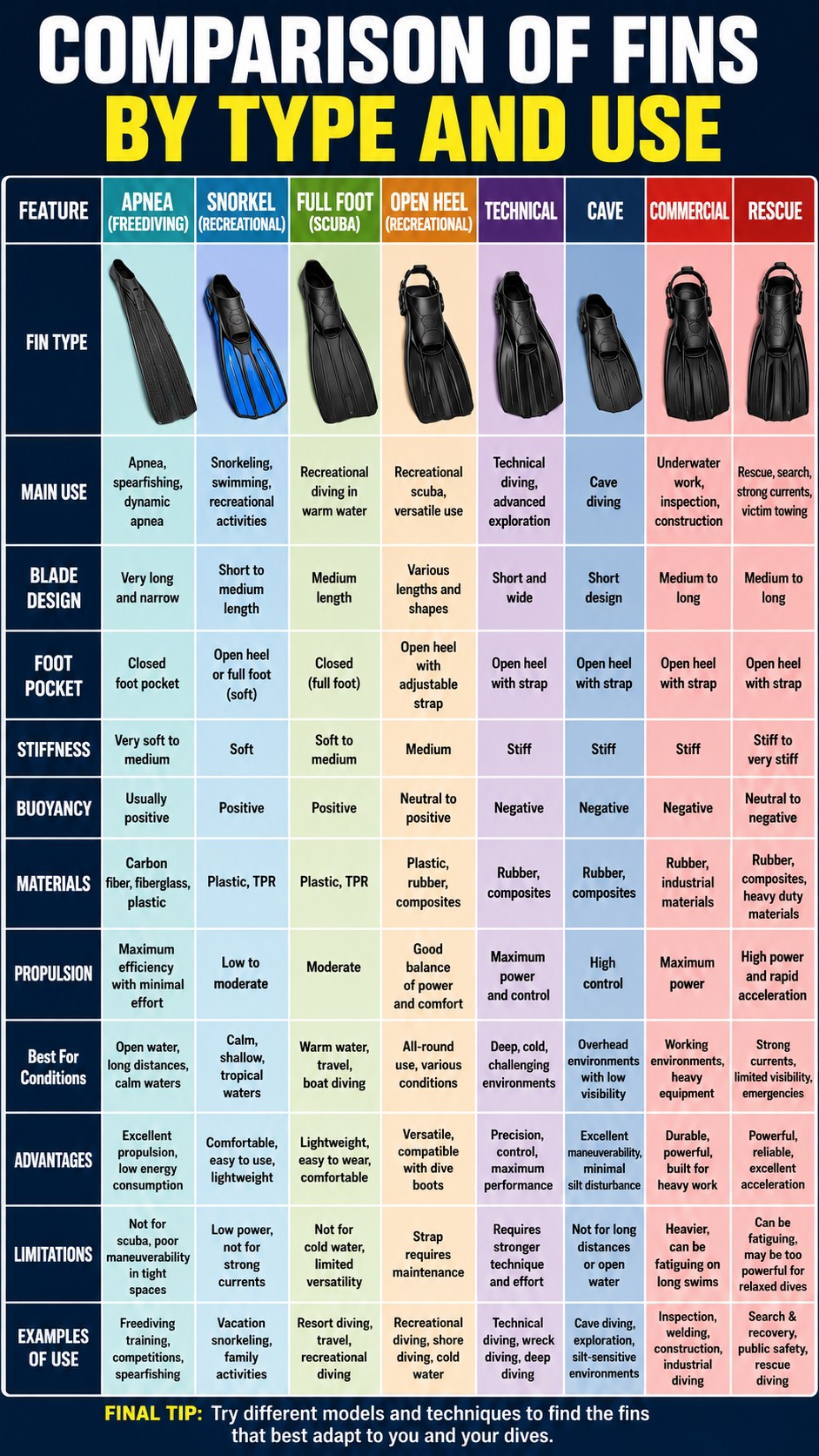
The environment you dive in should influence your fin selection.
Recreational Diving
Most recreational divers benefit from medium-stiff fins that balance comfort with propulsion.
Ideal characteristics include:
-
Moderate blade stiffness
-
Neutral or slightly positive buoyancy
-
Comfortable foot pocket
-
Efficient flutter and frog kicking
Technical Diving
Technical divers demand maximum precision and control.
Most choose short, wide fins made from dense rubber that provide excellent maneuverability for advanced finning techniques such as:
-
Frog kick
-
Modified frog kick
-
Back kick
-
Helicopter turn
These fins are usually negatively buoyant, helping maintain better trim and body position.
Cave Diving
Cave divers require extremely precise propulsion while minimizing disturbance of the bottom.
Their fins are optimized for:
-
Precise control
-
Short powerful strokes
-
Minimal silt disturbance
-
Excellent maneuverability
Commercial Diving
Commercial divers often work while carrying heavy equipment.
Their fins prioritize:
-
Maximum durability
-
Powerful thrust
-
Heavy-duty construction
-
Reliability under demanding conditions
Rescue & Public Safety Diving
Rescue divers frequently swim against currents while towing victims or equipment.
Their fins emphasize:
-
Strong acceleration
-
High propulsion
-
Excellent control
-
Reliability in low-visibility environments
Materials Matter
The material used to build a fin has a tremendous impact on performance.
Common materials include:
-
Thermoplastic
-
Natural rubber
-
Monoprene
-
Fiberglass
-
Carbon fiber
-
Composite polymers
Each material offers a unique combination of flexibility, durability, weight, responsiveness, and efficiency.
Buoyancy Makes a Difference
Many divers don't realize fins can actually affect their trim.
Positively Buoyant Fins
-
Lightweight
-
Easy on the legs
-
Popular for travel
-
Common in plastic designs
Neutrally Buoyant Fins
-
Balanced underwater
-
Comfortable for most recreational divers
-
Excellent all-around choice
Negatively Buoyant Fins
-
Improve trim
-
Increase stability
-
Preferred for technical diving and drysuits
-
Common in heavy rubber fins
Stiffness Changes Everything
One of the biggest factors in fin performance is blade stiffness.
Soft Fins
Require the least effort and are perfect for beginners, long surface swims, and relaxed diving.
Medium-Stiff Fins
Offer the ideal balance of comfort, efficiency, and propulsion for most recreational divers.
Stiff Fins
Generate maximum thrust and perform exceptionally well in currents, but they demand stronger legs, better technique, and more energy.
More Power Isn't Always Better
One of the biggest misconceptions in diving is that the stiffest fin is automatically the best.
In reality, more power usually comes with a cost.
A powerful fin often requires:
-
More leg strength
-
Better kicking technique
-
Higher energy expenditure
-
Greater air consumption when used inefficiently
Sometimes, a softer fin allows a diver to stay underwater longer simply because it reduces fatigue and conserves energy.
The goal isn't to own the most powerful fin.
The goal is to own the right fin for the type of diving you enjoy.
The Bottom Line
The best divers don't choose fins based on appearance or brand alone.
They choose fins based on:
-
Where they dive
-
Water temperature
-
Diving conditions
-
Exposure protection
-
Physical fitness
-
Kicking technique
-
Equipment configuration
-
Personal comfort
There is no universal fin that excels in every situation.
Understanding the strengths and limitations of each design allows you to dive more efficiently, improve your control underwater, reduce fatigue, and ultimately enjoy every dive to the fullest.
Visit Loves Park Scuba
Not sure which fins are right for you?
At Loves Park Scuba, we'll help you compare different fin styles, explain how each design performs underwater, and find the pair that best matches your diving goals, experience level, and environment.
The right fins don't just move you through the water—they transform the way you dive.
